Success Seen First-hand: Supporting First Nations Lawyers
By TEKAN COCHRANE
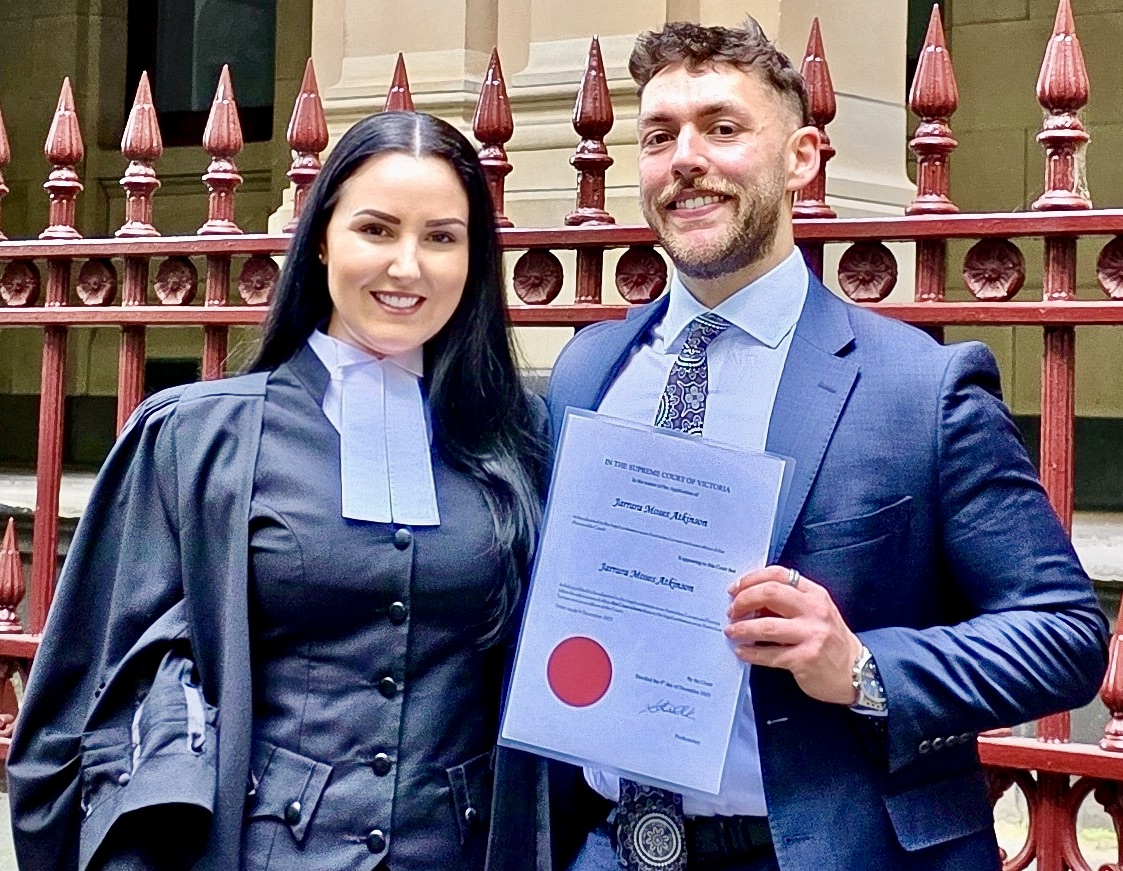
Recently, I had the privilege of moving the admission of a new lawyer in the Supreme Court of Victoria in Naarm (Melbourne). That lawyer is Jarrara Atkinson, a proud Yorta Yorta and Bangerang man.
Standing in that courtroom was not just a professional milestone. It was deeply personal.
Jarrara’s journey to admission is marked by perseverance, discipline, and strength.
Like many First Nations law students and graduates, he has navigated spaces not built with him in mind, balancing study with work, overcoming structural and personal challenges, and remaining grounded in his identity and community.
His admission reflects the resilience too often required of Aboriginal and Torres Strait Islander peoples simply to access the legal profession.
Moments like this matter. But they should not be exceptional.
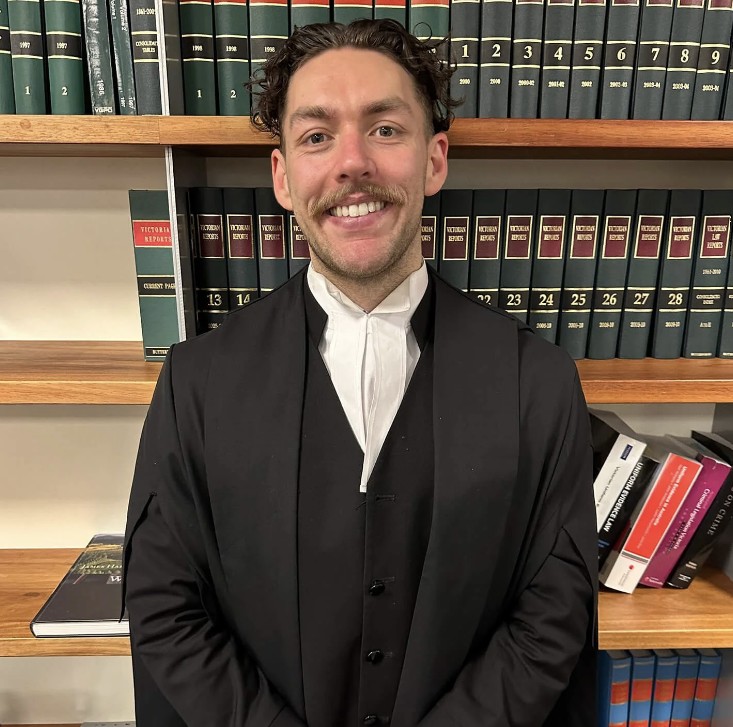
Jarrara Atkinson during his time as a Judge’s Associate at the County Court of Victoria.
Across Australia and the world, First Nations lawyers remain significantly underrepresented.
This is not due to a lack of talent or ambition, but because of systemic barriers such as financial, cultural and institutional, that shape who enters, stays, and thrives in the profession.
Despite Aboriginal and Torres Strait Islander peoples comprising nearly 4% of the Australian population, they account for just 0.8 per cent of solicitors nationally, approximately 757 individuals out of nearly 97,500, according to the Law Society of Australia 2024 National Profile of Solicitors (released in 2025). This proportion has remained largely unchanged over the past decade.
Meaningful support
For many, the journey into law involves more than academic effort. It requires navigating cultural load and environments where we may be the only First Nations person in the room while confronting stereotypes, managing expectations, and carrying deep obligations to our communities.
And yet, despite this, First Nations lawyers continue to show up in courtrooms, policy spaces, not-for-profit organisations, communities, top-tier firms, and for each other.
But showing up is not enough without meaningful support.
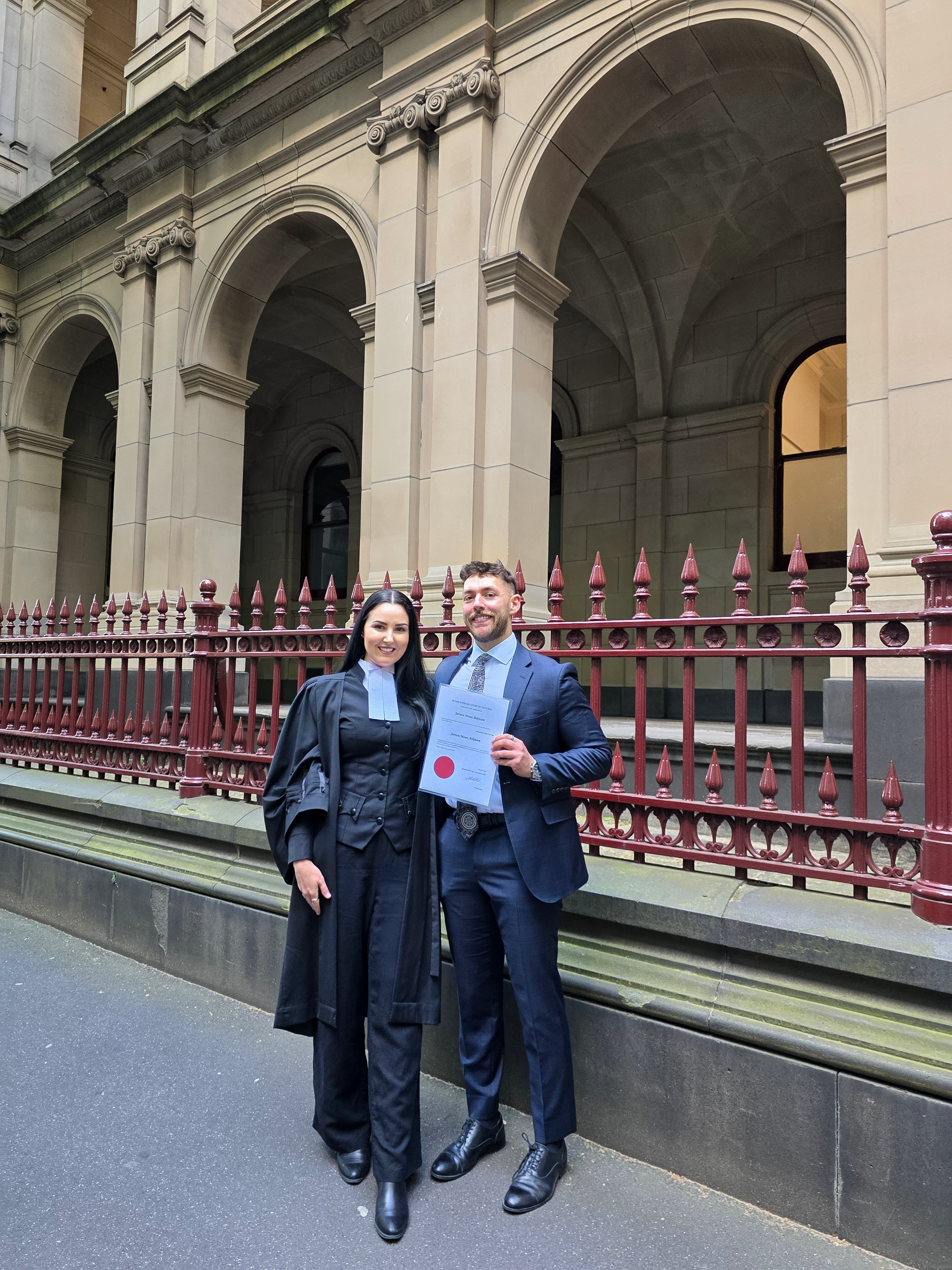
Tekan Cochrane & Jarrara Atkinson at the Supreme Court of Victoria on his admission day
Supporting First Nations lawyers must go beyond symbolic gestures. It requires sustained investment in pathways, mentorship, and culturally safe workplaces and a shift from diversity as a metric to inclusion as a practice.
I had the privilege of supporting Jarrara as a mentor, and watching his growth has been a powerful reminder of what can be achieved with consistent, culturally grounded support alongside individual determination.
Much of that support does not happen in isolation.
It is strengthened through associations such as Tarwirri Indigenous Law Association of Victoria Inc and Ngalaya (NSW) which play a vital role in supporting First Nations law students and lawyers to navigate the profession. First Nations lawyers bring more than legal expertise.
Building a legal profession
They bring cultural knowledge, lived experience, and perspectives that are essential to achieving justice in this country. A legal system that does not meaningfully include First Nations voices cannot fully serve First Nations communities.
Jarrara’s journey, drive and leadership are a reminder of what is possible and the work that remains. He is a strong role model for those seeking to enter the legal profession — Mob or not.
We should not have to celebrate “firsts” as often as we do. Instead, we should be building a legal profession where First Nations lawyers are not the exception, but a visible, supported, and thriving part of the profession.
Because when we support First Nations lawyers, we strengthen the integrity, legitimacy and fairness of the legal system itself.
- Tekan Cochrane is a Kooma and Yuwaalaraay woman. Founder & Managing Director / Lawyer. TC Law & Consulting | www.tclawconsulting.com.au