Growth, Visibility and Making Room for More Voices
By JEREMY WOLF
A week ago, I shared a screenshot of a Google search result.
At the time, I thought very little of it. As someone involved in building an independent Indigenous newsroom, I simply found it encouraging that First Nations News was appearing prominently for search terms relating to Indigenous news. For any publisher, visibility matters. It is one of the ways readers discover your work, engage with your stories and find their way into conversations that matter.
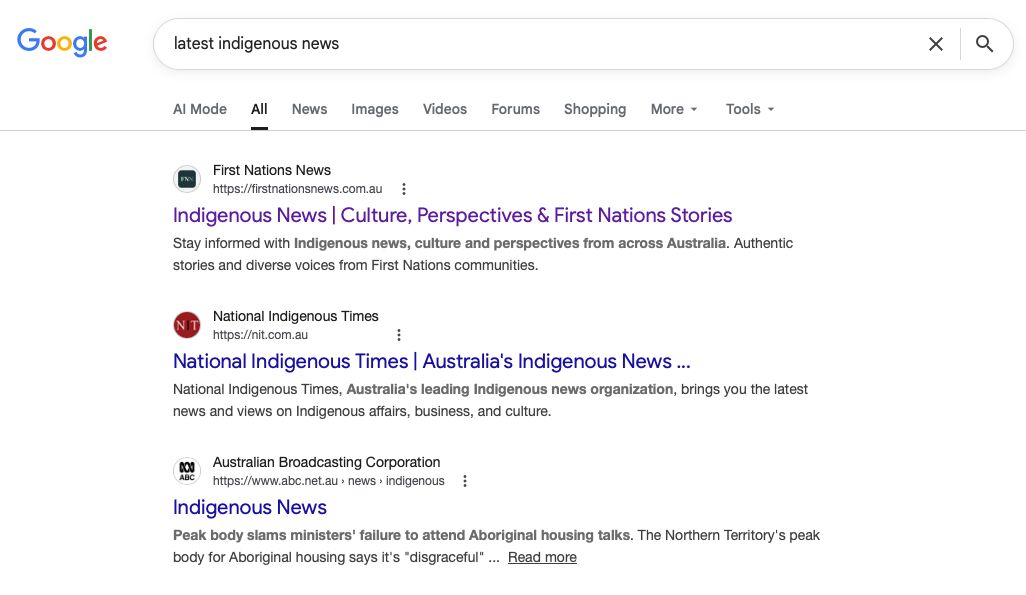
Google search result captured on Sunday 23 May 2026. Search rankings vary between users, devices, locations and over time. The image is included as a historical record of the search result observed at that point in time.
What surprised me was not the search result itself. It was the reaction to it, and the extent to which a simple observation about visibility became a discussion about whether that observation should remain public.
What began as a passing observation quickly became a conversation about audience size, market position and commercial standing. In many ways, that reaction was more interesting than the original post because it raised a question that extends well beyond search rankings or website traffic.
What happens when a new Indigenous media organisation starts to grow?
I have spent a lot of time thinking about that question over the past week.
To be clear, I have absolutely no issue with commercial success. In fact, I believe Indigenous media organisations should be commercially successful. They should attract advertisers, employ journalists, build sustainable businesses and create opportunities for future generations of Indigenous storytellers. Strong Indigenous media organisations are good for communities, good for truth-telling and good for the broader national conversation.
Influence brings responsibility
The more Indigenous media organisations that are sustainable and thriving, the better.
What I think deserves examination, however, is the distinction between commercial success and market protection. They are not the same thing.
Commercial success strengthens a sector. It demonstrates demand, builds capability and creates opportunities. Market protection, whether intentional or otherwise, can have the opposite effect. It can create an environment where growth is viewed with suspicion rather than encouragement and where new entrants are expected to justify their existence before they have even had the opportunity to establish themselves.
Success also brings influence. Influence brings responsibility. The larger an organisation becomes, the greater its ability to shape conversations, perceptions and opportunities within a sector. That influence can be used to create room for others to grow, or it can be used to defend the ground already occupied.
That is not a challenge unique to Indigenous media. It exists across many industries. But within Indigenous media, it is worth reflecting on because every organisation currently regarded as established was once the newcomer.
Every publication that now enjoys recognition and influence once had no audience, no market position and no commercial footprint. Every organisation had to earn its first readers, secure its first supporters and convince people there was room for another voice in the conversation.
National Indigenous Times, Koori Mail, IndigenousX, NITV, Indigenous News Australia and several others have each contributed to a stronger Indigenous media landscape. They have done so in different ways, serving different audiences and bringing different perspectives to important issues affecting First Nations peoples across the country.
Multiple perspectives available
That diversity is not a weakness. It is one of the great strengths of Indigenous media.
No single publication can tell every story. No single publication should tell every story. Readers benefit when there are multiple perspectives available to them. Communities benefit when important issues can be explored from different angles. Journalism benefits when ideas can be challenged, tested and scrutinised through a diversity of voices.
More Indigenous media does not diminish Indigenous media.
It strengthens it.
The reality is that Indigenous storytelling is not a finite resource. One organisation’s success does not require another organisation’s failure. One publication gaining visibility does not reduce the value of another publication’s contribution. There is more than enough room for multiple organisations to grow, evolve and serve their audiences.
This is particularly important when discussing emerging publishers.
No reasonable person would expect a younger independent newsroom to have the same audience as organisations that have spent years, and in some cases decades, building readership, trust and commercial sustainability.
That is not the comparison that interests me.
The comparison that interests me is growth.
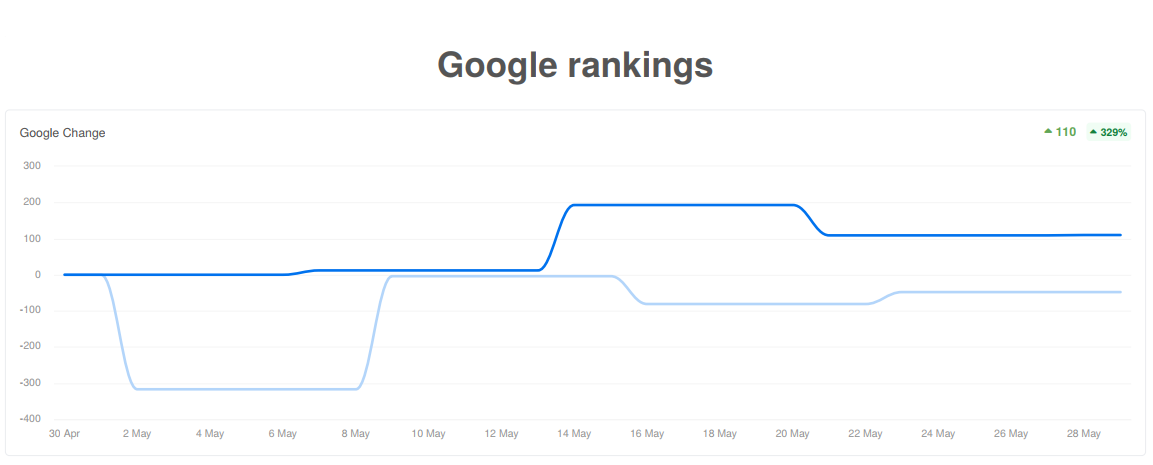
Independent search tracking data showing First Nations News recorded a 329% increase in Google search visibility across selected Indigenous news search terms between 30 April and 29 May 2026. Rankings fluctuate over time and should be considered directional rather than absolute.
Growth is often uncomfortable, particularly when it comes from places people did not expect. But growth itself is not a problem to be solved. It is evidence that readers are making choices.
Audience size tells us where an organisation has been. Growth tells us where it may be going.
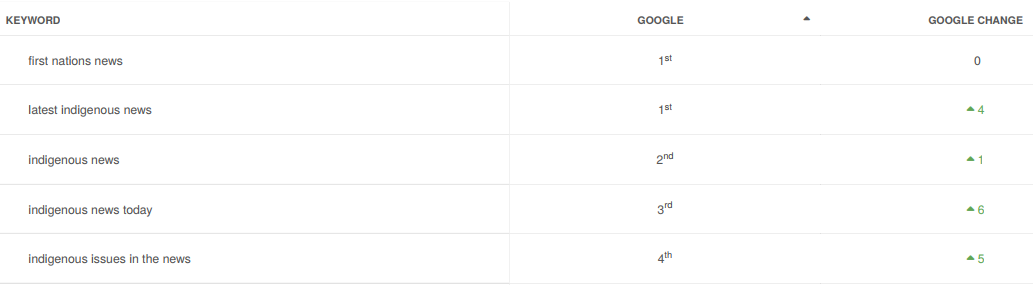
Selected Indigenous news search rankings monitored during May 2026. Search rankings vary between users, devices, locations and timeframes and should be interpreted accordingly.
Over the past month, First Nations News has experienced significant growth in search visibility, audience engagement and organic discovery. Google visibility across tracked Indigenous news search terms increased by more than 300 per cent, while organic search traffic, website engagement and LinkedIn reach all recorded substantial increases.
Those figures do not suggest we have arrived.
They simply suggest we are moving.
And that, in my view, should be welcomed.
Not because it benefits First Nations News specifically, but because growth anywhere within Indigenous media is ultimately a positive sign for the sector as a whole. More publishers create more opportunities for journalists. More publishers create more scrutiny and accountability. More publishers create more opportunities for readers to engage critically with the issues affecting their communities.
Most importantly, more publishers create more opportunities for stories to be told.
As Indigenous people, we understand that knowledge grows when it is shared. Stories gain strength when they are carried by many voices and viewed through many lenses. A circle does not become weaker because another chair is added.
“Audience size tells us where an organisation has been. Growth tells us where it may be going.”
It becomes stronger.
The future of Indigenous media should not be determined solely by who is largest today. It should also be shaped by whether we are creating enough room for those who are still building tomorrow.
Because if we genuinely believe in Indigenous self-determination, then that principle cannot stop once an organisation becomes successful. It must extend to those who come after.
The next generation of Indigenous publishers will emerge because communities support them, readers engage with them and they earn trust through consistency, hard work and service.
That is exactly how it should be.
We respect the organisations that came before us. We respect the work they have done to build audiences, create opportunities and establish Indigenous media as a powerful force within Australia’s media landscape.
But respect should not require silence, and growth should not require permission.
A healthy Indigenous media sector should be confident enough to welcome new voices, encourage innovation and celebrate momentum wherever it appears.
Because every voice we now consider established was once the new voice in the circle.
- Jeremy Wolf is Managing Director of Origin Digital and First Nations News