Commissioner calls for early intervention as child outcomes decline
Western Australia’s Commissioner for Children and Young People has issued a stark warning over declining child outcomes, calling for urgent early intervention and culturally informed support as poverty rises and youth detention without sentence persists.
New data from the State’s Commissioner shows worsening outcomes for children and young people in Western Australia. The report also identifies declining mental health and deterioration across learning, behaviour, safety and wellbeing.
At the same time, the poverty rate has climbed to 15.6 per cent, affecting an estimated 103,900 children and young people. The Commissioner’s analysis finds Western Australia’s results across five key developmental domains — physical health and wellbeing, social competence, emotional maturity, language and cognitive skills, and communication skills and general knowledge — have deteriorated faster than the national average.
Key Points
- Almost 140 under-14s detained last year in WA without sentencing
- Commissioner reports worsening mental health and developmental outcomes statewide
- Poverty rate hits 15.6 per cent, affecting about 103,900 children and youth
- Only 33.9 per cent of Aboriginal children on track across five domains
- Aboriginal children twice as likely developmentally vulnerable at age five
- Report warns high reoffending; over 58% return to detention
Worsening outcomes and rising poverty
Only 33.9 per cent of Aboriginal children and young people were developmentally on track across all five domains, nearly 20 percentage points below the state average. The report also found Aboriginal children are almost twice as likely to be developmentally vulnerable at age five — 42.5 per cent compared with 23.5 per cent for all children.
The report calls for “targeted, culturally appropriate, and place-based supports to ensure all children have the same opportunities to grow, learn, and thrive”.
Youth detention without sentence
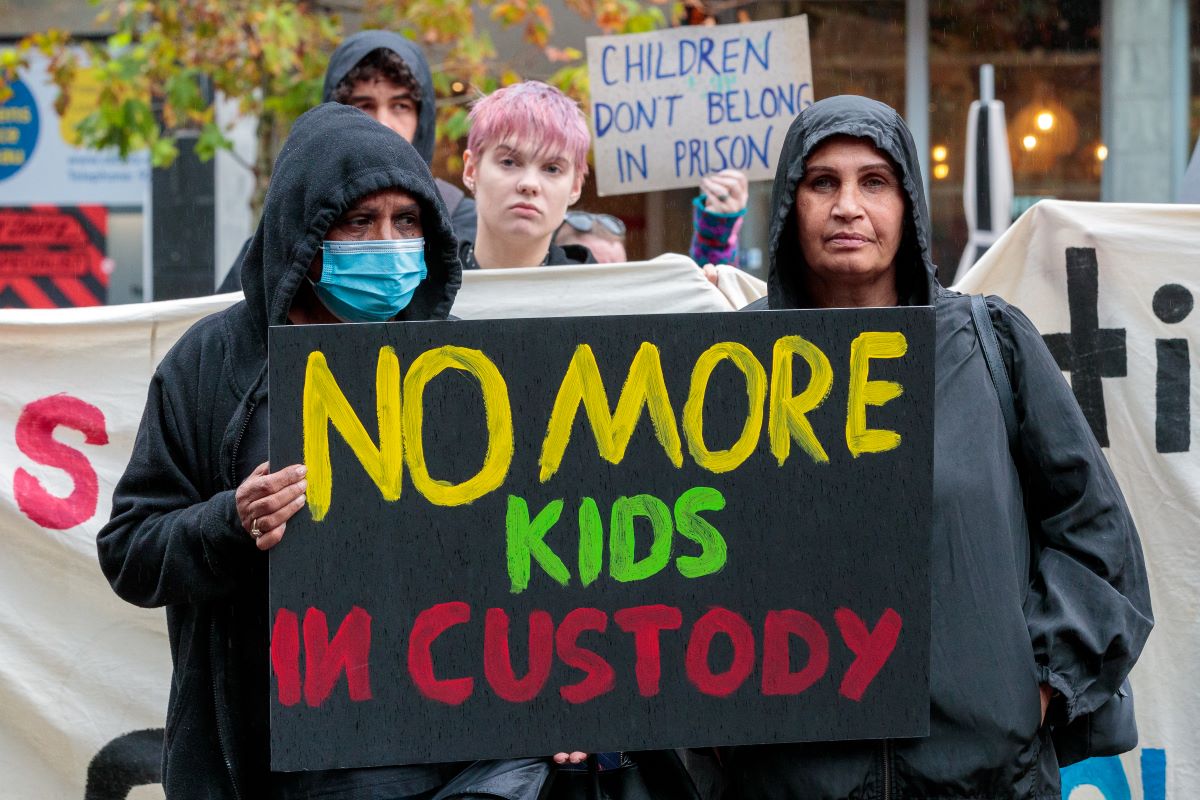
Almost 140 children under the age of 14 were held in detention in Western Australia in the last financial year without ever being sentenced. The Commissioner’s report highlights that, in the youth justice system — currently under examination through a Senate inquiry — children as young as 10 are being held in detention without being found guilty of a crime.
On an average night in Western Australia, between four and five Aboriginal boys aged 10 to 13 are detained without sentence, despite explicit recommendations from the 1991 Royal Commission into Aboriginal deaths in custody. The report warns that the current minimum age of criminal responsibility fails to align with international standards and does not prioritise the best interests of the child.
“Jailing is failing.”
The report urges greater emphasis on community-based programs that deter young people from the criminal justice system.
The Commissioner’s report cites high reoffending rates, with more than 58 per cent of young people in Western Australia returning to detention. While the rate has dropped significantly over the last decade, it notes Aboriginal children and young people are incarcerated at almost 22 times the rate of non-Indigenous children.
International concern
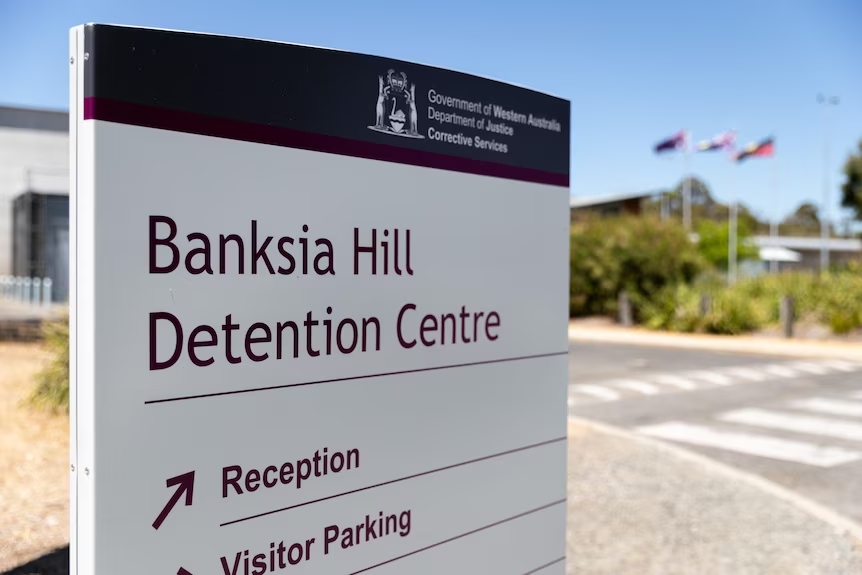
International scrutiny has intensified. Last year, delegates from the United Nations Working Group on Arbitrary Detention were denied access to both Unit 18 — the youth detention unit inside Perth’s maximum-security Casuarina Prison — and Banksia Hill Detention Centre. Despite that refusal, the group labelled Australia’s youth justice system a “stain on Australia’s reputation”.
Nationally, around one in three young people in detention is estimated to have Fetal Alcohol Spectrum Disorder, with most cases undiagnosed, according to the report. Echoing multiple submissions to the Senate inquiry, the Commissioner’s report calls for expanded access to intensive family support services and increased availability of specialist allied health services to identify developmental issues earlier.
It also calls for greater investment in programs for teenagers, positioning these measures as essential for both prevention and reduced reoffending. The report states these upstream actions are critical to reducing the number of children entering or returning to youth detention and to improving long-term outcomes for young people across Western Australia.
Commissioner urges a shift from crisis response
Commissioner Dr Jacqueline McGowan-Jones warned that failing to act early has predictable, damaging consequences. She said missing early-warning signs that a child is struggling means, “we are not just missing a moment, we are setting the stage for far more serious harm”. She added that school exclusion, youth offending and long-term mental health challenges are predictable outcomes of issues that could have been addressed earlier.

Commissioner Dr Jacqueline McGowan-Jones warned that failing to act early has predictable, damaging consequences.
Dr McGowan-Jones called for a fundamental reorientation of state responses. The report emphasises prevention and early support, and argues for investment in the earliest years of life, where the right assistance can change a child’s trajectory. It concludes that systems designed to intervene only when children are already in distress must change if outcomes are to improve.
What the report calls for:
- Targeted, culturally appropriate, place-based supports to ensure equal opportunities
- Expanded intensive family support services
- Greater availability of specialist allied health services for early identification
- Increased investment in programs for teenagers
- Emphasis on community-based programs to deter entry into the justice system
Dr McGowan-Jones underscored the urgency of prevention, stating that the state must move away from crisis responses and towards upstream action that can alter trajectories.