Victorian schools adopt First Nations language names
Every new state school opening in Victoria will carry a First Nations language name under a policy the State government says will embed Indigenous heritage into daily education.
The initiative has already seen six schools adopt Indigenous names following a process of consultation with Traditional Owner groups, local communities, and Geographic Names Victoria.
The first wave of schools includes Barayip Primary School in Tarneit, with a name drawn from the Bunurong word for “spring,” Kuyim Primary School in Pakenham meaning “kangaroo,” and Mirniyan Primary School in Clyde North meaning “moon.”
Two other Clyde North schools have been named Turrun, meaning “she oak,” and Wulerrp, meaning “tea tree.” In Wollert, the new Wirrigirri Primary School carries a Woi-wurrung name meaning “messenger.” Each name was endorsed by Traditional Owners before being formally approved by the Education Minister.
Another 26 schools scheduled to open next year are currently undergoing the same process. Proposed names include Gamadji, meaning “emerging creeks” in Wurundjeri Woi-wurrung, and Ngurraga, meaning “koala” in Bunurong Boonwurrung. Final decisions will be made after a period of public consultation through the Engage Victoria website, ensuring community voices are heard alongside Indigenous leadership.
Education Minister Ben Carroll said the policy was part of Victoria’s commitment to reconciliation and recognition through everyday language.
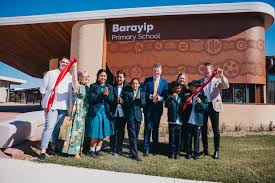
“When children walk through the gates of Barayip, Kuyim, or Wulerrp, they are walking into a space that acknowledges and celebrates the deep history of the land they are on,” Mr Carroll said. “Names are powerful symbols, and this program makes reconciliation a lived experience.”
When a child says the word Kuyim every day, they are speaking our language, keeping it alive, and carrying it into the future. That is powerful
Traditional Owners have welcomed the initiative as an important step in preserving and revitalising languages that were once actively suppressed.
A Bunurong Elder involved in the naming process said the program was about more than symbols.
“When a child says the word Kuyim every day, they are speaking our language, keeping it alive, and carrying it into the future. That is powerful,” the Elder said.
The policy has not been without criticism. Some parents and opposition politicians argue that energy should instead be directed toward literacy, numeracy, and core education outcomes.
Federal opposition spokesperson for education, Sarah Henderson, said the policy was “virtue signalling” and risked distracting from efforts to lift basic test results.
“Names do not improve NAPLAN scores,” she said.
Community responses have been mixed, with some parents welcoming the names as a chance for their children to engage with Indigenous culture and others expressing concern that non-Indigenous children may find them unfamiliar or difficult to pronounce. Supporters counter that learning and respecting new words is part of education itself.
Victoria is believed to be the first state to legislate such a requirement across its public school system.
The decision aligns with the state’s Treaty process, which has included measures to strengthen the role of language and culture in public life. The government has also funded programs to introduce Indigenous languages into school curricula, with 80 Victorian schools already teaching First Nations languages as part of their lessons.
The naming initiative builds on earlier moves, including guidelines that encouraged local councils to use Indigenous words for new parks, suburbs, and community facilities. By making it mandatory for all new schools, the state government has signalled that reconciliation and truth-telling will form part of the education system’s identity.
Experts in education and linguistics say the policy will have a lasting impact. Dr. John Henderson, a linguist at the University of Melbourne, said school naming programs in New Zealand had helped normalise Māori words across society, and Victoria’s policy could have similar effects. “Children learn language through familiarity. By normalising these words in everyday contexts, governments make a statement that Indigenous culture is not just part of history, but part of contemporary life,” he said.

Teachers’ unions have generally supported the initiative, though some have raised concerns about ensuring that staff receive adequate training in pronunciation and cultural context. The Department of Education has responded by producing guidance sheets and audio resources for teachers, ensuring staff can confidently use the names.
Parents at the newly opened Mirniyan Primary School told reporters that while there had been initial uncertainty, the name quickly became a source of pride.
“My daughter knows it means moon, and she comes home telling us stories about the Woi-wurrung people,” one parent said. “It’s sparked conversations at home that we weren’t having before.”
For some families, however, the change has highlighted gaps in understanding. “We support reconciliation, but I’m still not clear on the process,” another parent said.
“I’d like more information about who chooses the names and why.”
The government said transparency would be critical in the rollout, promising more community forums and school briefings in 2026.
The policy comes against the backdrop of national debates about truth-telling, Treaty, and the role of Indigenous culture in public life following the failed 2023 Voice referendum. While Victoria has pressed ahead with its Treaty process, other states have been more cautious.
Advocates say policies like school naming can advance reconciliation in practical, everyday ways, regardless of federal-level politics.
Education experts say the success of the policy will ultimately depend on how it is implemented over time.
“Names are powerful, but they are only the beginning,” Dr. Henderson said.
“What matters most is whether schools integrate Indigenous perspectives into their classrooms, teaching, and community engagement. Names must be part of a wider educational journey.”
For now, families in Victoria are preparing for a school system where Indigenous languages form the identity of every new school.
As one parent in Tarneit put it: “Our kids will grow up thinking Barayip is just the normal name for a school. That is exactly how reconciliation should work.”