Healing Foundation welcomes aged care means testing backflip
Stolen Generations advocates have welcomed a Federal Government backflip regarding aged care means testing, which previously included redress payments as income.
Advocates from organisations like the Healing Foundation are now calling for broader reforms to protect the dignity of survivors.
The Healing Foundation said the decision to amend the Aged Care Act to include basic care needs as essential services addresses a policy that undermined access to “the bare minimum” of support.
The organisation argued that access to essential personal care support services is a baseline requirement for older people, including ageing Stolen Generations survivors.
Key Points
- Federal Government reverses plan to charge for basic personal aged care
- Healing Foundation says original measure undermined dignity and cultural safety
- Co-payments introduced in November 2025 risked survivors forgoing essential care
- Support at Home to invest $1 billion, making personal care free
- Domestic assistance still charged 17.5 to 80 percent under means testing
- Redress payments counted as assets, unlike National Redress Scheme
- Changes take effect in October, raising wellbeing concerns for survivors
Changes to the Aged Care Act made in November 2025 had introduced co-payments for personal care, which advocates warned would deter people from seeking essential assistance. According to The Healing Foundation, the change had placed survivors at serious risk of forgoing care and compounded existing inequities.
“The reversal reduces harm,”
— Professor Steve Larkin, The Healing Foundation
The Healing Foundation has said it is supportive of government plans to invest $1 billion to change the treatment of personal care services through the Support at Home program, making them free of charge alongside other clinical care.
The organisation said this represents a step in the right direction to supporting ageing survivors.
What changed under the Aged Care Act
Under the co-payment system introduced late last year, pensioners, part-pensioners or self-funded retirees paid between 5 and 50 percent of the service providers’ fee for services including showering, dressing and continence care for in-home care. According to the Support at Home fee schedule, costs could range anywhere between $50 a week to as high as $500 a week depending on the recipient’s package.
Evidence cited by The Healing Foundation shows survivors experience a ‘gap within the gap’ and are much more likely to be experiencing financial hardship. The organisation said that the co-payment framework exposed survivors to unacceptable choices between essential daily needs and their health.
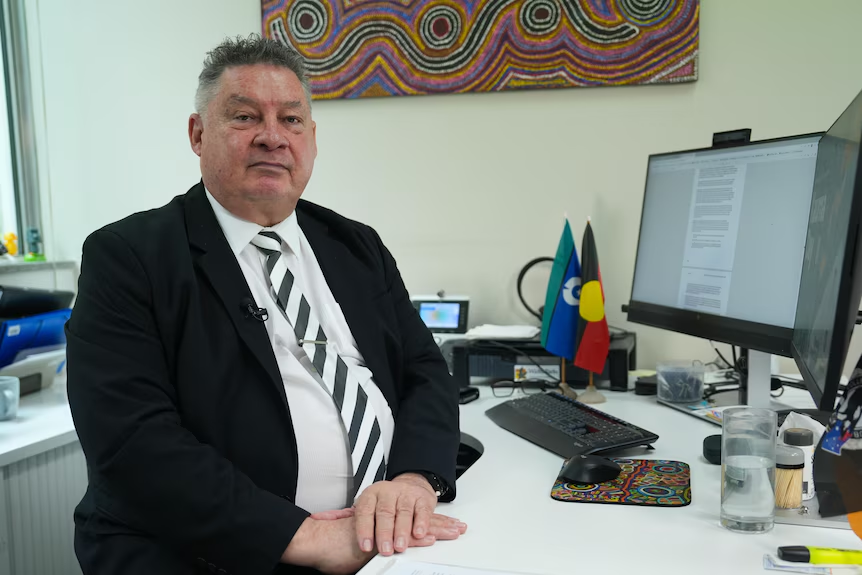
Healing Foundation Chair Professor Steve Larkin.
The Healing Foundation Chair Professor Steve Larkin said the original policy changes undermined ageing survivors’ dignity, trust and cultural safety. He said survivors were likely to drop basic care such as showering because they could not afford to pay, which would put their health at risk.
Professor Larkin also noted broader inequities: survivors are over‑represented among older Australians with poorer health, lower incomes and higher reliance on pensions due to disrupted education, employment and family life. He said these conditions magnified the burden of any added charges.
“A $50/hour charge adversely affected them financially.”
— Professor Steve Larkin, The Healing Foundation
Implementation timeline and health risks
Although the reversal is underway, The Healing Foundation said the wait until October for the changes to take effect will have serious implications for survivors’ wellbeing. The organisation warned that delays prolong the period during which vulnerable people must navigate unaffordable choices.
Professor Larkin said that not regularly showering could risk infection and wider health issues, and that no one should be forced to choose between basic hygiene and essential needs such as food due to cost pressures. He said the original policy approach was economically focused and failed to be explicitly trauma‑informed and culturally safe.
Ongoing costs and means testing
Despite the reversal on personal care, survivors will still be required to pay out of pocket for services such as cooking, cleaning and laundry from 17.5 to 80 percent depending on their package. Income and asset testing affects the percentage the recipient must pay for a service.
- Domestic assistance — cooking, cleaning, laundry — remains subject to client co-payments
- Required contributions range from 17.5 to 80 percent, depending on package
- Income and asset tests determine the payable percentage for each recipient
The Healing Foundation raised particular concern that survivors who received compensation through State and Territories Stolen Generations Redress Schemes are disadvantaged by means testing. Payments through these schemes were not made exempt to asset and income testing for survivors.
By contrast, the National Redress Scheme for Institutional Child Sexual Abuse does not count as an asset when being means tested for aged care. The Healing Foundation said this difference is discriminatory and represents a major risk to survivors who need in-home assistance, further compounding affordability issues for essential services.
The organisation warned that if survivors are unable to afford these services, there is a real risk they may disengage altogether from aged care services. It said this would increase health risks and social isolation, particularly for those already wary of institutional settings and experiencing much higher levels of disadvantage than most other Australians.





- AFL / AFLW
- Arts
- Athletics and Olympics
- Business
- Conditions and Research
- Culture
- Elections
- Employment and Careers
- Enterprise and Startups
- Entertainment
- Events and NAIDOC
- Fashion
- Film and TV
- Food
- Government and Policy
- Grants and Funding
- Health
- Healthcare and Services
- Heritage and History
- International
- Language
- Lifestyle
- Mental Health and Wellbeing
- Music
- News
- NRL and Rugby League
- Olympics
- Opinion
- Other Sports
- People and Profiles
- Podcast
- Politics
- Property and Land
- Sports
- Technology
- Travel
- Treaty and Truth-telling
- Voice and Referendum