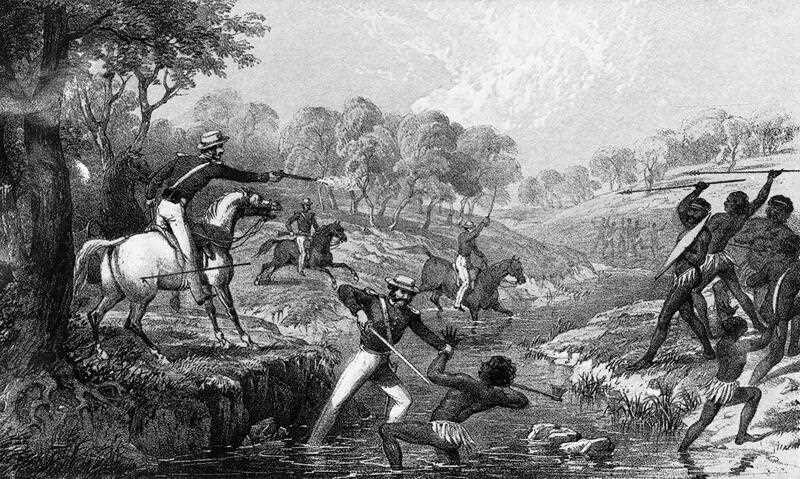
Australia’s story of spear versus gun needs telling
By LLOYD JONES and JOHN KIDMAN
Australians need to know thousands of Aboriginal people died defending Country with spears, says one of the activists who founded the Aboriginal Tent Embassy.
Human bones trampled by cattle are a stark reminder of the mass killing of Aboriginal people in frontier wars when spears were pitted against guns.
Yet it is a travesty that needs to be kept in plain sight, according to one of Australia’s pioneers in the struggle for Indigenous recognition.
Michael Ghillar Anderson is the sole survivor among the four men who founded the nation’s oldest permanent protest occupation site, the Aboriginal Tent Embassy.
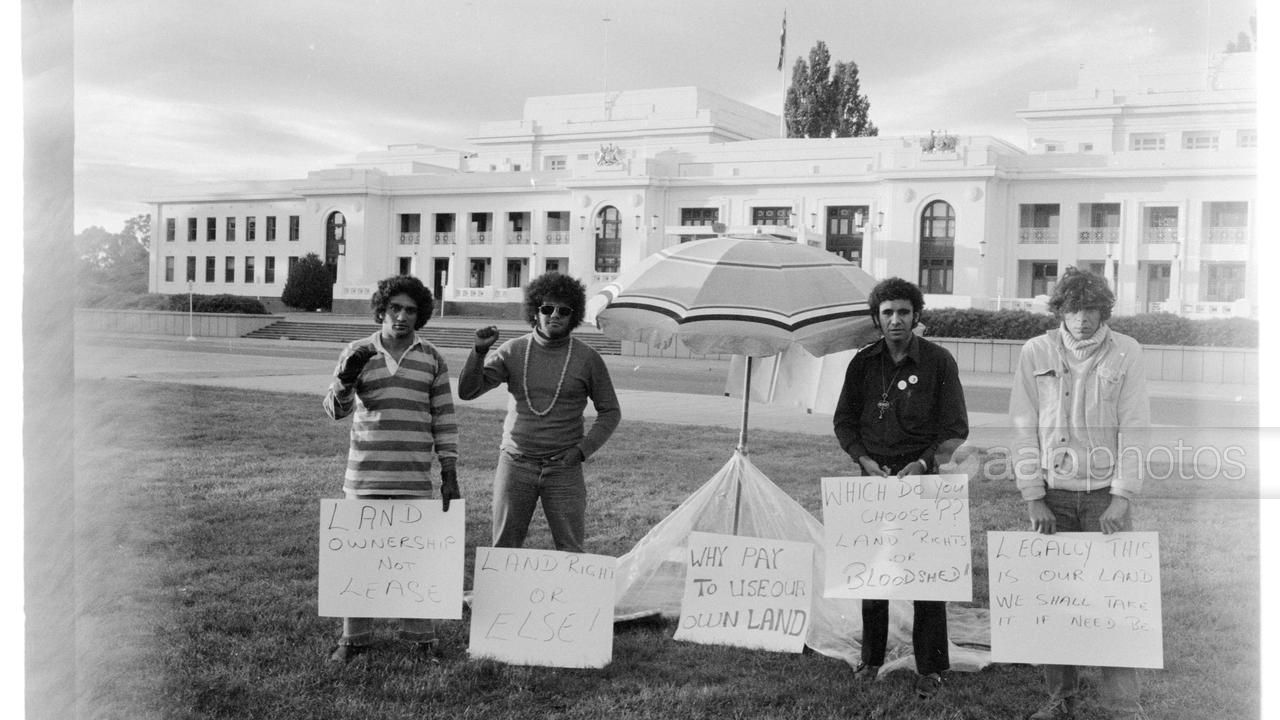
Billy Craigie, Bert Williams, Michael Anderson and Tony Coorey launched the Tent Embassy in 1972. (Mitchell Library, State Library of New South Wales)
The quartet drove to Canberra from inner-Sydney’s Redfern on January 26, 1972, where they pitched a beach umbrella in front of the federal parliament.
The group’s reasoning was that Aboriginal people were being treated as aliens in their own country and were therefore in need of diplomatic representation.
In one form or another, the gesture has stood the test of time.
“… Formally recognise our fallen”
The embassy has since hosted myriad protests and campaigns demanding recognition of land rights, self-determination, sovereignty and justice in response to black deaths in custody.
In 2010, Mr Anderson also initiated an annual Anzac Day rally to commemorate the frontier wars when spear-wielding Aboriginal people fought back against the guns of colonial settlers and police.
“I … was supported by about 15 solid supporters who, like me, believed it was time to formally recognise our fallen in defence of their inherent right to defend our Country, lands and waters,” he says.
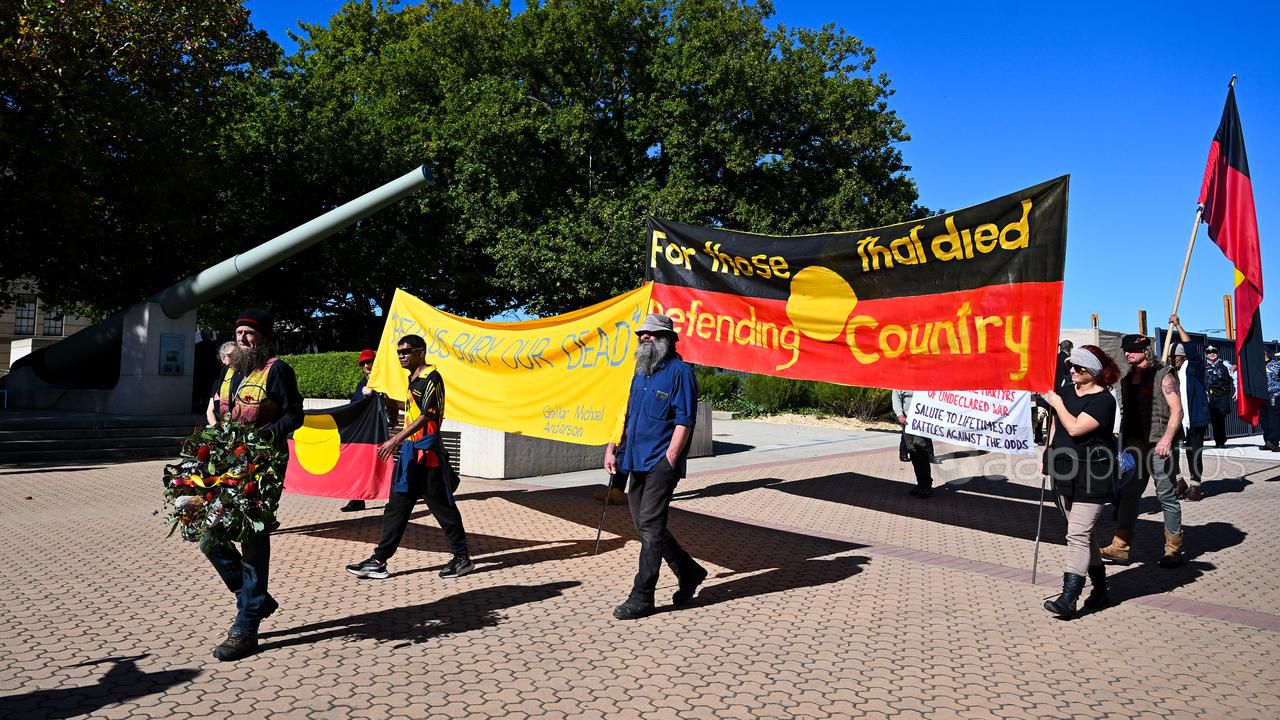
This year’s Remembrance Day rally will focus on Indigenous resistance during the Frontier Wars. (Lukas Coch/AAP PHOTOS)
This year’s edition of the event will highlight to Australians that Aboriginal people “didn’t just roll over and walk away, they defended their Country”.
The now-74-year-old activist says his grandmother told him her grandmother survived a massacre at Hospital Creek, near Brewarrina, NSW, in 1870.
A Newcastle University massacre register records 200 men, women and children were shot and killed after a station manager formed a posse to attack an Aboriginal camp, alleging cattle had been speared.
“The bodies were never buried,” Mr Anderson says.
“We found human bones about 25 years ago broken up with cattle and sheep tramping over them.”
In Western Australia, so called punitive expeditions to quell Aboriginal resistance led by police would spend weeks on horseback shooting on sight.
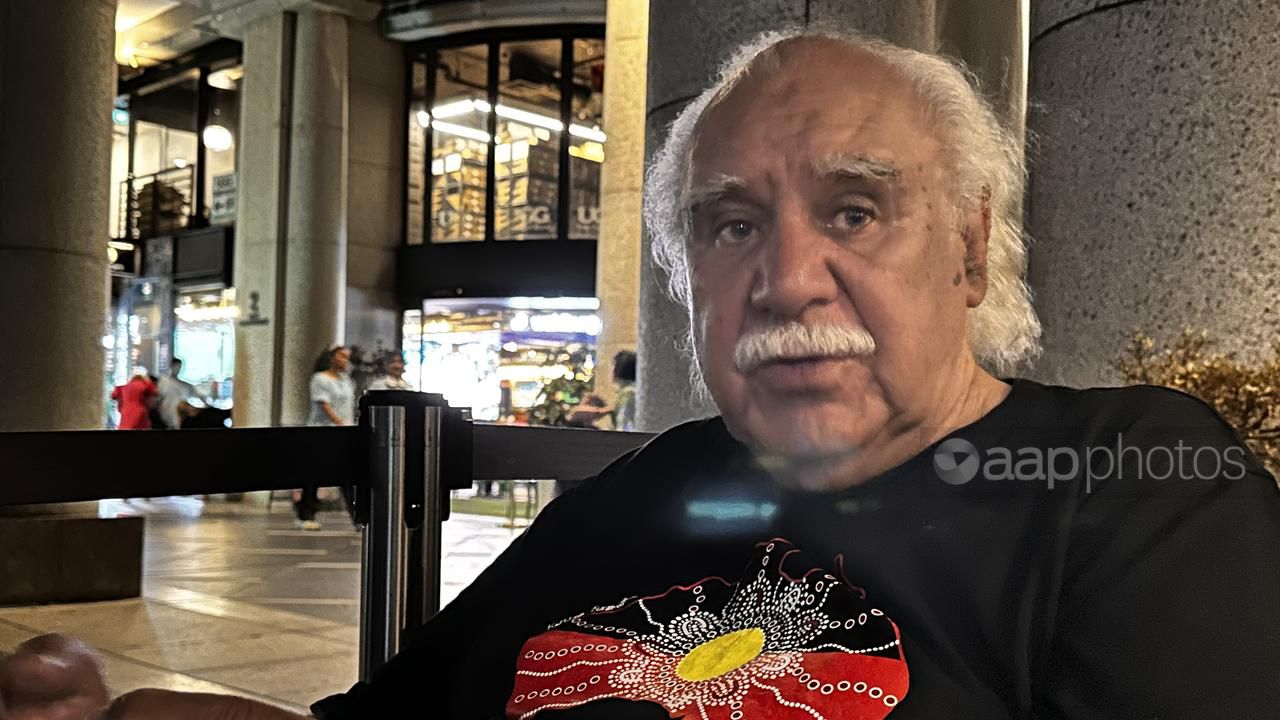
Michael Anderson launched the annual Anzac Day Remembrance March 16 years ago.
Those who did not meet their end during “the killing times” were rounded up and put in chains.
“The neck chains are still there and the skeletons are still at the bottom of the cliffs,” Mr Anderson says.
A long-running research project led by Newcastle University professor Lyndall Ryan found more than 10,000 First Nations Australians were killed in colonial frontier massacres between 1788 and 1930.
In contrast, less than 170 non-Indigenous colonists in total were killed at 13 of almost 440 separate massacre sites during the same period.
The research found about half the killings were carried out by police and other government agents, and half perpetrated by settlers, often with tacit state approval.
The frontier wars were about people dying on their land in defence of their own Country, Mr Anderson says.
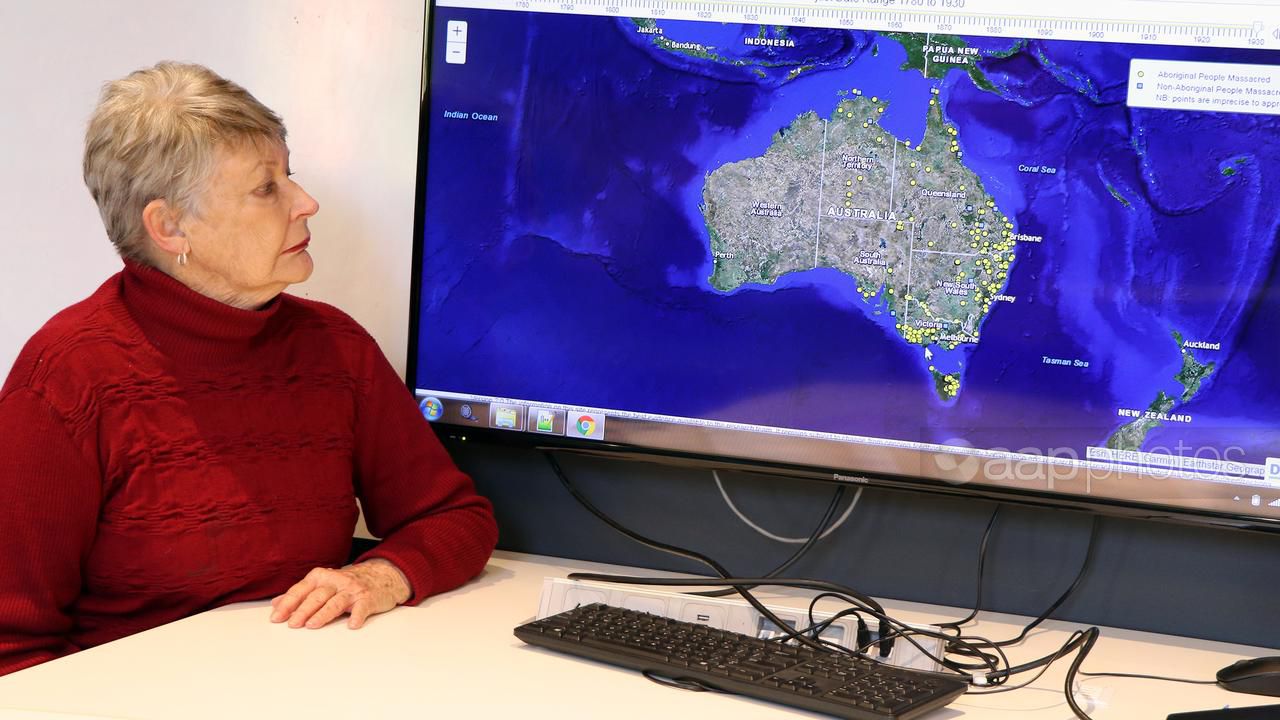
Professor Lyndall Ryan and her colleagues documented more than 10,000 frontier wars deaths.
“Land tenure changed after all that, as if the Aborigines never existed.”
Mr Anderson would like to see the frontier wars featured at the Australian War Memorial but says it only recognises wars in which people wore uniforms.
“Unfortunately my people’s uniform was nakedness.”
Violent conflict
However the Australian War Memorial Act 1980 contains a broad definition of the institution’s role as “a national memorial to Australians who have died as a result of any war and warlike operations.”
Kim Beazley, the memorial council’s chair, has previously noted that it is “enormously important” the renovation of the memorial provides significant coverage of violent conflict between settlers and Indigenous Australians.
“We must give the Aboriginal population the dignity of resistance,” he said.
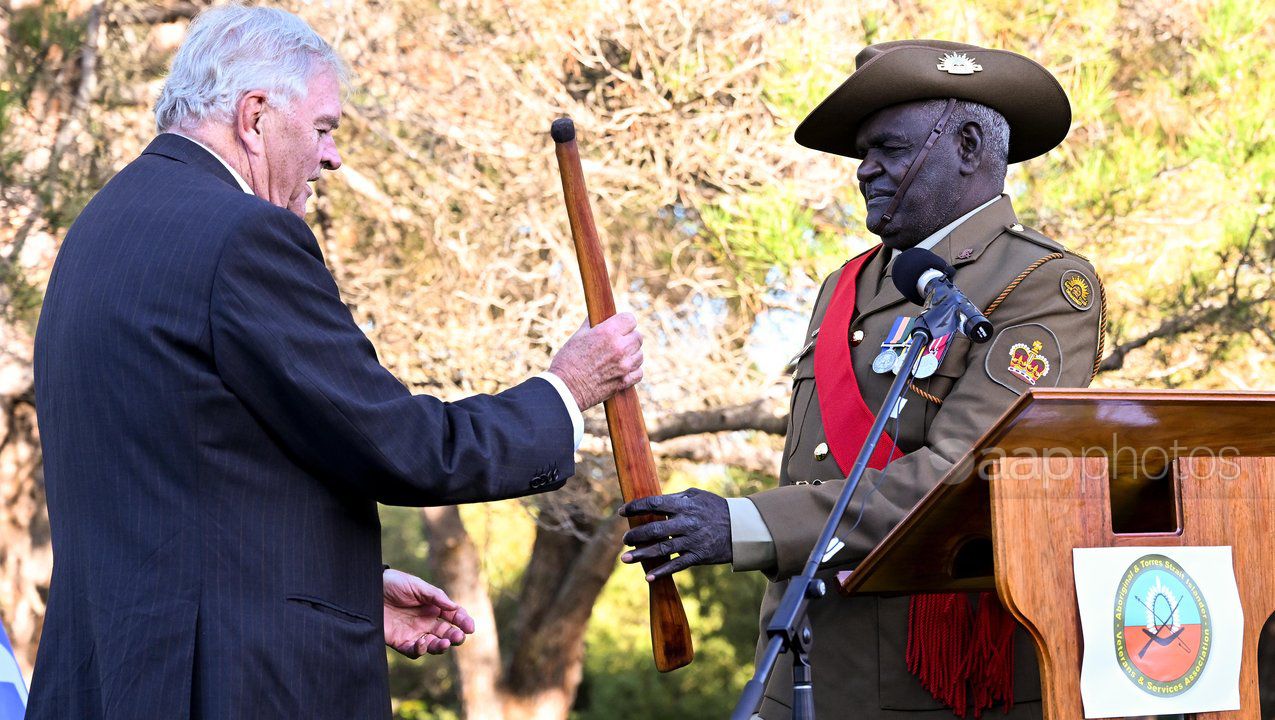
Kim Beazley has acknowledged the significance of recognising the frontier wars. (Lukas Coch/AAP PHOTOS)
The revitalisation of the War Memorial’s main building, scheduled for completion in 2028, will feature a series of new galleries including one devoted to pre-1914 conflicts.
Exhibits illustrating First Nations resistance to colonial forces from 1788 will be displayed along with those on the New Zealand Wars, Sudan, the Boer War and Boxer Rebellion.
Given Australia’s many Indigenous nations, though, Mr Anderson fears it would be a difficult and lengthy task to achieve consensus.
“I think every nation in this country has been impacted by massacres or killings as the government rounded them up and moved them off their land,” he says.
“So every one of those groups will have a right to have a say in this.”
aap