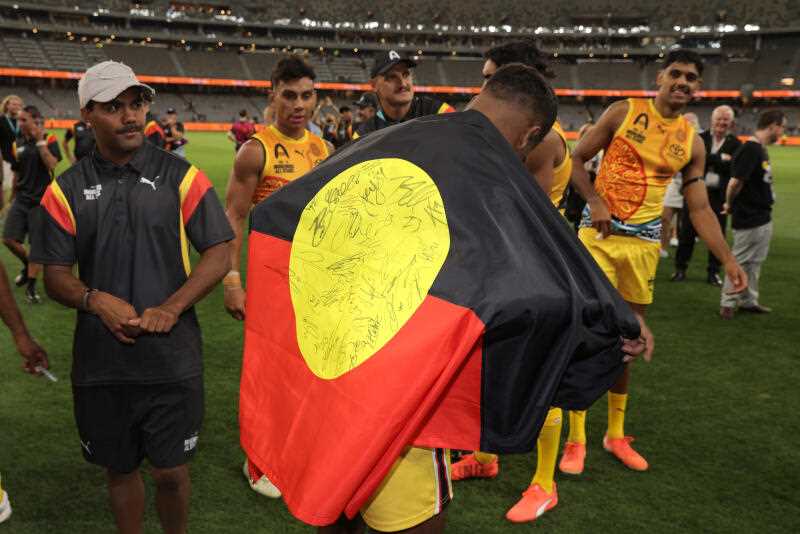
AFL redirects guernsey funds to tackle racism, retention
The AFL will channel around $300,000 from Indigenous guernsey sales into a new First Nations impact fund as it confronts a steady decline in Indigenous player numbers and seeks to address racism and culturally unsafe environments across the league.
Under a five-year strategy drafted last year, the AFL has launched a First Nations impact fund that is expected to receive around $300,000 this season. The league will divert proceeds from sales to resource initiatives intended to create culturally safe environments and address racism, amid concerns about retention and player welfare.
Key Points
- League will divert around $300,000 from Indigenous guernsey sales
- First Nations impact fund expects around $300,000 this season
- Indigenous AFL players dropped from 87 in 2020 to 62 now
- AFL aims to increase Indigenous players to 89 by 2030
- Typical Indigenous career about one year shorter than others
- Nine Indigenous men drafted last year, 11 delisted, Dillon said
- Clubs can pitch projects to create culturally safe environments
Funding to address racism and safety
Clubs will be able to access the fund by pitching initiatives that support the AFL’s First Nations strategy. The league has stated that supported projects should focus on the conditions that enable First Nations players to thrive, with an emphasis on confronting racism and building culturally safe spaces in and around teams.
- Creating culturally safe environments for First Nations players and staff
- Calling out and addressing racism within clubs and the wider competition
- Supporting initiatives aligned with the AFL’s broader First Nations strategy
League leadership has also established structures to deepen this work. A subcommittee has been formed to consider ways to grow Indigenous representation, while a working group is examining the possibility of dedicated First Nations list spots. Senior officials have cautioned that there are no uniform solutions and that retention depends on the everyday culture players experience once they join club lists.
Player numbers and retention pressures
The number of Indigenous players on AFL lists has fallen each year since a peak of 87 in 2020, declining to 62 at present. The league has set a target to lift the figure to 89 by 2030, but acknowledges that increasing recruitment alone will not reverse the trend.
AFL chief executive Andrew Dillon said First Nations teenagers are being drafted at a higher rate than their share of the league suggests, yet departures from lists are outpacing arrivals. He contrasted last season’s intake and exits in the men’s competition to illustrate the challenge, noting that the raw numbers skewed negative despite a comparatively strong draft presence.
Dillon added that at the same time, 11 Indigenous players were delisted, contributing to the overall decline. According to the league, the typical career for an Indigenous player is approximately one year shorter than that of a non-Indigenous player. That pattern extends even to proven performers, with the trend evident in the career arc of Willie Rioli, who retired last year at age 30.
Dillon said the task is twofold: identifying talent and ensuring players can stay on lists long enough to fulfil their potential. He emphasised that the focus must stretch beyond pathways into clubs to the conditions that support longevity, including culturally safe environments and effective responses to racism.