NT child protection law overhaul ‘devastating and neglectful’
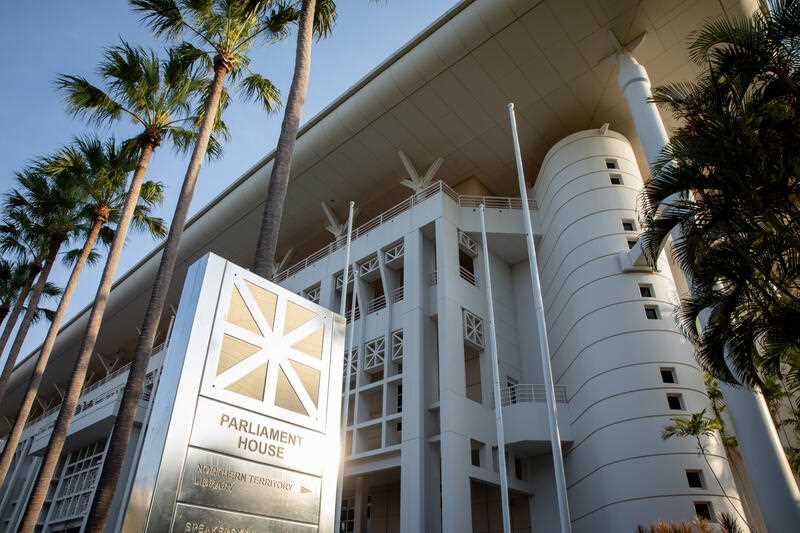
The Northern Territory parliament has passed a sweeping and highly controversial overhaul of its child protection laws, known as the Care and Protection of Children Legislation Amendment (Every Child Matters) Bill 2026, sparking criticism from domestic and national bodies.
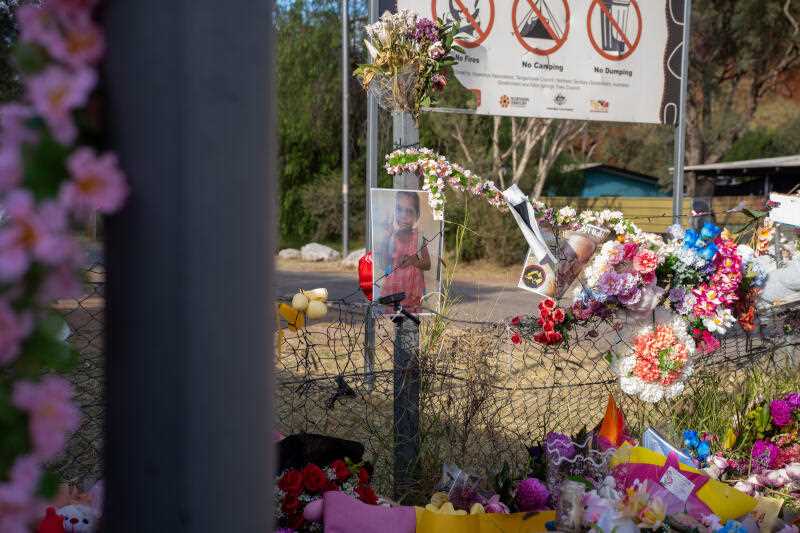
TheTerritory government rushed the laws through late yesterday, describing them as the most significant child protection changes in a generation. The reforms were drafted in the wake of the tragic death of five-year-old Kumanjayi Little Baby in Alice Springs, aiming to place a child’s safety above all other considerations.
But Leaders from peak bodies like SNAICC and the North Australia Aboriginal Justice Agency (NAAJA) have warned the changes will dilute cultural rights, reduce family reunification, and risk repeating policies that caused the Stolen Generations.
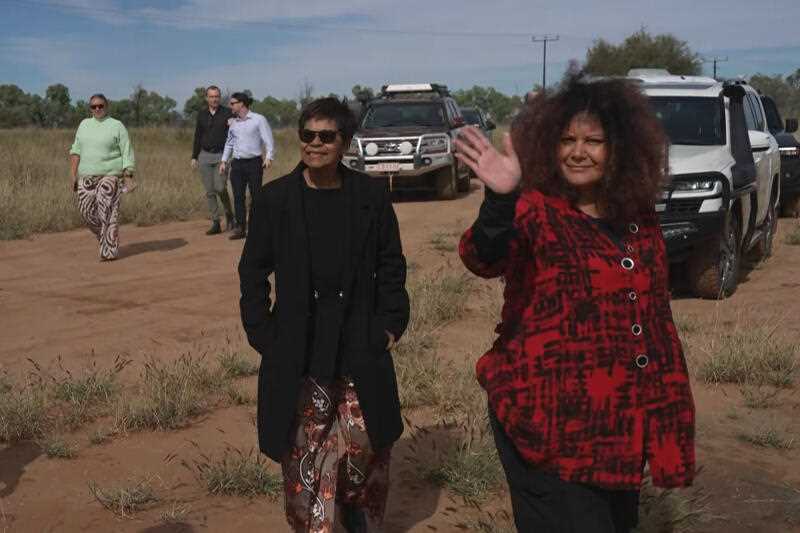
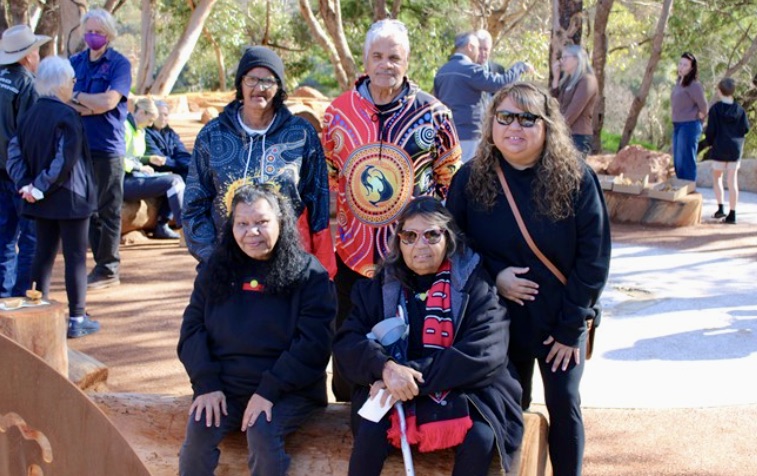
Minister for Indigenous Australians Malarndirri McCarthy and Special Envoy for Remote Communities Marion Scrymgour.
And Minister for Indigenous Australians Malarndirri McCarthy and Special Envoy for Remote Communities Marion Scrymgour have criticised the lack of proper consultation, with independent Senator Lidia Thorpe calling on the Commonwealth to intervene.
In a joint statement posted on social media Senator McCarthy and Ms Scrymgour said the overall of the system in the Territory occurred “without proper consultation and against the advice go child protection experts and front line workers.”
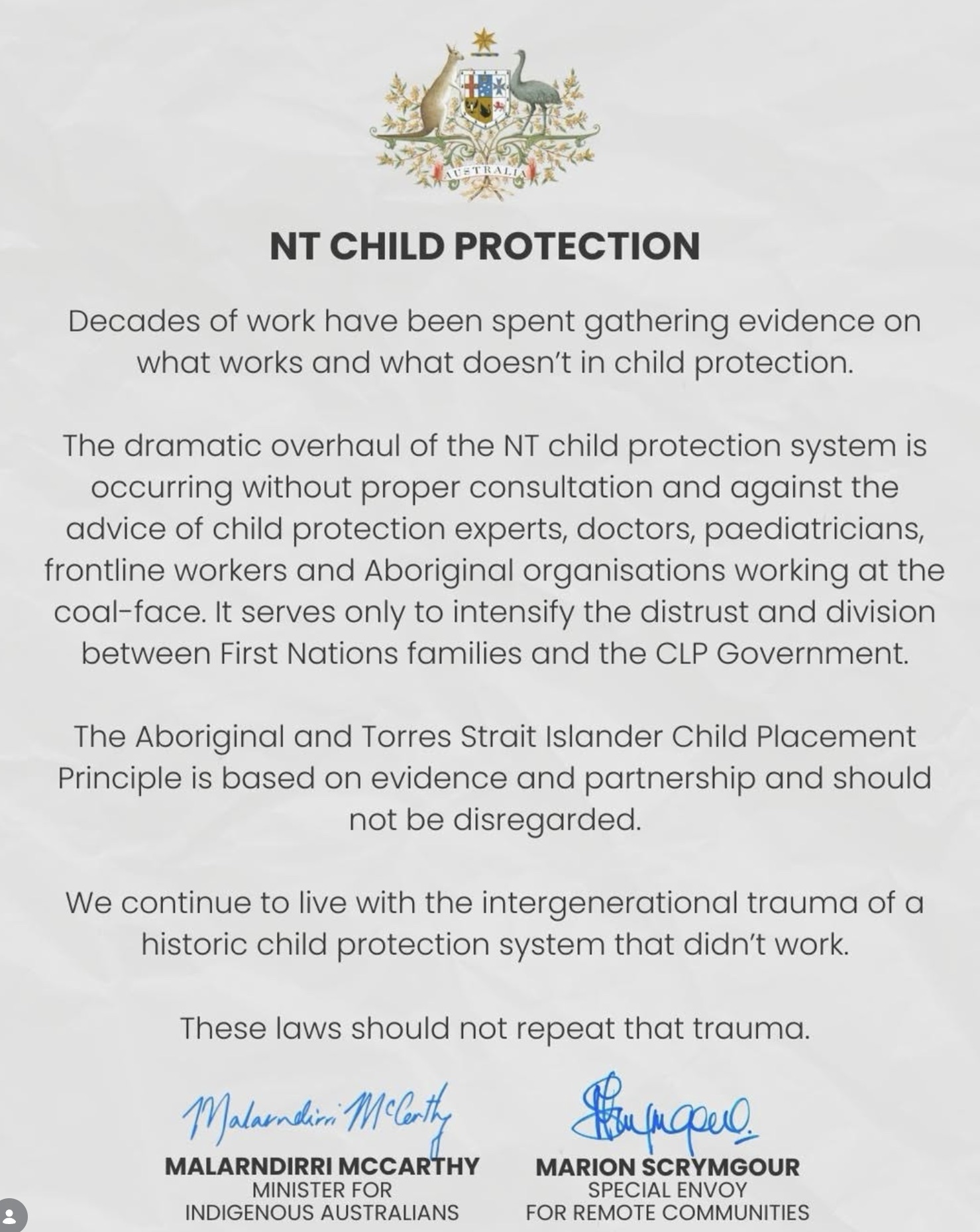
“It serves only to intensify the distrust and division between First Nations families and the (Territory) government,” they said.
“The Aboriginal and Torres Strait islander Child Placement Principle is based on evidence and partnership and should not be disregarded.”
The National Commissioner for Aboriginal and Torres Strait Islander Children and Young
People, Sue-Anne Hunter, said the decision was “devastating”.
“This decision is one Aboriginal families and communities across the Northern Territory will carry for generations,” Ms Hunter said.
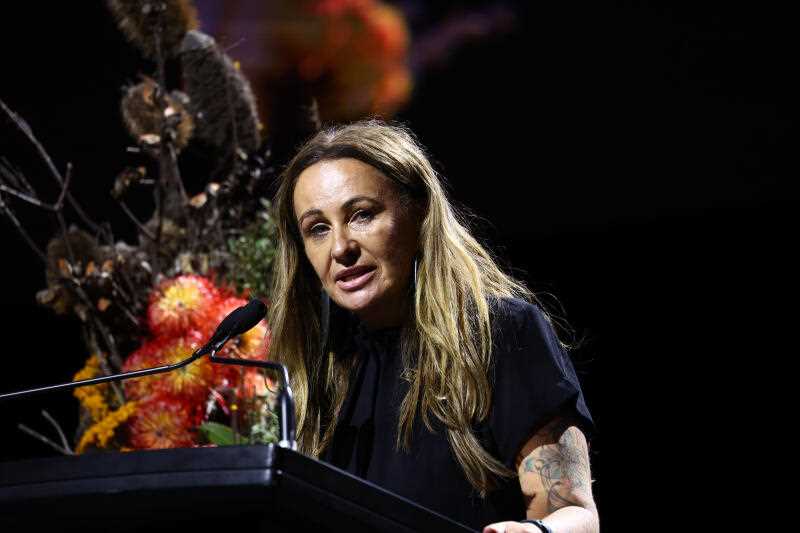
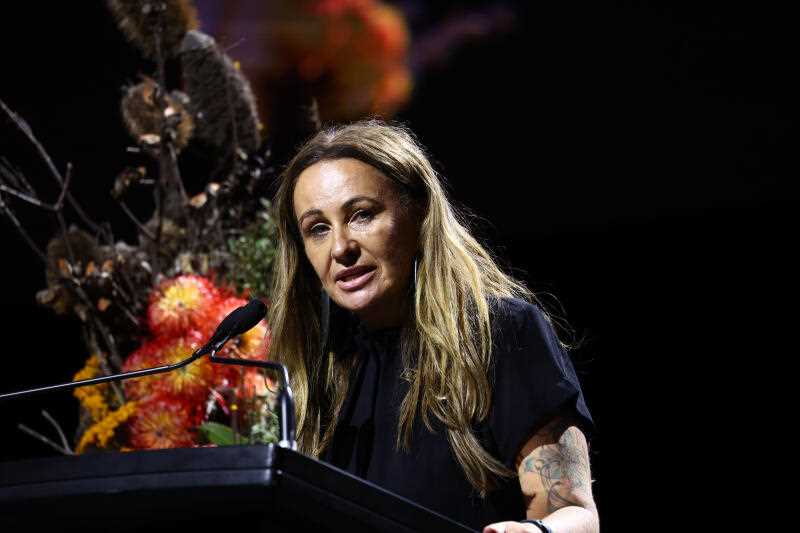
National Commissioner for Aboriginal and Torres Strait Islander Children and Young People, Sue-Anne Hunter.
“The Northern Territory Government has blatantly ignored the 120 submissions made from Aboriginal and Torres Strait Islander peak bodies, legal services, health services and human rights organisations.
“They have ignored the continued calls from Aboriginal Community Controlled Organisations and child protection experts. They have ignored the Child Protection Ministers from across the country.”
Ms Hunter said the decision was not ignorance, but “neglect.”
“More importantly, they have ignored their own independent review, which reconfirmed what we have all been saying. The Northern Territory Government is experiencing operational failures. The failures are in the practice and do not require legislative reform.
“This decision will be one our children will suffer from and carry the consequences of for generations. This knee-jerk reaction is not something to celebrate. It is something to mourn.
The Territory government has maintained the previous framework had failed to keep children safe and acted too late, arguing these changes are vital to protect vulnerable children immediately.
Key changes to the law
Universal principle:
Introduces a overarching legal principle making child safety the paramount consideration for all decision-makers, regardless of the child’s cultural background.
Placement principle modification:
Weakens the legal enforceability of the nationally endorsed Aboriginal and Torres Strait Islander Child Placement Principle (ATSICPP). The principle, which ensures Indigenous children remain connected to family, kin, and culture, will now only apply “as far as practicable”.
Protection order caps:
Imposes a strict two-year limit on short-term protection orders. Once this period lapses, the government is no longer legally mandated to make “proactive efforts” to reunify a child with their birth family, shifting focus heavily toward permanent alternative placements.
Oversight changes:
Abolishes the independent child death review function, making the Northern Territory the only Australian jurisdiction without a dedicated independent body inspecting child fatalities under State care.