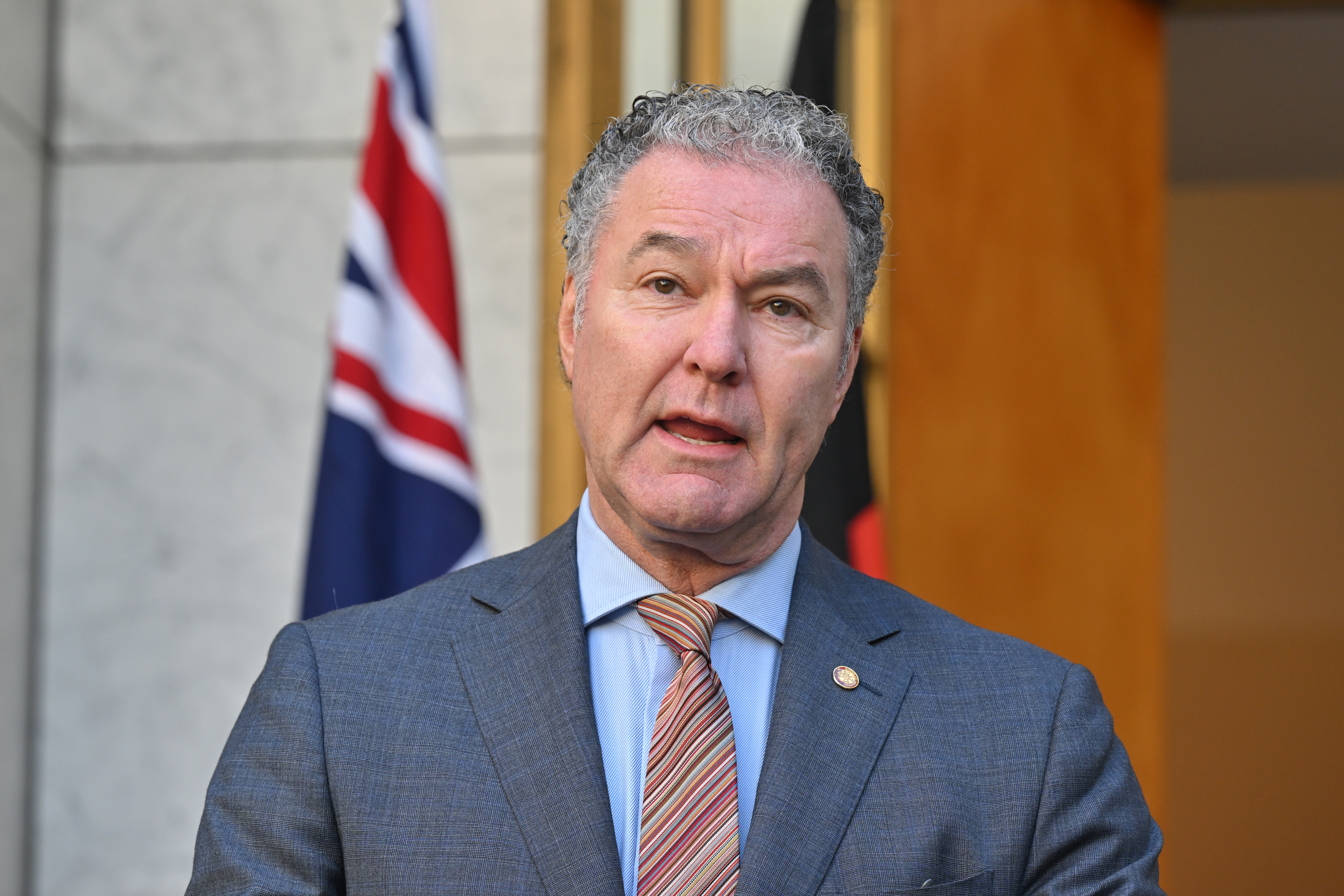
Qld minister tight-lipped about Indigenous sackings
Queensland Arts Minister John‑Paul Langbroek has declined to explain why eight Indigenous leaders were removed from the boards of major State cultural institutions, as allegations mount of a coordinated effort inside government to oust Aboriginal and Torres Strait Islander directors.
Mr Langbroek’s office said the board changes were decisions of cabinet and therefore confidential.
The office also noted that the cultural institutions maintain Indigenous advisory panels and staff. There is no suggestion of wrongdoing by any individual director who was removed.
Key Points
- Eight Indigenous directors removed from four Queensland cultural boards
- Minister’s office cites cabinet confidentiality, offers no reasons
- Allegations raised of coordinated ‘Project Invisibility’ campaign
- Four directors dismissed mid‑term without stated cause
- QAGOMA left with no First Nations trustees after sackings
- State Library board reshaped after fellowship rescission controversy
- Premier rejects claims, highlights investment in Indigenous communities
Cabinet secrecy and leadership changes
The removals come after claims from leading Indigenous barrister Joshua Creamer of a sustained government campaign, referred to in political circles as “Project Invisibility,” to remove First Nations leaders from public boards and senior roles.
Under Mr Langbroek’s direction, eight Indigenous directors have departed from the Queensland Performing Arts Centre (QPAC), the State Library of Queensland, the Queensland Museum, and the Queensland Art Gallery and Gallery of Modern Art (QAGOMA), with two replacements. Four were dismissed mid‑term without stated reason.
The minister’s office did not confirm which Indigenous directors were terminated, when the decisions were made, or the rationale for each change. Critics have characterised the pattern as a withdrawal of prominent Aboriginal and Torres Strait Islander voices from key cultural governance positions, a claim the government disputes.
Institutions and individuals affected
QAGOMA’s Board of Trustees lost both of its Indigenous members earlier this year, leaving the board with no First Nations trustees.
Among those removed was prominent Indigenous artist Dr Bianca Beetson, who was dismissed more than a year before her term was due to expire. Dr Beetson is executive director, First Nations, at the Queensland Museum and chair of the Cairns Indigenous Art Fair. She was appointed a Member of the Order of Australia in this month’s King’s Birthday Honours for significant service to Indigenous art as an educator, curator and artist.
Also removed was David Williams, a Wakka Wakka man who had been due to serve until November. Williams is co‑founder and executive director of Gilimbaa creative agency, former chair of the Queensland Museum Network’s Aboriginal and Torres Strait Islander Consultative Committee and an adviser to Opera Australia. He now chairs QAGOMA’s First Nations Advisory Panel, which reports to the QAGOMA board.
At the State Library of Queensland, Aunty Cheryl Buchanan, a Guwamu woman and senior Aboriginal leader, was dismissed in late February along with an Indigenous academic leading language revival work. She said she was given 24 hours’ notice via a departmental phone call. A founder of the Aboriginal Legal, Medical Services and Childcare Centre in Brisbane, Aunty Buchanan was involved in the Queensland treaty process and later served on the Truth‑telling and Healing Inquiry before being sacked when the Crisafulli government abolished the inquiry in one of its first acts in office.
Gooreng Gooreng descendant Robert McLellan, a senior project manager at the University of Queensland’s School of Languages and Cultures and an advocate for truth‑telling, no longer serves on the State Library board. It appears his role ended about 15 months before his term was due to conclude.
No Indigenous trustees on the QPAC board
The minister’s office would not confirm details of the termination. They were replaced by junior lawyer Amanda Martin, a recipient of a Queensland Aboriginal and Torres Strait Islander Foundation educational scholarship. Social media images show Martin with Health Minister Tim Nicholls and Mr Langbroek and attending a 2025 budget briefing by Treasurer David Janetzki.
The State Library board underwent a broader refresh in March after controversy over Mr Langbroek’s decision to rescind a $15,000 fellowship awarded to Indigenous writer KA Ren Wyld over social media comments about the Gaza conflict last year. The library’s legislated guiding principles affirm respect for Aboriginal and Torres Strait Islander cultures.
There are currently no Indigenous trustees on the QPAC board after Luritja woman Georgina Richters left at the conclusion of her term in November 2025. Last year, Mr Langbroek overruled a proposal from the QPAC board and its Indigenous advisory group to name the centre’s newest venue after acclaimed Quandamooka poet and activist Oodgeroo Noonuccal. The government instead named the 1,500‑seat venue the Glasshouse Theatre.
The Queensland Museum board, which until recently had three Indigenous representatives, now has a single Aboriginal director appointed by the LNP government. It is understood the board’s Aboriginal and Torres Strait Islander sub‑committee requires a chair who is a board member and an Aboriginal or Torres Strait Islander person. The sole First Nations director is Lorraine Hatton, a Quandamooka woman who serves as Indigenous Elder of the Australian Army and is a council member of the Australian War Memorial.
University of Queensland senior Indigenous academic Jackie Huggins said reliance on a single Indigenous director at the museum is particularly sensitive, given the institution’s funded role in repatriating hundreds of Indigenous ancestors and sacred objects from overseas and returning them to their communities of origin.
Government response
At a press conference this week, Queensland Premier David Crisafulli rejected Mr Creamer’s “Project Invisibility” claims, arguing that the government is focused on practical outcomes and investments for Indigenous communities, including those in rural and remote regions.
“We’re driven to do great things for Indigenous people, particularly those indigenous people living in rural and remote communities who haven’t had the opportunity that other Australians have,” the Premier said.
Mr Langbroek’s office reiterated that board appointments and removals are a matter of ensuring the balance of skills and experience, and that cabinet confidentiality applies. The office also said the cultural centres continue to draw on advice from Indigenous advisory panels and employ Indigenous staff.
- ACT
- AFL / AFLW
- Arts
- Athletics and Olympics
- Business
- Conditions and Research
- Culture
- Elections
- Employment and Careers
- Enterprise and Startups
- Entertainment
- Events and NAIDOC
- Fashion
- Film and TV
- Food
- Government and Policy
- Grants and Funding
- Health
- Healthcare and Services
- Heritage and History
- International
- Language
- Legal and Justice
- Lifestyle
- Mental Health and Wellbeing
- Music
- National
- News
- NRL and Rugby League
- NSW
- NT
- Olympics
- Opinion
- Other Sports
- People and Profiles
- Podcast
- Politics
- Property and Land
- QLD
- SA
- Sports
- TAS
- Technology
- Travel
- Treaty and Truth-telling
- VIC
- Voice and Referendum
- WA