Push for Indigenous data sovereignty at summit
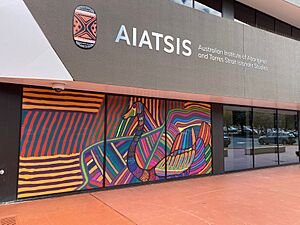
Leaders from the Kimberley Aboriginal Law and Culture Centre (KALACC) are advancing Indigenous Data Sovereignty at the Australian Institute of Aboriginal and Torres Strait Islander Studies (AIATSIS) Summit on the Gold Coast, a five-day gathering centred on self-determination in a rapidly digitising world.
The summit’s theme, Our Truth. Our Power. Our Future, has held discussions on governance of information relating to First Nations peoples.
Key Points
- KALACC leaders advanced Indigenous Data Sovereignty at the AIATSIS Summit
- Five-day Gold Coast summit focused on sustaining data rights and self-determination
- AIATSIS emphasised ethical guidelines prioritising Indigenous authority and cultural safety
- KALACC cited preservation of 60 First Nations language groups as urgent priority
- Leonard Hill stressed community governance amid rapid digital and AI growth
- Richard Rose highlighted language custodianship as identity and community responsibility
- James Brown underscored continuity to strengthen stories for future generations
The AIATSIS conference has asserted that Aboriginal and Torres Strait Islander peoples must control information collected about their communities, Country, cultures, and lives. The principle is grounded in self-determination and requires Indigenous leadership, consent, and clear community benefit before data is gathered or used.
AIATSIS has stated it supports this approach through ethical research guidelines that prioritise Indigenous rights, cultural safety, and community authority. With artificial intelligence driving rapid growth in data creation and use, AIATSIS underscored the need for governance led by the communities from which this information originates.
“As digital technologies advance, so does the volume and value of data about First Nations peoples, cultures, and languages. Indigenous Data Sovereignty ensures that this information is governed by the communities it comes from, no matter where it is held,” Leonard Hill, AIATSIS chief executive said.
Summit discussions reiterated that data governance is inseparable from cultural authority. By placing First Nations decision-making at the centre, Indigenous Data Sovereignty enables communities to determine what information is collected, how it is interpreted, and whether it should be shared.
KALACC underscores language preservation
KALACC leaders highlighted language as a core driver of the push for Indigenous Data Sovereignty. The organisation’s work to preserve 60 different First Nations language groups was cited as a clear example of why communities must steward their own records and knowledge.
Nyikina man and KALACC board member, Richard Rose, said the effort to record and care for languages demands Indigenous control across the data lifecycle. He told National Indigenous Times that language is identity and that custodianship must remain with communities.
“One of the key issues for me is data and data sovereignty — making sure our recorded languages are kept, preserved, and managed by us, because language is our identity. It’s our passport. Our passport is on our tongue,” Mr Rose said.
Walmajarri and Wangkajungka man, and KALACC cultural advisor, James Brown, underscored the importance of continuity. He said sustaining cultural practices and knowledge is vital so that future generations inherit stronger stories and a clear path forward.
For KALACC, maintaining authority over language records is integral to cultural survival. The organisation’s position aligns with the summit’s focus on ensuring that any collection or use of data proceeds only with Indigenous leadership, explicit consent, and demonstrable benefit to the communities involved.
Ethical governance in the digital era
Speakers at the summit emphasised that the accelerating digitisation of cultural materials, research archives, and community records raises the stakes for ethical governance. AIATSIS described Indigenous Data Sovereignty as a safeguard that centres community authority regardless of where data is stored or processed.
At its core, Indigenous Data Sovereignty is about self-determination. It affirms that communities should choose what is collected, shape its interpretation, and decide if, when, and how it is shared. The approach is designed to protect culture while enabling responsible uses that communities identify as beneficial.
The principle covers information relating to First Nations peoples and their knowledge systems, including:
- Data about communities and their social, cultural, and linguistic life
- Records connected to Country and associated custodial responsibilities
- Cultural materials, practices, and languages requiring respectful handling
- Personal and collective information that reflects lived experiences
AIATSIS also highlighted the practical standards needed to uphold these rights. Ethical research guidelines should prioritise:
- Indigenous leadership over research direction and data governance
- Free, prior, and informed consent for collection and use
- Cultural safety across all stages of data management
- Clear, measurable benefits that flow back to communities
- Community authority over interpretation and sharing decisions
With artificial intelligence advancing quickly, leaders at the summit stressed that data related to First Nations peoples must not be detached from the communities it describes. The call from KALACC and AIATSIS is for sustained structures that protect culture, uphold consent, and ensure that modern technologies operate within frameworks defined by Indigenous custodians.