Peak body condemns ministers’ absence at NT housing talks
Aboriginal Housing NT has criticised the failure of Territory and Federal ministers to attend Darwin’s homelands conference as communities confront overcrowding, ageing infrastructure, and flood damage across the region.
The conference’s organisers and attendees say uncertainty over homelands funding and slow progress on new builds are compounding pressures.
Key Points
- Territory and Federal ministers missed Darwin’s Aboriginal Housing and Homelands Conference
- Aboriginal Housing NT called the no-show “disgraceful” amid a housing crisis
- Funding for Northern Territory homelands only secured for 12 months
- Residents report overcrowding and repeated wet-season floods in Katherine camp
- $4b federal–NT deal aims for 270 houses a year over a decade
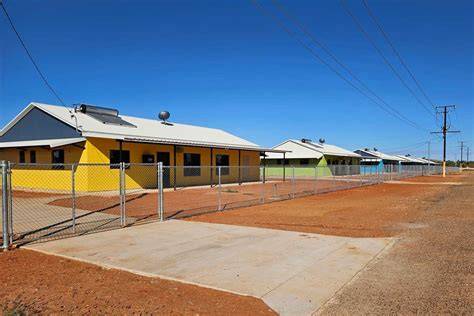
- Just under 300 houses built two years in; floods disrupt targets
- NT Housing chief heard calls for more homelands investment
Ministers skip housing conference
Territory and Federal ministers did not appear at the Aboriginal Housing and Homelands Conference, the biennial forum that brings together remote residents and Aboriginal organisations to focus on solutions to overcrowding, sub-standard housing and maintenance across the Northern Territory.
Aboriginal Housing NT chief executive Leeanne Caton said all responsible ministers declined invitations to attend this year. She argued the absence reflected a broader lack of priority on housing in the Northern Territory at a time when need is acute.
“I just think it’s disgraceful and it really demonstrates the level of commitment and how housing is not seen as a priority in the Northern Territory,[…]It’s in crisis,” she said.
The event followed weeks of heightened national scrutiny of housing conditions in Aboriginal town camps and a landmark legal case alleging the NT government has failed to provide climate-safe public housing. Organisers said the forum was designed to surface practical solutions led by residents and local organisations, and to engage decision-makers on how to resource and implement those solutions across the Territory.
Homelands uncertainty and flooding impacts
Ms Caton said homelands face an uncertain future because of short-term funding agreements. Homelands, also known as outstations, are remote areas — often with small populations — where residents have traditional ties to the land. According to Ms Caton, the NT Government has only committed funding for the next 12 months, raising concerns about continuity of basic services and maintenance in these locations.
She said the short horizon leaves residents and service providers without the stability needed to plan for essential upkeep and improvements. Ms Caton pointed to the scale of potential disruption if support lapses: she asked where approximately 10,000 people would go should funding cease after the 12-month mark.
She also described ageing housing stock and infrastructure that frequently fail to meet basic service provision. Many residents, she said, want to return to their homelands — their traditional country — and move away from communities and urban environments where there is anti-social behaviour.

Victorian Senator Lidia Thorpe appeared as a replacement keynote speaker.
Victorian Senator Lidia Thorpe appeared as a replacement keynote speaker. She urged governments to resource solutions identified by those most affected and called for long-term, real funding rather than short-term measures. In her address, she said she would continue to show up and press for commitments that match the scale of the housing challenges.
The NT Housing Department’s chief executive, Tom Leeming, attended the conference and gave a presentation. He acknowledged the calls for greater investment in homelands and signalled an openness to receiving direct feedback from tenants and service organisations.
“We hear loud and clear the voices of homelands residents asking for more investment,” he said.
He told attendees he recognised the department’s processes can sometimes frustrate organisations, tenants and the broader sector, and he encouraged feedback, questions and complaints. Participants said that maintaining dialogue with agencies will be critical as flood recovery needs intensify and as the build program seeks to regain momentum.