Aboriginal Land Councils Rally Against Land Rights Bill
Aboriginal Land Councils across New South Wales have mounted a coordinated push against a Crown lands Bill, warning it threatens land rights and long-standing legal principles.
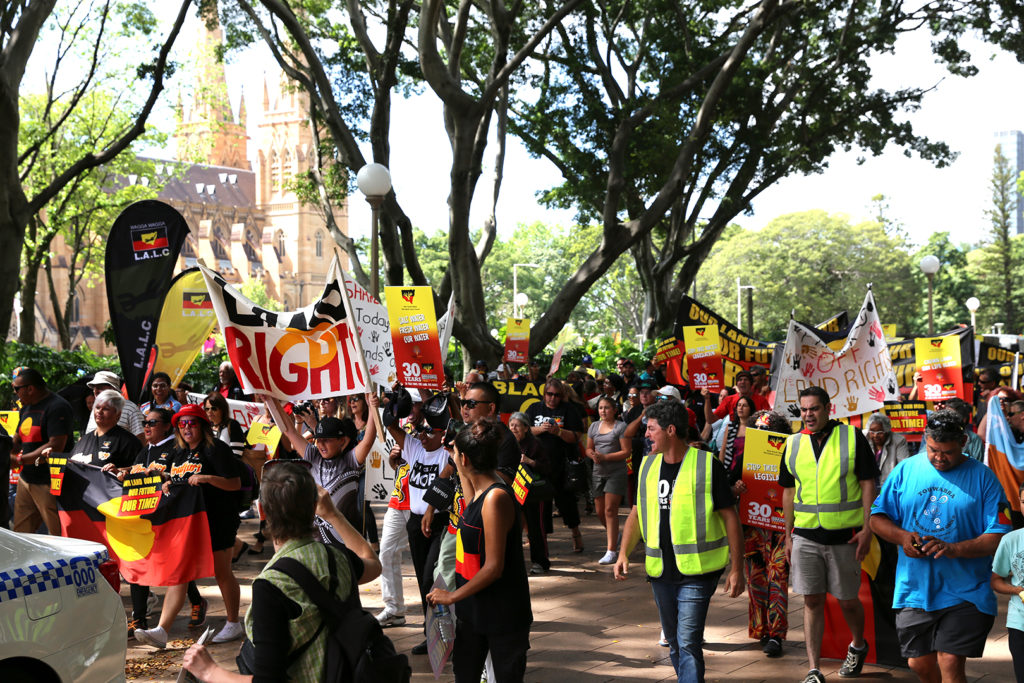
Yesterday, hundreds of protestors marched from Sydney’s Hyde Park to NSW Parliament House to oppose the Bill.
LALCs and their allies sought to underscore the breadth of resistance across the state, pointing to the volume of letters and the high proportion of councils in opposition. The demonstrators emphasised that consultation must occur before any legislative changes that touch Aboriginal land rights.
The State Government has paused the legislation for consultation after widespread opposition, but protestors say they will maintain pressure until meaningful engagement occurs.
Key Points
- More than 92 per cent of NSW Land Councils oppose the Crown lands Bill
- Protesters marched from Hyde Park to NSW Parliament House
- Councils say the Bill risks tens of thousands of land claims
- NSWALC warns of retrospective powers and weakened legal integrity
- Over 100 letters sent to the Premier and ministers opposing the Bill
- NSW Government paused the Bill for consultation after widespread backlash
- Community leaders insist consultation must be genuine, not in bad faith
Bill overview and legal concerns
Worimi LALC chief executive Andrew Smith said the introduction of the Bill shut out First Nations communities from proper consultation. He warned the proposed changes could allow ministerial removal of land from the relevant register, including parcels already subject to claims, and argued that such a power would be unacceptable.
He maintained that LALCs would not accept unchecked authority that could undermine the Aboriginal Land Rights Act.
Local Aboriginal Land Councils (LALCs) and their supporters have condemned the Crown Land Management Amendment (Statutory Review) Bill 2026, introduced in mid-March.
The Bill was initially presented by Minister Steve Kamper as involving minor procedural changes. The New South Wales Aboriginal Land Council (NSWALC) argues the legislation would carry serious implications for Aboriginal Land Rights, including retrospective powers, the undermining of established legal principles, and the weakening of the integrity of the Aboriginal Land Rights Act 1983.
According to LALCs, the legislation could place tens of thousands of land claims at risk. In response, more than 100 letters from more than 92 per cent of the NSWLALC network were sent over the past week to Minister Kamper, the Premier and Minister Harris opposing the bill. Following this backlash, the State Government paused the bill for consultation.
“Let me be clear about one thing. This is not just about land rights. This is about the rule of law,” he said. “You can’t introduce a Bill which makes it lawful and then change it somewhere through the process, deceitfully and under the cover of darkness. If you’ve got to do this, then come have a conversation with us.”
— Dr Raymond Kelly, Chair of NSWLALC
Community representatives contend the process that led to the Bill’s introduction failed to engage Aboriginal stakeholders at the outset. They describe the stakes as legal, cultural and practical, noting potential knock-on effects on housing, economic independence and the strength of communities if the framework underpinning Aboriginal land rights is weakened.
Protesters mobilise at NSW Parliament
Speakers also focused on the long-term impact on self-determination. Illarah Roberts, a member of the NSWLALC Youth Advisory Committee and Jali LALC, said younger generations would bear the consequences of decisions made now.
She described land as identity, culture, connection and opportunity, and said it is foundational for housing, economic independence and strong communities. Roberts added that genuine engagement is critical, saying First Nations people are tired of being told they have been consulted without being properly heard.
“We are here solidifying our unity and showing government that we don’t agree with what they’re doing, we will not be a political pawn,” Ms Hampton said.
She said the rally reflected widespread statewide opposition and was driven by frustration at being excluded from decisions about laws affecting Aboriginal people and land. Protestors vowed to continue pressing their case until proper consultation takes place, with organisers emphasising unity across communities and generations.
Consultation pause and next steps
After receiving more than 100 letters from across the NSWLALC network, the State Government paused the Bill for consultation. Despite this step, concerns remain that the process could be conducted in what Wiradjuri CEO of Just Reinvest, Jeff Scott, described as bad faith. Protestors gathered outside NSW Parliament House to ensure their views are formally acknowledged as part of any consultation.