Progress stalling without remote early years investment
On National Closing the Gap Day The Moriarty Foundation has warned the national failure in early childhood development targets will persist unless the government supports sustained, locally-led models in remote Australia.
While the news of 95 per cent of preschool enrolment is welcome, Moriarty Foundation says it is not even close to a real solution with national data confirming early childhood development is one of four key targets currently going backwards.
The real key to unlocking a future where Aboriginal and Torres Strait Islander children thrive —particularly those in our most remote communities—is getting early years education right. If we don’t succeed in doing that in a child’s first five years, we are permanently playing catch-up.
“The Prime Minister stated he is ‘not contemplating failure,’ yet the national data shows as a nation we are failing our most vulnerable children,” says Ros Moriarty, Co-Founder and Executive Director of Moriarty Foundation.
“While more children may be enrolled in preschool, we need to ask if they are being set up to succeed. Success isn’t just a seat in a classroom; it is the readiness of thechild to learn, which we know only comes through a consistent and culturally safe early years approach.
“It’s vital we invest in tested solutions already working on the ground. Our Indi Kindi program stands as a blueprint for reducing the school readiness gap.”
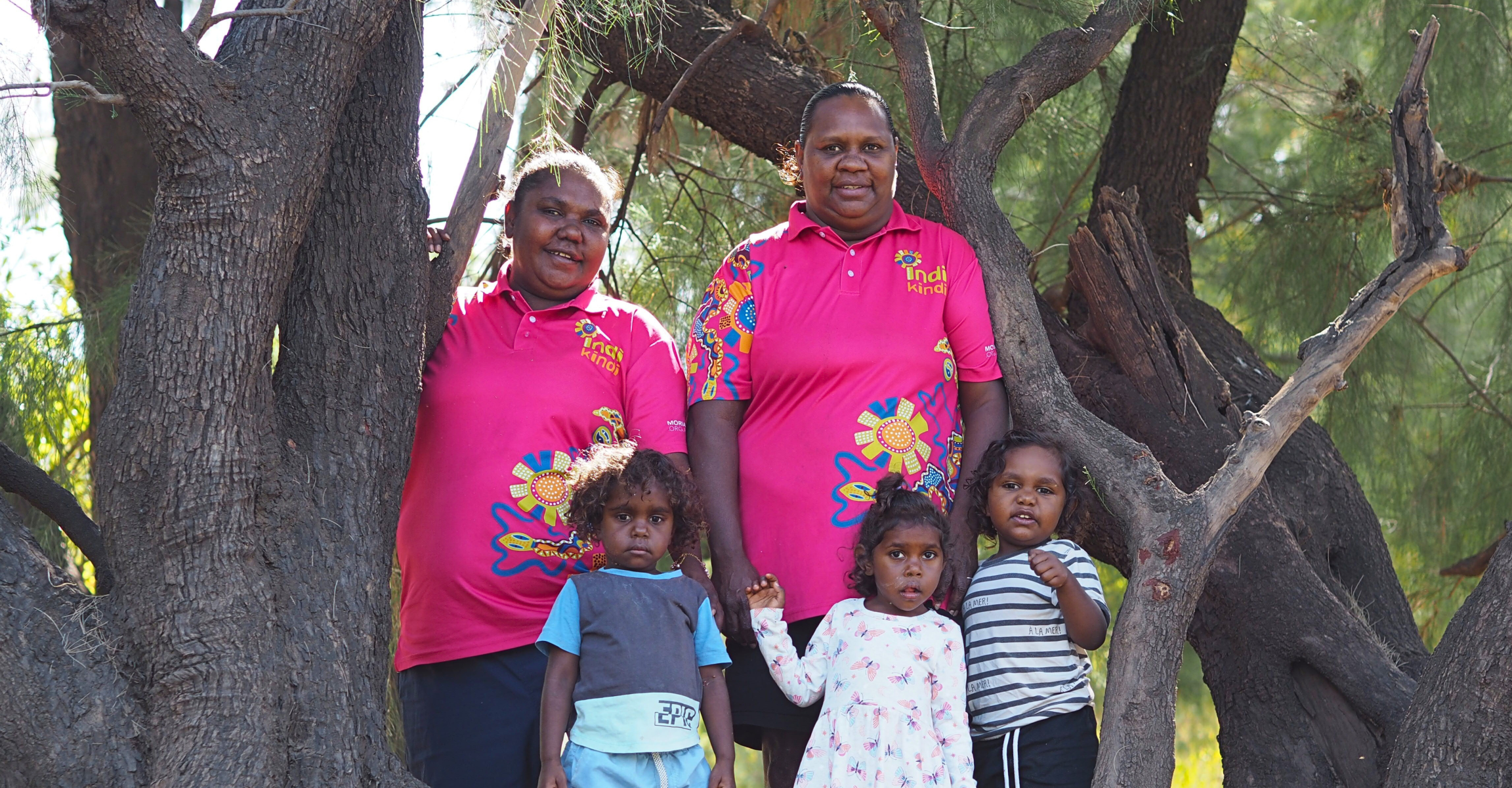
Indi Kindi is an early years service for Aboriginal and Torres Strait Islander children from newborn to age five. It is delivered in co-design with the community and itscurriculum is aligned to the Australian Early Years Learning framework. Local Aboriginal women deliver Indi Kindi on Country, using a traditional Aboriginal teaching methodology.
Since establishing in Borroloola, Northern Territory in 2012, Indi Kindi has improved preschool and developmental outcomes, reducing the proportion of children developmentally behind in their first year of school from 74% to 34% (Deloitte Access Economics, 2024).
About Indi Kindi
Indi Kindi is a ground-breaking, on Country early education program for Aboriginal and Torres Strait Islander children from birth to five years of age that integrates culture, education, health, wellbeing and development to give them the best start in life.
Indi Kindi combines Aboriginal teaching methodology with best-practice, evidence-informed pedagogical approaches, in a unique curriculum called Walking Learning®’. In Walking Learning®, all learning experiences happen outdoors, on Country, in ‘classrooms without walls’.
According to research from Deloitte Access Economics:
- Since Indi Kindi started, the share of vulnerable children in Borroloola fell from 74 per cent in 2012 to 42 per cent in 2021.
- Borroloola has strong preschool participation compared to other similar communities, supported by a deliberate transition approach employed by Indi Kindi.
- Indi Kindi educators have some of the longest tenure and best qualifications in the regions the program is delivered in, with an average tenure rate of 8+ years.
- Indi Kindi promotes a sense of cultural pride, resilience and connectedness among Aboriginal and Torres Strait Islander children and their families.
- Indi Kindi’s healthy practices and connection with local health services are lowering the prevalence of chronic health conditions.