Racism still ‘widespread in Australian workplaces’
Racism and the lack of cultural safety remains widespread across Australian workplaces, a major report, released today, says.
Gari Yala 2 (Speak the Truth) provides one of the most comprehensive and current examinations of Aboriginal and/or Torres Strait Islander people’s workplace experiences, and it states there is still much work to be done.
The report found that almost 60 per cent of Indigenous employees experience racism in Australian workplaces.
This second national survey – the only one of its kind led by mob, for mob – found that 86 per cent of Aboriginal and/or Torres Strait Islander employees stated it was important for them to share their identity at work.
The same amount shared their identity at work – 56 per cent actively talking about their identity at work and 30 per cent not trying to keep it private.
“I felt dehumanised like they only saw me for my Blakness and nothing more.”
– Survey interviewee response
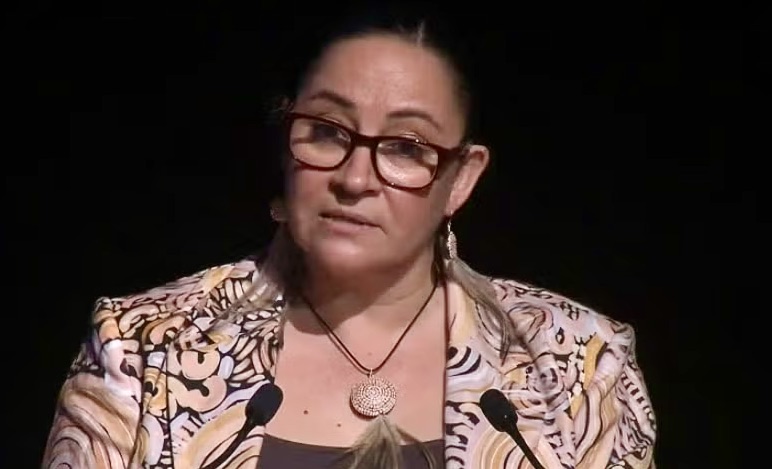
Director of Centre for Indigenous People and Work, Professor Nareen Young, said the results of the research are a wake-up call to employers and all levels of government.
“Although, there has been some progress since our first report in 2020, racism and lack of cultural safety remain widespread,” she said.

Director of Centre for Indigenous People and Work, Professor Nareen Young.
More than 1100 Indigenous employees took part in the survey with many speaking of sharing their identity out of a deep sense of pride, responsibility, and commitment to organisational change.
In all, only 40 per cent of Indigenous employees reported that their workplaces were culturally safe – the majority of respondents reported being either in a culturally unsafe (25 per cent) or only moderately safe workplace (35 per cent).
Lack of safety
While cultural identity is deeply important to many employees, most are not working in environments where they can express, practise, and maintain that identity without fear of ridicule, discrimination, or marginalisation.
This lack of cultural safety, the report says, has direct, detrimental impacts, as Aboriginal and/or Torres Strait
Islander employees in culturally unsafe environments are:
- • 7 times less likely to be satisfied with their jobs,
• 10 times less likely to recommend their employer to other Indigenous people, and
• 3 times more likely to be actively looking for a new employer.
The report found that for the majority of respondents, racism was not an isolated or occasional experience but a recurring feature of their working lives. In all, 58 per cenr experienced some form of racism at an average frequency of very often to sometimes.
Racism manifested in different ways, but some of the more common experiences were:
• Appearance racism (53 per cent received comments about how they look or should look as
an Indigenous person very often, often, or sometimes),
• Inappropriate race-based comments and assumptions (53 per cent reported that non-
Indigenous employees made inappropriate comments or assumptions about
Indigenous peoples very often, often, or sometimes),
• Not being treated seriously (41 per cent reported that they felt ignored or not taken
seriously by their boss very often, often, or sometimes), and
• racial slurs and jokes (40 per cent reported hearing racial or ethnic slurs or jokes about
Aboriginal and/or Torres Strait Islander people at work very often, often, or
sometimes).
Six years after the first report in 2020, the picture is mixed.
There are small gains. More employees feel safe to share their identity (79 per cent versus 72 per cent) and seven of nine forms of racism have eased slightly (by between 0.4 per cent and 1 per cent per year).
But racism remains stubbornly high. One in two (53 per cent) Indigenous employees still experience inappropriate race-based comments and assumptions. Key markers like unfair treatment (38 per cent in both years), high cultural load (63 per cent versus 64 per cent), and anti-racism structures (only 21 per cent of workplaces offering both training and a complaint process in both years) show no progress.
“Since I have been open about my Aboriginality… I have been subject to racial
discrimination, bullying and harassment.”
– Survey interviewee response
The report says at the current rate of change, without further policy or legislative change, it estimates it could take another 118 years for Aboriginal and/or Torres Strait Islander workers to never hear racial slurs and jokes at work.
“The increasing numbers of our mob in work where they had previously been excluded form employment market participation has been a great achievement, but these workplaces need to be made safe. No one should have to suffer vilification and ridicule as part of their conditions of employment,” Prof Young said.
Take action
Samantha Webster, Head of First Nations Affairs at NAB, said NAB Foundation backed the Gari Yala research to improve employment outcomes.
“Gari Yala shows the power of listening to lived experiences, backing it up with strong data to help people feel safe, respected, and able to contribute fully at work,” she said.
“Trust grows when First Nations peoples can see their experiences reflected.
“Indigenous workers are not valued are not supported for high duties or promotion.”
– Survey interviewee response
“The research builds credibility in the system and gives leaders clear evidence to act on, not just good intentions.”
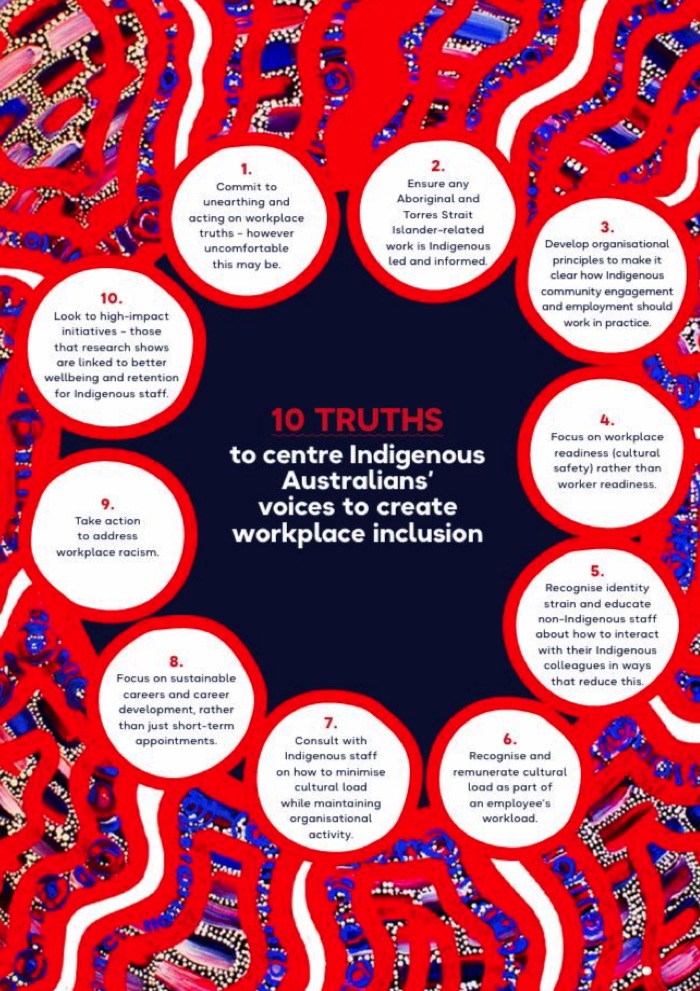
Prof Young urged employers to act on Gari Yala’s findings.
“Gari Yala found that racism is widespread but not inevitable. The research also shows that workplaces with measures like a complaints procedure and appropriate training have lower levels of racism,” she said.
“We urge employers to take heed of the findings and act because we shouldn’t have to wait a century to rid our workplaces of racism.”