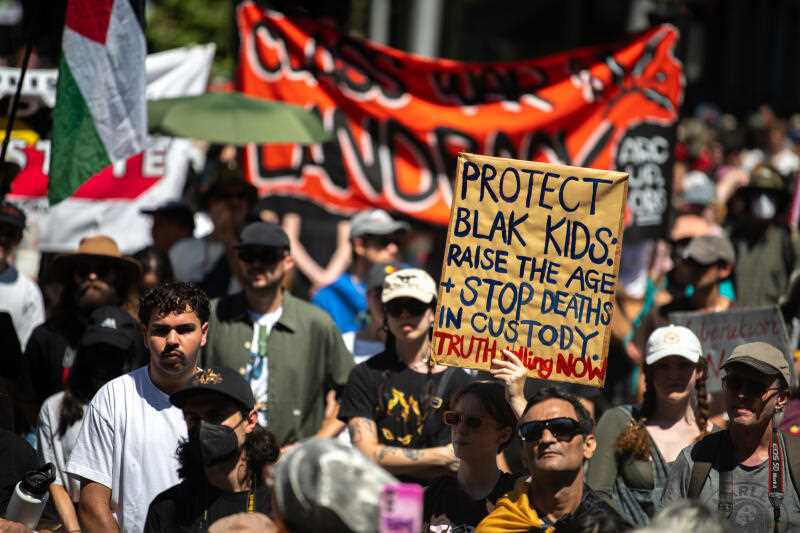
Racism inquiry urged to produce ‘results, not rhetoric’
By ALLANAH SCIBERRAS and AARON BUNCH
A parliamentary inquiry to address racism must drive action, not diagnose the already well-known problems facing First Nations people, advocates say.
The inquiry aimed at ending racism, hate and violence within the community will also consider the threat posed by ideologically-motivated extremism after an alleged attempted bombing of an Invasion Day protest in Perth.
The Australian Human Rights Commission says the government already knows what needs to change, and the probe must turn that knowledge into action, with timelines and accountability.
Demand for a stronger response
“The path forward is already mapped,” Race Discrimination Commissioner Giridharan Sivaraman said on Thursday.
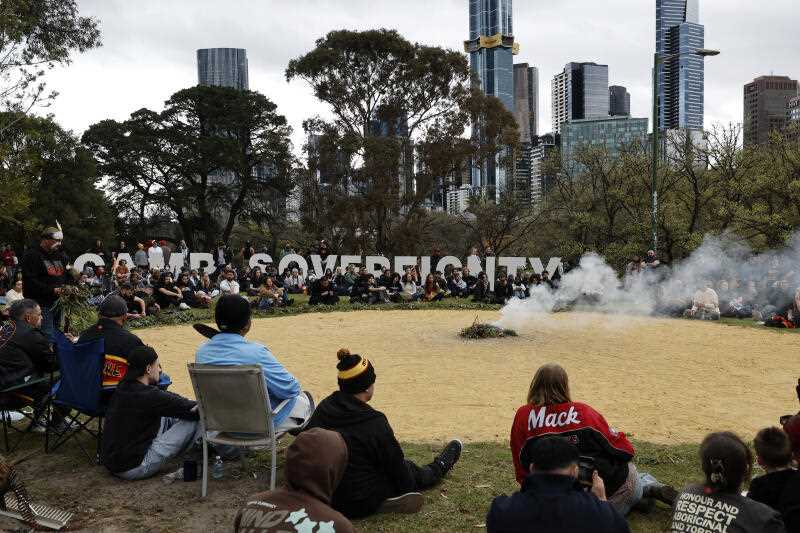
Camp Sovereignty in Melbourne was the target of a recent attack. (Con Chronis/AAP PHOTOS)
The commission’s National Anti‑Racism Framework sets clear actions, and the government must adopt it “so this new inquiry delivers results, not rhetoric”, he said.
Leaders have been demanding a stronger response from government officials following the failed attack in Perth’s CBD on January 26.
More than 2500 people were evacuated from the Invasion Day protest after Liam Alexander Hall allegedly threw an object containing volatile chemicals, nails and metal ball bearings into the crowd.
The devise did not detonate despite a fuse allegedly being lit.
Hall, 32, has been charged with engaging in a terrorist act and is yet to enter a plea. Police allege the incident was a nationalist and racially motivated attack targeting First Nations people at the protest.
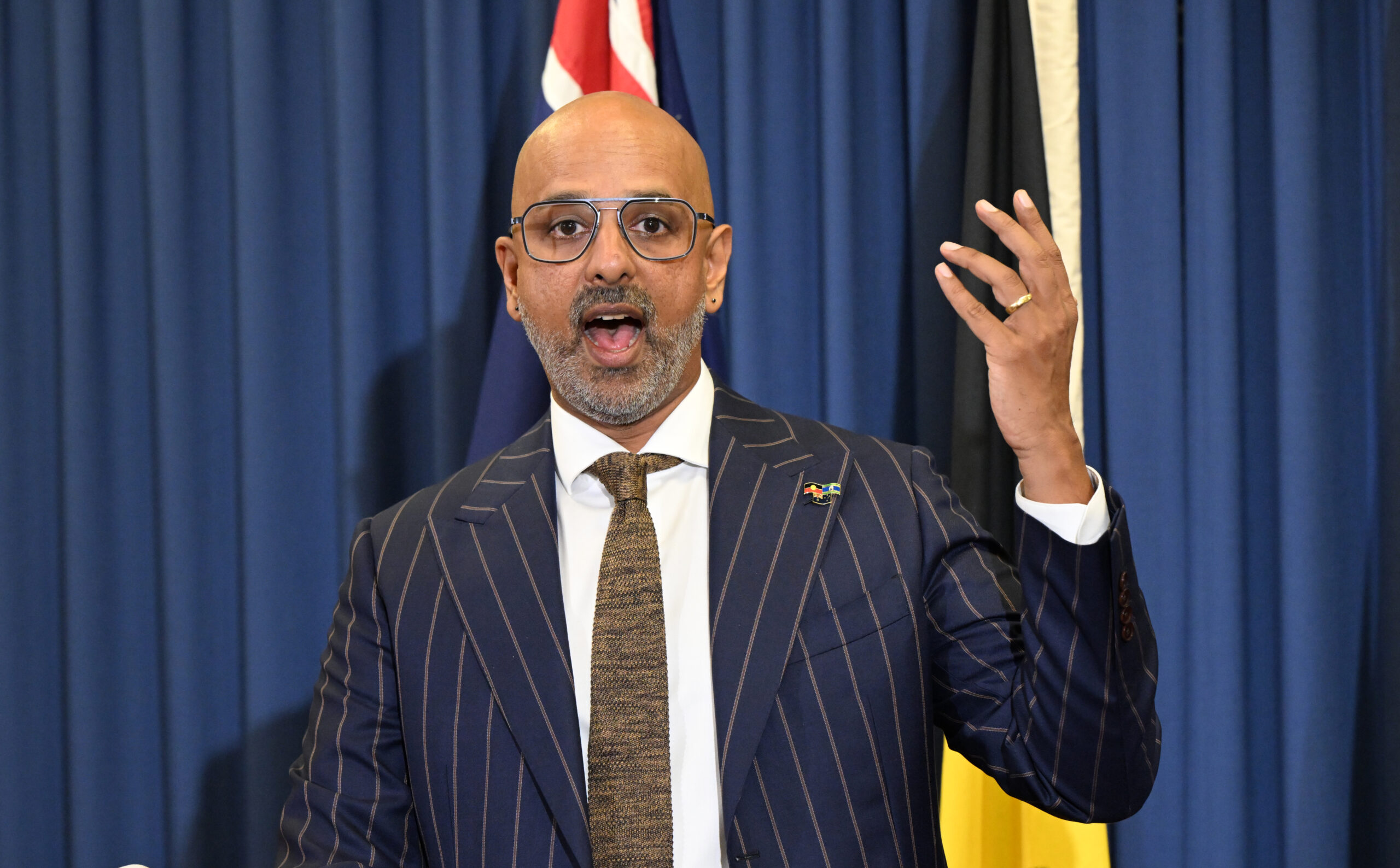
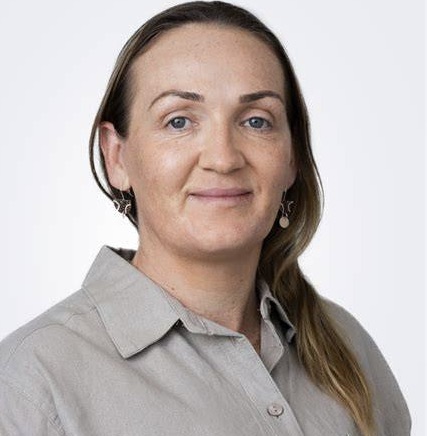
Giridharan Sivaraman says the path to end racism against Indigenous Australians “is already mapped”. (Darren England/AAP PHOTOS)
Just months earlier, a large group of men dressed in black stormed Camp Sovereignty, an Aboriginal protest camp at Kings Domain in Melbourne after attending an anti-immigration protest.
Multiple men, including self-confessed white nationalist Thomas Sewell, allegedly lashed out at people at the camp, the site of remains of Indigenous people from 38 clans.
Scared and angry
Indigenous Australians Minister Malarndirri McCarthy said First Nations people are feeling scared and angry following the alleged attacks.
“I know this has been a difficult time for families and communities. This inquiry ensures they can have their say and their experiences will be heard by the parliament,” the NT senator said.
The inquiry will examine ways to reduce harm from racism, hatred and violence, including systemic racism, the role of online platforms, and efforts to combat discrimination.
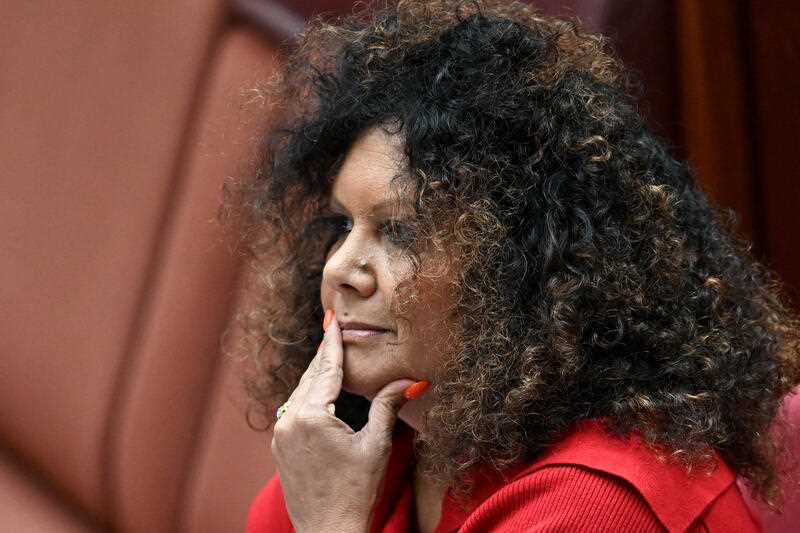
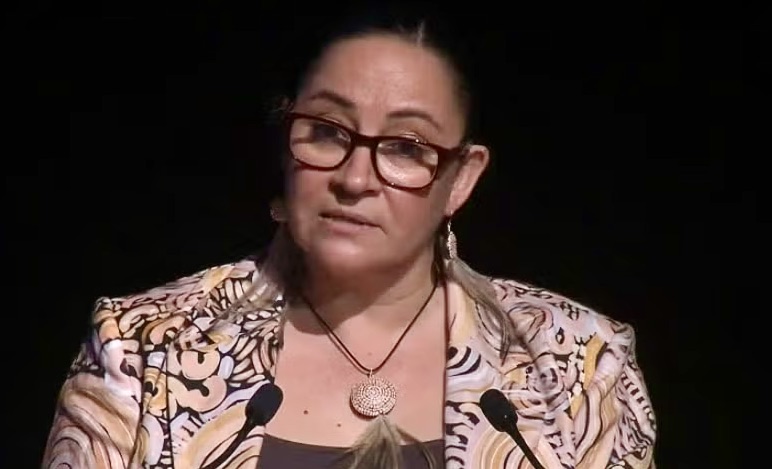
Malarndirri McCarthy says Indigenous Australians are feeling scared after recent attacks. (Mick Tsikas/AAP PHOTOS)
WA Premier Roger Cook backed the probe, saying the Invasion Day incident was an act of hatred, division and racism.
“This wasn’t just an attack on a predominantly crowd of Aboriginal people, it was also an attack on all of us,” he said.
The committee should also examine “stubbornly prevalent” racism against Aboriginal and Torres Strait Islander people in workplaces, the University of Technology Sydney’s Centre for Indigenous People and Work said.
Community members, including Aboriginal and Torres Strait Islander peoples, are invited to make submissions on ways to create safer and more respectful environments until May 1.
The inquiry will deliver its report in September.
13YARN 13 92 76
Lifeline 13 11 14
AAP