Have your say and vote in South Australian elections
First Nations South Australians have being encouraged to enrol to nominate and vote in the upcoming elections for the landmark First Nations Voice to Parliament.
The First Nations Voice to Parliament was an election commitment from the State Government, with the first election for the body taking place in March 2024.
Since then, the 46-member strong Voice has worked tirelessly to engage with local Aboriginal communities, and worked with government agencies and Ministers to develop changes that can make a meaningful difference in the lives of Aboriginal South Australians.
Establishment and Purpose
- The South Australian Voice to Parliament was officially established when the South Australian Parliament passed the First Nations Voice Bill on March 26, 2023.
- This legislation made South Australia the first Australian jurisdiction to create a legislatively recognised body for Aboriginal and Torres Strait Islander people.
- The Voice aims to ensure that First Nations communities have a direct and independent means of communicating with the South Australian Parliament and government on matters affecting their lives.
“At its heart, the Voice is about ensuring First Nations people have more of a say in the decisions that affect their lives,” Deputy Premier Kyam Maher said.
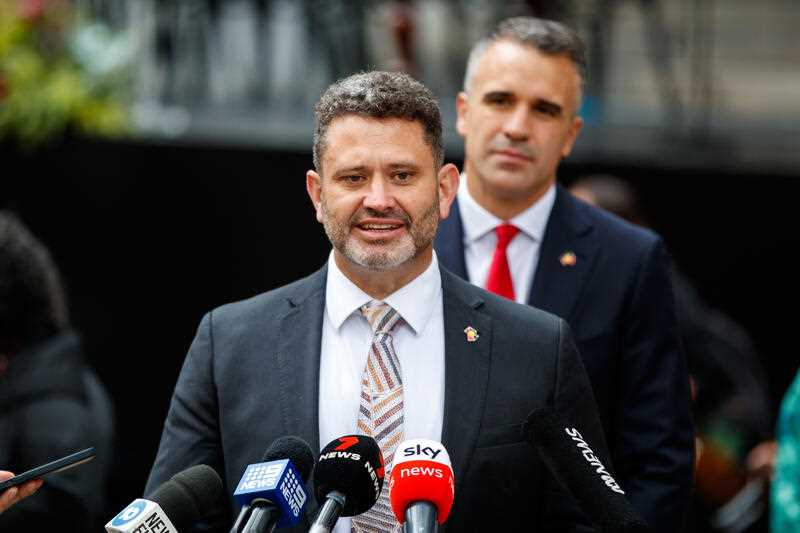
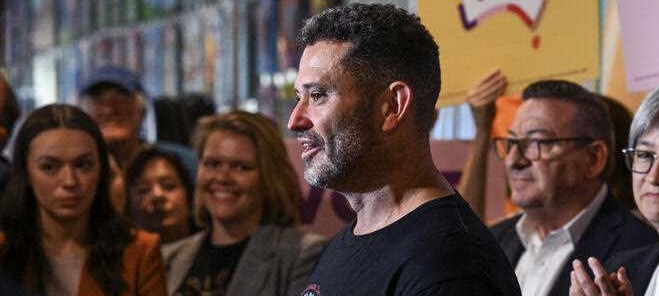
Deputy Premier Kyam Maher said the Voice was about ensuring First Nations people have more of a say
“We recognised that for too long, decisions have been made for Aboriginal people, and not by Aboriginal people.
“The Voice to Parliament was established to provide a strong and direct line of communication for First Nations peoples to South Australia’s Parliament and that’s exactly what we have seen in its first years of operation.”
Mr Maher said since its establishment the Voice had shown that embedding First Nations perspectives at the centre of government decision-making leads to better outcomes for Aboriginal people.
Structure and Elections
- The Voice is composed of 46 elected representatives from six regions across South Australia. These representatives were chosen in the first election held on March 16, 2024, where over 2,000 First Nations South Australians participated.
- The inaugural members include prominent figures such as Moogy Sumner and Jack Johncock, who are tasked with advocating for their communities and influencing policy decisions.
“We know there is more work to do and I would encourage all South Australian First Nations people interested in representing their communities and achieving better outcomes for all South Australian First Nations people to nominate for these roles to continue to help shape the work of this important body,” he added.
In their role, members were given unprecedented access to agency heads and Cabinet Ministers, with work subsequently undertaken across multiple portfolios to address issues of concern in areas including the Voice’s priority areas of health and wellbeing; housing and infrastructure; and justice and policing.
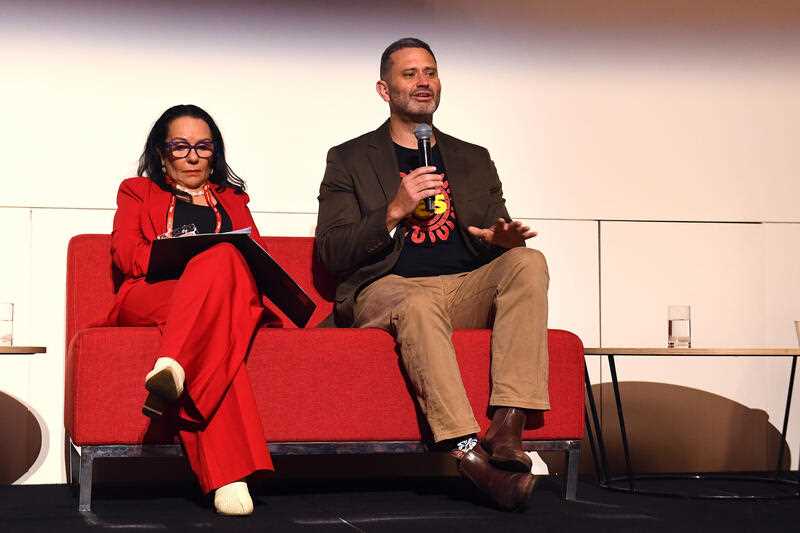
Former Minister for Indigenous Australians Linda Burney and then Attorney-General of South Australia Kyam Maher speak at a referendum conference in Brisbane in 2023. (AAP)
The Justice system has been a strong focus of the Voice, with members undertaking visits to courts and metropolitan and regional prisons to hear from residents first-hand, and engaging closely with relevant departments and Ministerial offices.
In recognition of advice from the Voice to Parliament and in line with Closing the Gap priorities, a new 30-bed Bail Accommodation Support Program (BASP) included in the 2025-26 State Budget will ensure Aboriginal needs are a central focus of the program’s development and delivery.
Significance
- The establishment of the South Australian Voice to Parliament represents a significant step towards recognising and amplifying the voices of First Nations people in legislative processes.
- It aims to foster better communication and understanding between Indigenous communities and the government, ultimately striving for positive change and representation in decision-making processes that impact their lives.
Key principles of the new BASP will be co-designed with the Voice and South Australian Aboriginal community controlled sector (ACCOs) and will provide participants with case management to transition to longer-term housing, increase their likelihood of meeting bail conditions, maintain links to the community and reduce recidivism.
Voice members also highlighted the opportunity to improve community understanding and raise awareness of the Nunga Court, which operates in the Port Adelaide, Murray Bridge and Maitland Magistrates Courts to increase its potential.
The Government has committed to developing culturally appropriate materials that help members of the Aboriginal community understand the role of the Nunga Court and how it works.
In health and wellbeing, a Safe Birthing on Country practices project has been established as a result of direct advocacy from the Voice. The Review and Co-design of a Statewide Approach to Aboriginal Family Birthing Programs has been approved by the Department of Health and Wellbeing (DHW) to establish a co-designed model of care across metropolitan and regional SA, defining and embedding Birthing on Country principles to deliver high-quality maternal and infant care.
The project timeline will go across three stages over three financial years and directly supports Closing the Outcome 2, ensuring Aboriginal children are born healthy and strong.
DHW has also approved funding to design models of care for Aboriginal youth and adults within custody and forensic mental health settings, in co-design with the Aboriginal Community Controlled sector. The initiative will also explore appropriate mechanisms for Aboriginal Community Controlled Health Services (ACCHSs) to provide access and support within custody settings.
Major contribution
The Voice also played a key role in the Government’s historic Royal Commission into Domestic, Family and Sexual Violence – ensuring Indigenous voices were heard at every step of the way as the Commission considered the issues confronting South Australia and ways of addressing them.
In addition, the Voice contributed to numerous pieces of Government legislation, including legislation relating to early childhood development, preventative health, biodiversity and justice.
Voting for the State Voice will occur at the same time as the South Australian State election.
Nominations for the State Voice are officially open and close 10 February. Information on how to enrol is available at https://www.savoiceelection.sa.gov.au/