From poverty to professorship – a real mission statement
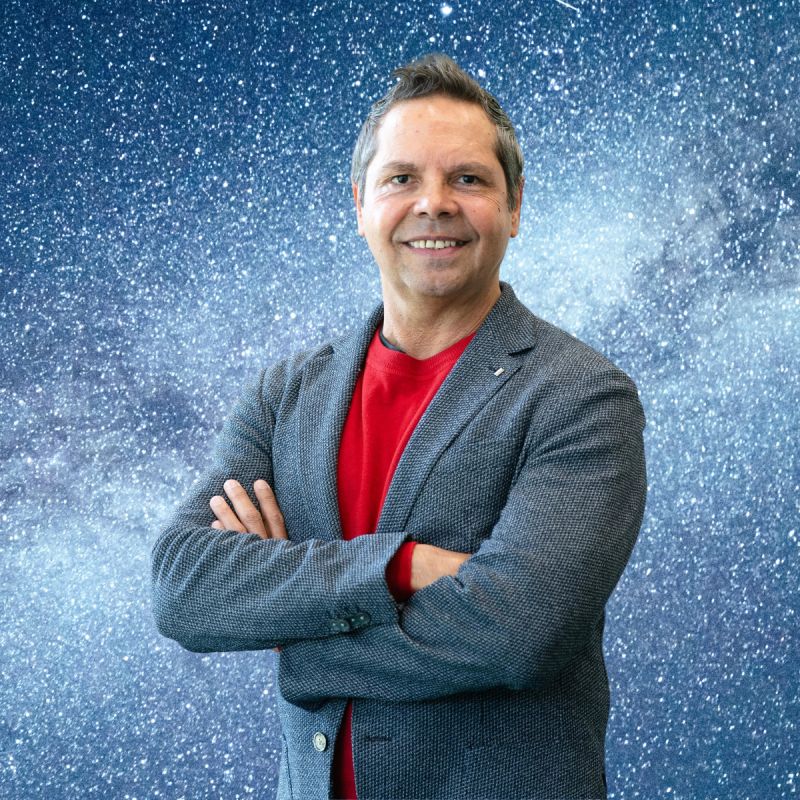
Professor Chris Lawrence’s story is one to inspire every Indigenous child to believe they can achieve and be someone.
The son of traumatised stolen generation parents who grew up in a mission in Western Australia, Chris’s remarkable life story began in Northam in 1966.
He wasn’t even an Australian citizen – that law had still to be passed. Yet today, Professor Christopher Lawrence heads a Space innovation department at Monash University in Melbourne, its Professor of Practice in Space Innovation and Security Capabilities.
A proud Noongar Whadjuk / Ballardong man, Professor Lawrence is a leading Indigenous health and wellbeing researcher with a Master of Applied Epidemiology and a PhD in Indigenous health and lifestyle choices.
His career spans health, technology, and space – from leading the Centre for Indigenous Technology Research and Development at UTS to founding the National Indigenous Space Academy (NISA) in partnership with Monash University, NASA Jet Propulsion Laboratory and the Australian Space Agency.
And his dream is to see an Indigenous student take the next step – into space.
“I was born a non-citizen in 1966 and taken home to the Aboriginal reserve in Northam. My parents, Gloria and George were both physically and mentally abused and traumatised as youngsters. It was not a nice time for Aboriginal people,” he recalled.
Growing up in poverty, Chris was raised by his grandparents, but it was a good home, moving first to Southern Cross and then Lockridge in the days before it became a suburb of Perth.
“My brother and I grew up calling my grandparents mum and dad and we didn’t know anything about our real parents until we were teenagers.
“We went to bed with the chooks and were up with the chooks.”
“I was born a non-citizen in 1966 and taken home to the Aboriginal reserve in Northam.”
When Chris dropped out of school his grandmother made it clear he would have to get a job. And when he did, she asked for money to assist with the upkeep of the home. It taught him many life skills.
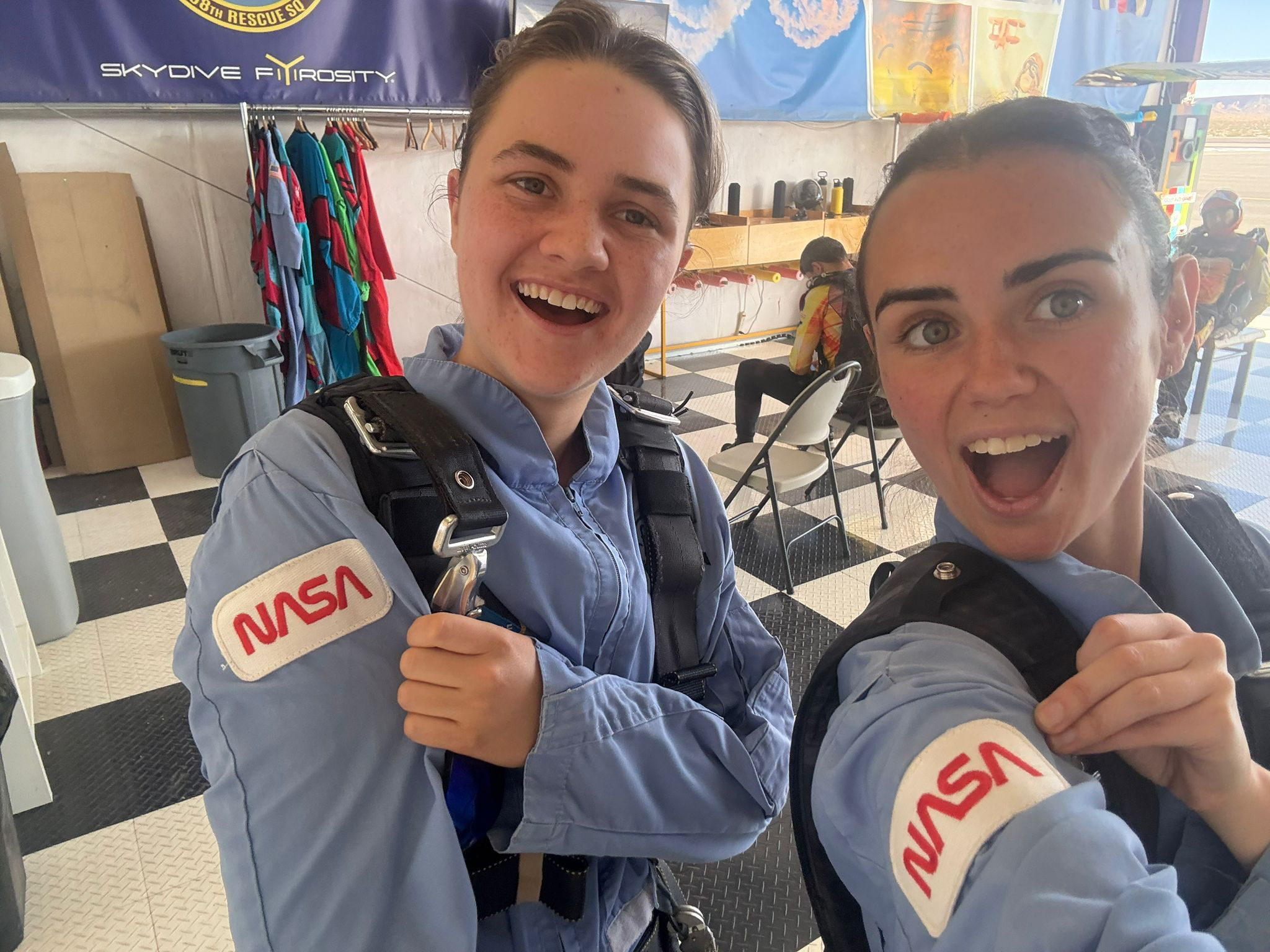
Indigenous students are now studying at NASA in the USA.
Chris eventually found his way to a job at the Environmental Protection Agency, where he experienced racism one Christmas.
A meeting with his boss that saw an apology also resulted in a recommendation to do a 12-month bridging course at Curtin University that saw him study teaching.
A confrontation about Aboriginal history – still a time of many unresolved cultural issues – saw Chris walk away to go back into the workforce.
But he always has a curious mind and moved east and became the first Aboriginal education officer for the NSW Aids Council, which got him interested again in studying and eventually he took a degree in epidemiology, culminating in a Masters in Indigenous health at UNSW.

“If that wasn’t enough I then did a Phd in Aboriginal health,” he said, adding he was pushed into the extra study, but that is has since proved invaluable.
His research established him in the academic world and a leader in Aboriginal epidemiology, and he got a grant in 2016 to study the role of IT and technology in his field, more engineering that health.
“ We asked how do we develop software for indigenous communities, what do they want,” Chris said.
“Our team designed a new software platform – called This is My Mob. And it became a catalyst to open doors for more grants.
His persuasive, never give up attitude saw him offered a leadership course in San Diego in California by his Dean of faculty.
“I think it was really to learn about the fact that I was arrogant,” he said with a wry smile.
And when there he connected with a fellow student from JPL (Jet Propulsion Laboratory) and NASA, which sparked an amazing conversation about space.
“When I told him of a bold idea about sending Indigenous kids into space, he said ‘OK, let’s make it happen’.
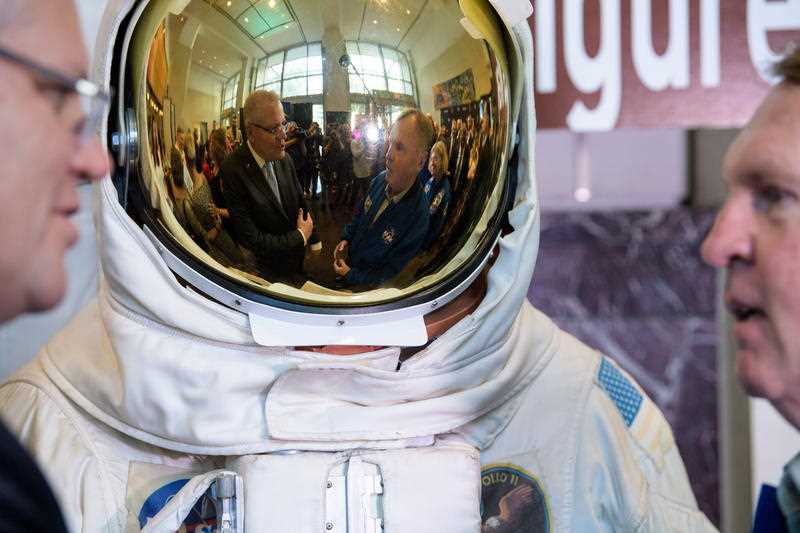
Former Prime Minister Scott Morrison with astronaut Andy Thomas.
“He made the connections for me and JPL invited me to work with them for three months and we developed the National Indigenous Space Academy.
“The program was set up in 2019 with three indigenous students, kind of our ‘pathway’ students. Then Covid struck and put a hold on everything.”
The Australian Space Agency heard of Chris’s work in 2023 and helped fund its rebirth.
When the Australian government discovered it Chris was invited to then ambassador to the USA Joe Hockey’s residence in Washington to talk about the idea.
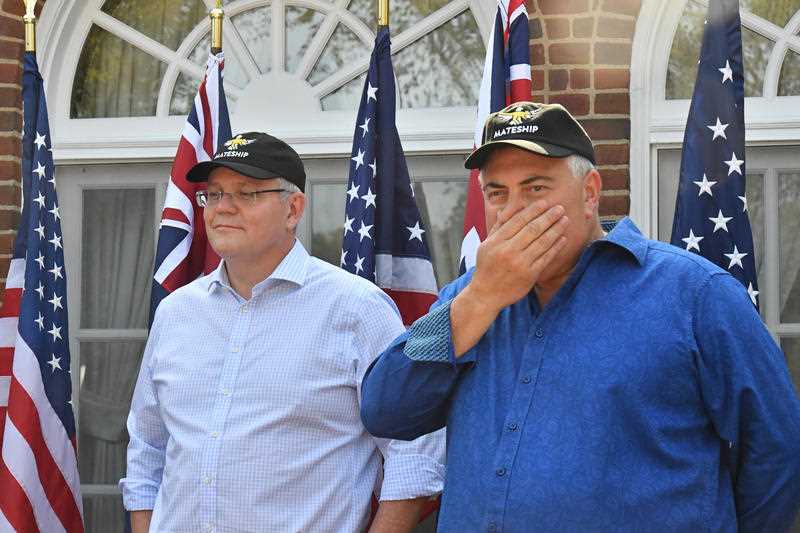
Ambassador Joe Hockey, right, invited Chris to his residence in Washington DC.
“When I met him he just asked how did I set it up without the Australian government involved, I just told him our story and said ‘good for you’.
“He made a speech at a dinner in front of NASA chiefs and astronauts and he talked about how proud he was of our program.
“He wanted to acknowledge the setting up of the first Indigenous space program and that it was Australian.”
Monash University has invested in the program and supported Chris in his work, a place of learning that he says has a bold vision.
“We are laying down the foundations for the next generation, a dynamic university that wants to go places,” he said.
“And for me, coming from a mission in Northam to a major university and now partnering with the UK space agency in Oxford is something to be immensely proud of. You can’t make that up.
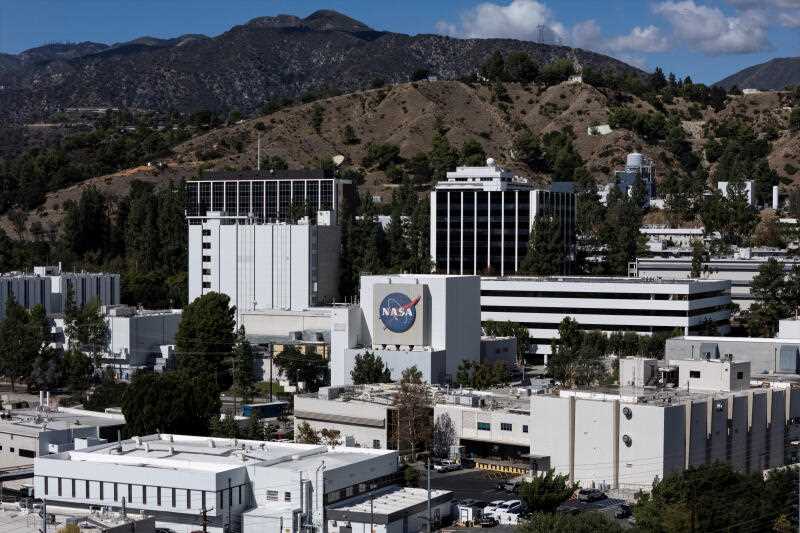
NASA’s centre in Pasadena, California.
“There are young indigenous people who are more tech savvy and connected with 21st technology, working at JPL in Pasadena in California and in the UK.
“Monash has a research centre in Prato, Italy so from there we are eligible for European funding as well.”
Indigenous students come from universities across the country to study – currently 17 in the program and another 16 in Monash’s engineering department.
There are few Indigenous STEM students, but Chris believes there should be more.
“Chase your dreams and be bold,” he said.
I was a Noongar kid watching Lost in Space on TV. I loved it and I’m sure there are kids today wanting to do the same as I did.”
JPL is a NASA research centre, not a flight training centre, and to be an astronaut you normally have to be a US citizen.
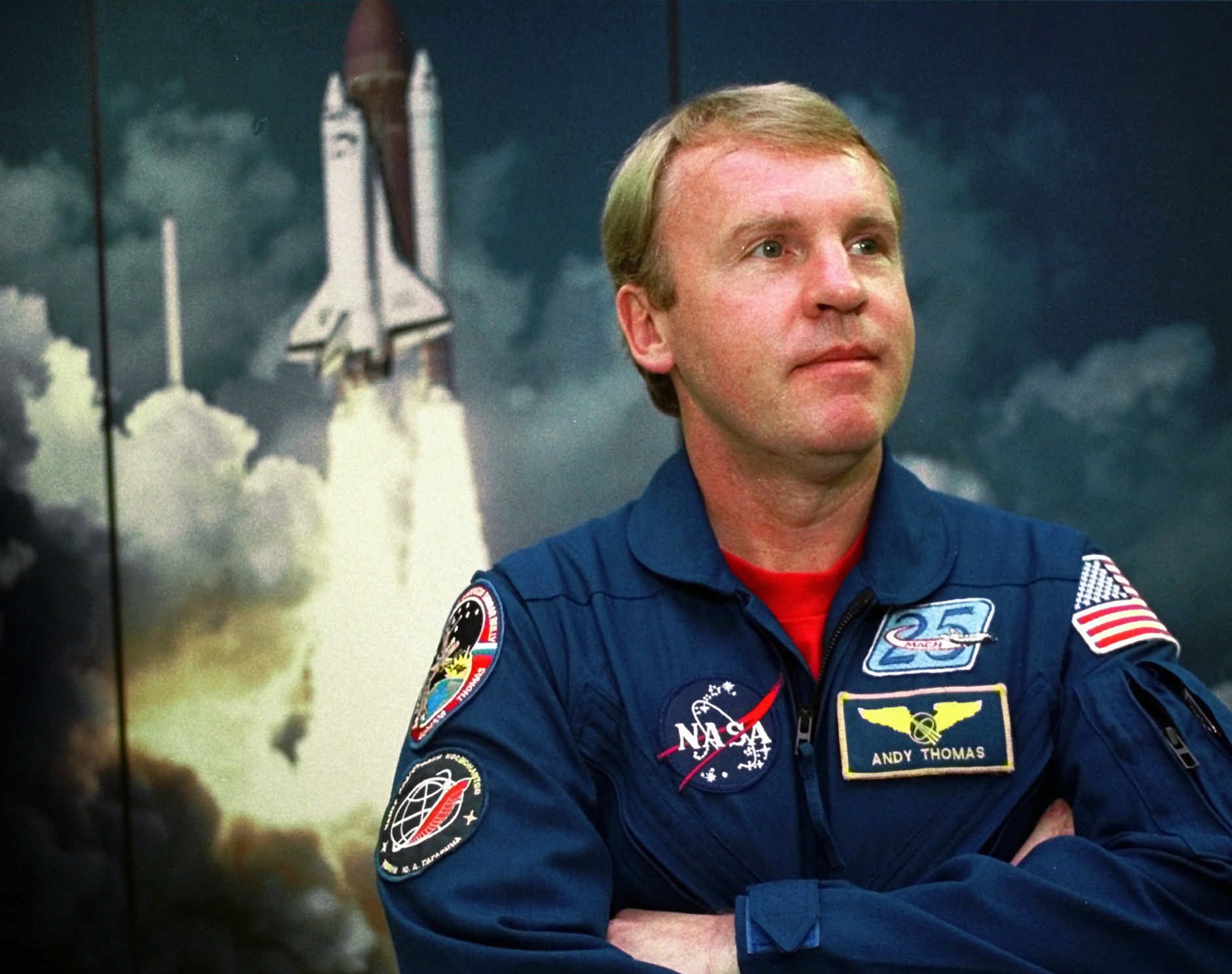
Australian astronaut Andy Thomas at NASA in 1998, (AP Photo/Brett Coomer)
“Andy Thomas became a dual-US citizen to do that and now we have an Andy Thomas Foundation Scholarship to send a student to become a space explorer.
“Our current students work in space technology but it is my dream to take our project to the next stage and create the first Indigenous astronauts.
“We have students currently in the US and in the UK. One of our students has even through research made some great discoveries, so new that NASA wants her to stay.”
The program is the first national Indigenous space program in the world.
“Set up on the smell of any oily rag.”
Now supported financially by the CSIRO and the Australian Space agency, the dream is ever closer.
And Chris Lawrence’s dream, his mission statement, to give Indigenous kids the chance to not just work, but flourish in such an exciting scientific field as space and space exploration is also coming to fruition.
From a non-citizen to a citizen of the solar system, Chris Lawrence is proof that dreams can come true.