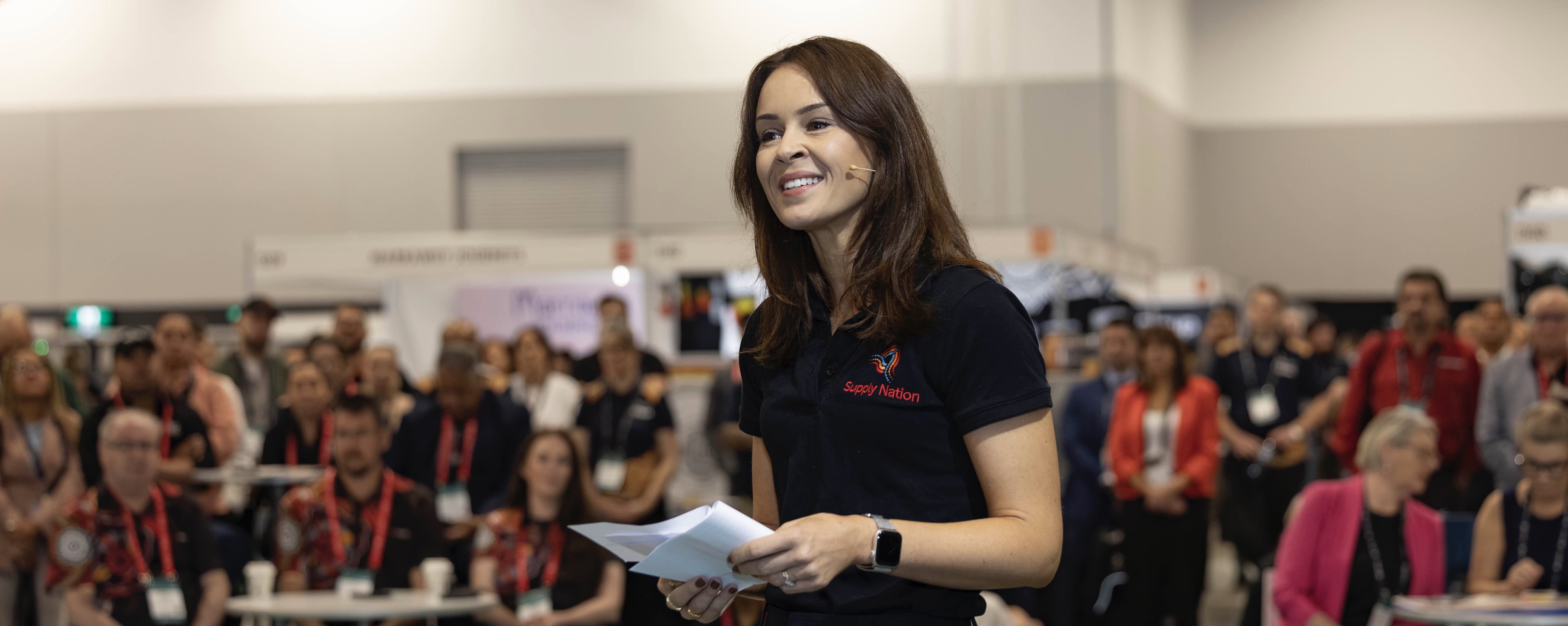
Growing fast – Supply Nation ready to face new challenges in 2026
EXCLUSIVE
Supply Nation Chief Executive Kate Russell has one very distinctive word to describe Blak Cladding. “Fraud.”
Ms Russell, who has led the nation’s database of verified Indigenous businesses for just over two years, talks exclusively to First Nations News about her organisation and how it has grown since its formation 16 years ago.
“Supply Nation is the Australian leader in supplier diversity,” she said.
“We work to connect 6,000 verified Indigenous businesses on Indigenous Business Direct with more than 850 paid corporate, government and not-for-profit members in every State and Territory.
“Are we perfect? No. No business or organisation is, but we are always open to conversation to improve what we do.”
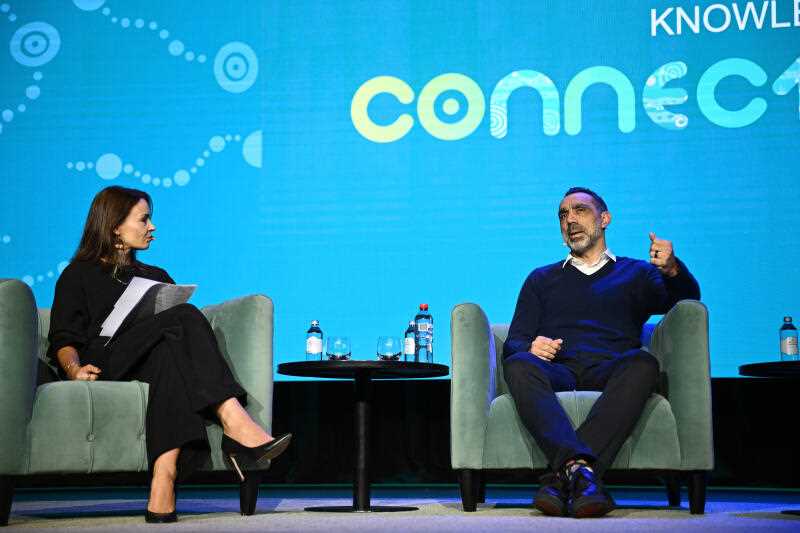
Former AFL footballer Adam Goodes speaks during a Q and A with Supply Nation CEO Kate Russell during Supply Nation’s annual event Connect 2025 in Sydney.
The journey has been a long one and there have been many milestones that have helped shape and grow the Indigenous business sector.
“The numbers we are currently at, almost 6,000 businesses and 850 members, is I think testament that our model works,” she said.
“Our people have something to add to all sectors of industry. We need more chief financial officers, more directors and executives.
“The 15-year anniversary last year in Canberra was great, and to get acknowledgment from the Prime Minister meant a lot.
Major milestone
“Another major milestone last year was when we surpassed that 5,000 business mark. They represent all sectors of the economy.
“We are a national organisation and, personally, for me to take our flagship event from Sydney to Brisbane was a big signal of intent for us, and taking it to Perth next year is testament that we want to represent as many Indigenous businesses across the whole country as we can.
“It is estimated there are about 13,000 Indigenous businesses in Australia and we represent about 35 to 40 per cent.”
And growth, is that all part of the plan?
“It’s 10 years since we created the procurement policy and that has seen accelerated growth.
“Businesses that align with our values and are the right fit for both of us will benefit.
“If you don’t aspire to do procurement with corporate, government and large non-government organisations you probably don’t fit, but that’s fine. We would like to be representative of as many Indigenous businesses as we can.
“There’s no judgement on any businesses that don’t want that.”
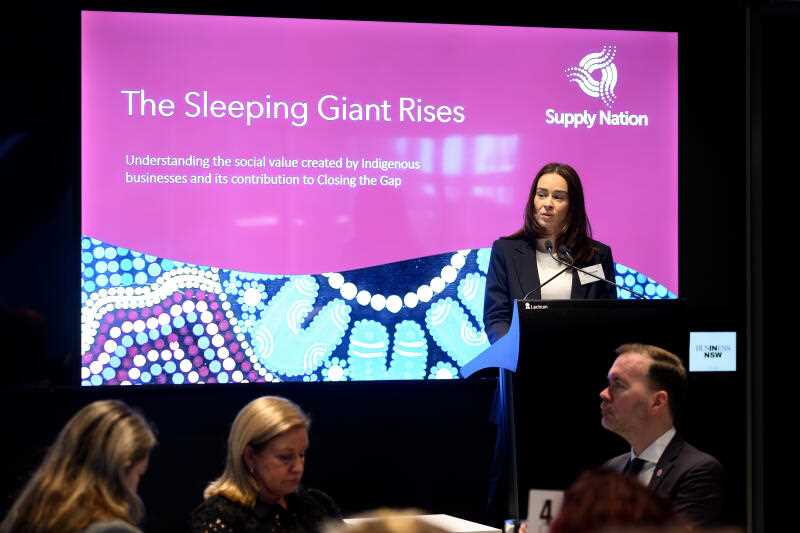
Supply Nation Chief Executive Officer Kate Russell talks during the Indigenous Business Report launch at Business Sydney Events Centre in Sydney.
The impact on the national economy is not to be underestimated. This year’s record $5.83 billion member spend with verified Indigenous businesses is massive.
It signals a positive change in Indigenous business and entrepreneurship.
“It also signals the size of the contribution and that we should be included in national economic discussions,” Ms Russell added.
“There’s a lot we can leverage from that, economically and in social value within communities. It has a positive impact on Closing the Gap targets, for example.
“Indigenous businesses are offering quality, reliable products and services, and that shows the resilience, diversity and strength of Indigenous people.
“It is an upstream solution to so many of the challenges we face.”
A recent study said that for every dollar in, it creates $3.66 of socio-economic value, so in excess of $5 billion in total equates to over $15 billion.
Independent of government
“We also looked at some of the social indicators around Closing the Gap and we asked a sample group of about 140 Indigenous businesses questions about the impact on housing, education, children and physical and mental health, and we found children were more positive about their lives and their futures that some of this entrepreneurship has brought,” Ms Russell said.
“That is purely through business operations and not through any philanthropy.”
Many people think Supply Nation is a government organisation. They are not.
“We are independent of government.”
And the verification process the organisation sticks rigidly to is also independent.
“Yes, we talk to Land Councils and commercially based organisations, and ASIC, who can carry out real-time checks, so we can assure everyone of best practice,” Ms Russell said.
“We have verification rules. Ours may differ to some chambers of commerce and vice versa, but is there a totally perfect verification system?
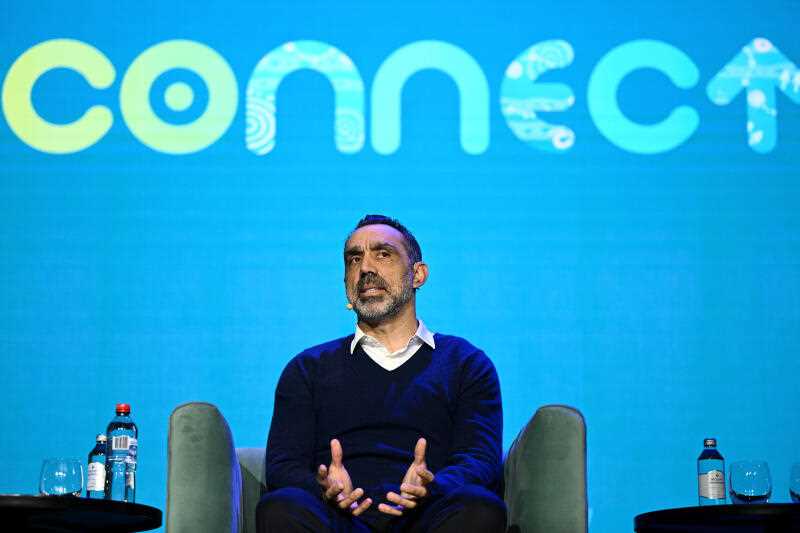
Former AFL footballer Adam Goodes speaks during a Q and A with Supply Nation CEO Kate Russell during Supply Nation’s annual event Connect 2025 in Sydney on Gadigal Land.
“We don’t charge Indigenous businesses, whereas others chase a fee, that’s up to them. And if you want to be registered with another chamber that’s fine.
“What I would say is we try and work to a nationally consistent standard. There are seven, eight, nine different standards, so on a national scale it would be nice to have just one.”
The government announcement earlier this year in relation to a change in the definition of ‘Indigenous-owned’ from 50 to 51 per cent is a move in the right direction, Ms Russell believes.
“Our position in our own IP is 51 per cent owned, managed or controlled, that is our preference. I would like to see it go further.
“Percentage of contract to value of contract is a timely move because we continue to see a number of small contracts.”
Aligning with cultural practises
So how confident is Ms Russell that Supply Nation has got its business model right?
“Our model aligns with cultural practices as well as the federal legal definition from an Indigenous perspective.
“What isn’t working, whether that’s Supply Nation or another organisation, is being scapegoated for broader challenges in identification issues. There is a federal policy on how someone identifies as Aboriginal. Is it perfect? No, but that requires a conversation at government level.
“Key verification processes are rigorously independent and we have strict rules over things like conflict of interest and government risk.”
Supply Nation works hand in glove with ASIC over company ownership changes and are notified with daily updates to ensure the processes are adhered to. Their staff of 13 people regularly investigate any changes or complaints, which are often made anonymously.
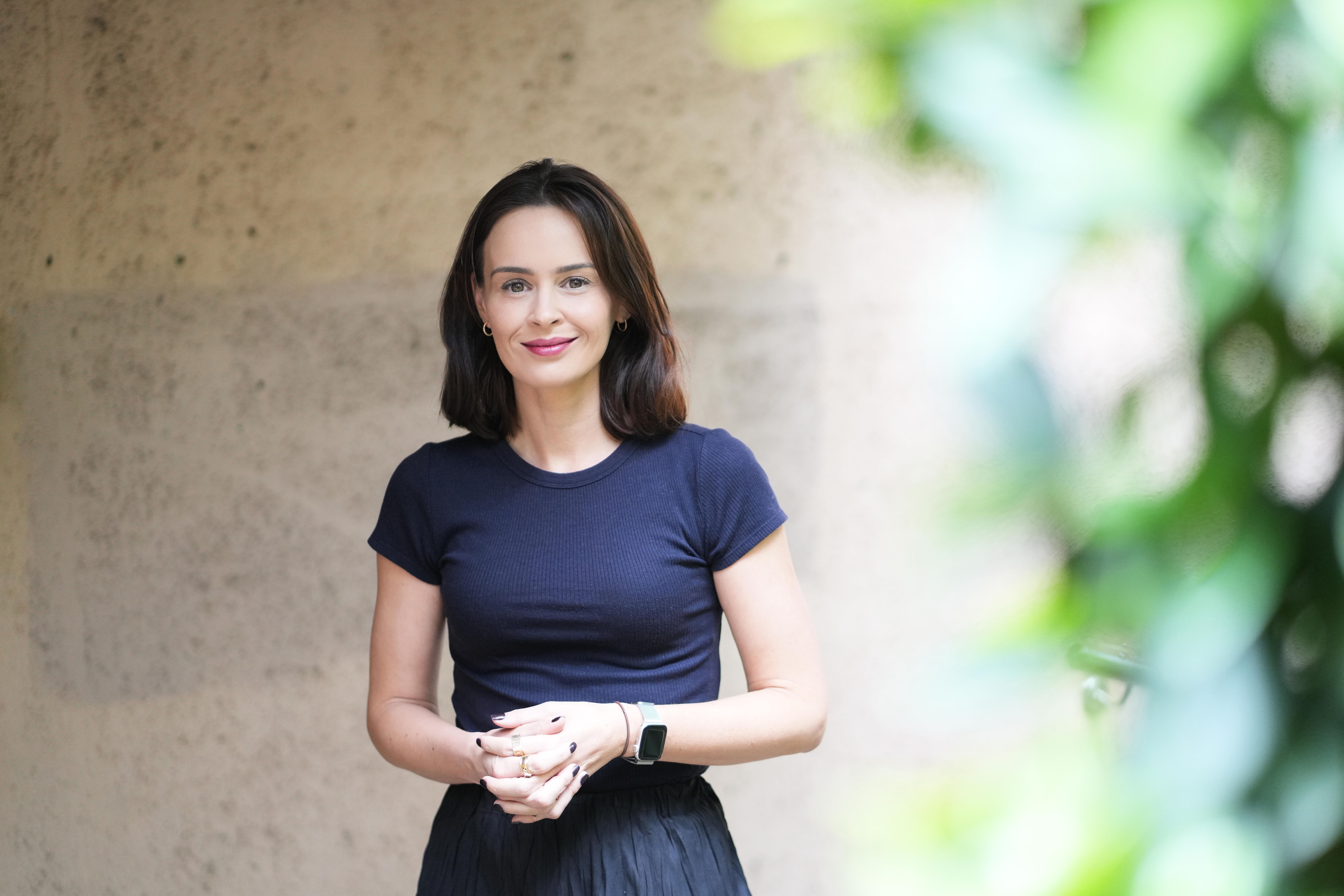
“We had 16,000 ASIC reports last year. That triggers an audit and further checks,” Ms Russell said.
“Anyone can make a complaint, if something smells, then talk to us.
“Complaints can be anonymous, you don’t have to give your name, we will still carry out an audit.
“We act, move quickly, we are very transparent in our process.
“Many verification processes exist, and it’s worth noting what a chamber might accept is not necessarily what we might.
“Theoretically we should be working together. We shouldn’t be throwing stones, we work with a number of reputable bodies to ensure our processes and standards are the highest they can be.”
Talk of other verification organisations in the market is not new. Various business chambers are out there and Ms Russell says she has no issues with them.
“The sector has changed so much, relatively quickly, and grown. The competition between Blak businesses is enormous. Being Blak is still an advantage with all the cultural benefits that come with it but there is now so much competition between Blak businesses that wasn’t there not that long ago.
“We have had 1,000 new businesses register with us in the last 12 months, that shows the pace of change.”
So how does Supply Nation keep itself relevant? New technology and innovations are moving at such speed it is hard for many businesses and organisations to keep up.
The new government definitions surrounding the percentage of ownership will see change in 2026.
Supply Nation will audit its database to ensure all certified and then registered businesses comply.
“Mob are hungry. They want contracts now, but it can sometimes take 12 to 18 months to work one relationship lead. It takes years to build successful businesses.”
Blak Cladding
And Blak Cladding. Where does Supply Nation stand?
“There is no one definition to Blak Cladding, we have one and we are quite clear on that, there is also some miscommunication as to what Blak Cladding may be.
“If you are a registered business under the current definition, you don’t have to work in that business, you don’t have to be in the shop or factory. You just have to own it.
“Blak Cladding is fraud. It exists in every industry and it can often be very difficult to track down. We just have a fancy name for it.
“The conversation we have is we are the first line of defence, and we encourage anyone to talk to us because everybody has a responsibility in this and we will follow it up. But total eradication is not possible.
“Every registered business gets audited at least once a year, some twice, hence the 16,000 ASIC reports.”
Innovations and improvements are always part of the business plan and AI plays an increasingly bigger role as the organisation strives to update information and help businesses link with members.
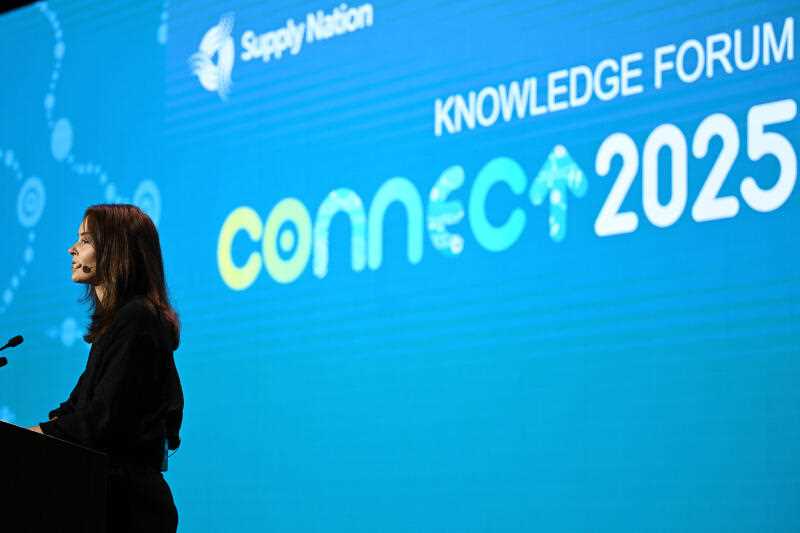
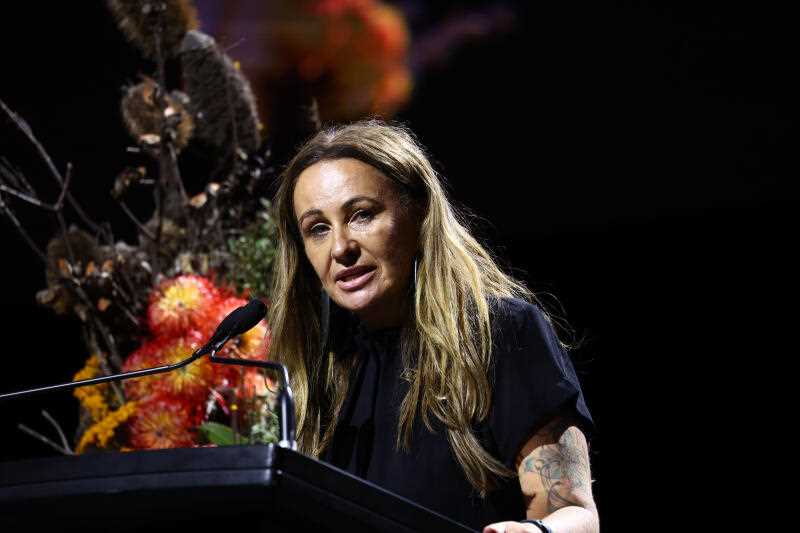
Kate Russell speaks during Supply Nation’s annual event Connect 2025 in Sydney. The event will come to Perth in 2026.
Ms Russell said they would be even more active in 2026, partly because of the new government definition regulations that come into effect next July, but also because the sector is growing fast.
“Social media is changing the landscape so fast and we need to be across all that.”
And the chief executive takes her organisation’s code of conduct very seriously, ensuring there is respect among members and businesses.
“As you will know, we had an issue recently, the first I believe of its nature, and we engaged independent legal experts to manage it to ensure a fair outcome,” she said.
“It not only has to pass the pub test but it also has to meet the legal framework. I hope it was an isolated incident because everyone deserves respect.
“We will not compromise on our standards but we are always open for a conversation with members, with registered businesses and with chambers throughout the country.”