‘Grave disrespect’: treaty referendum call dismissed
By CALLUM GODDE and WILLIAM TON
Comparisons between a State treaty and the failed Voice to Federal parliament have been derided as a prominent ‘no’ campaigner calls for a referendum.
A push for a landmark treaty to be put to the people has been slammed as an expert cautions it could be some time before other jurisdictions are ready to strike deals of their own.
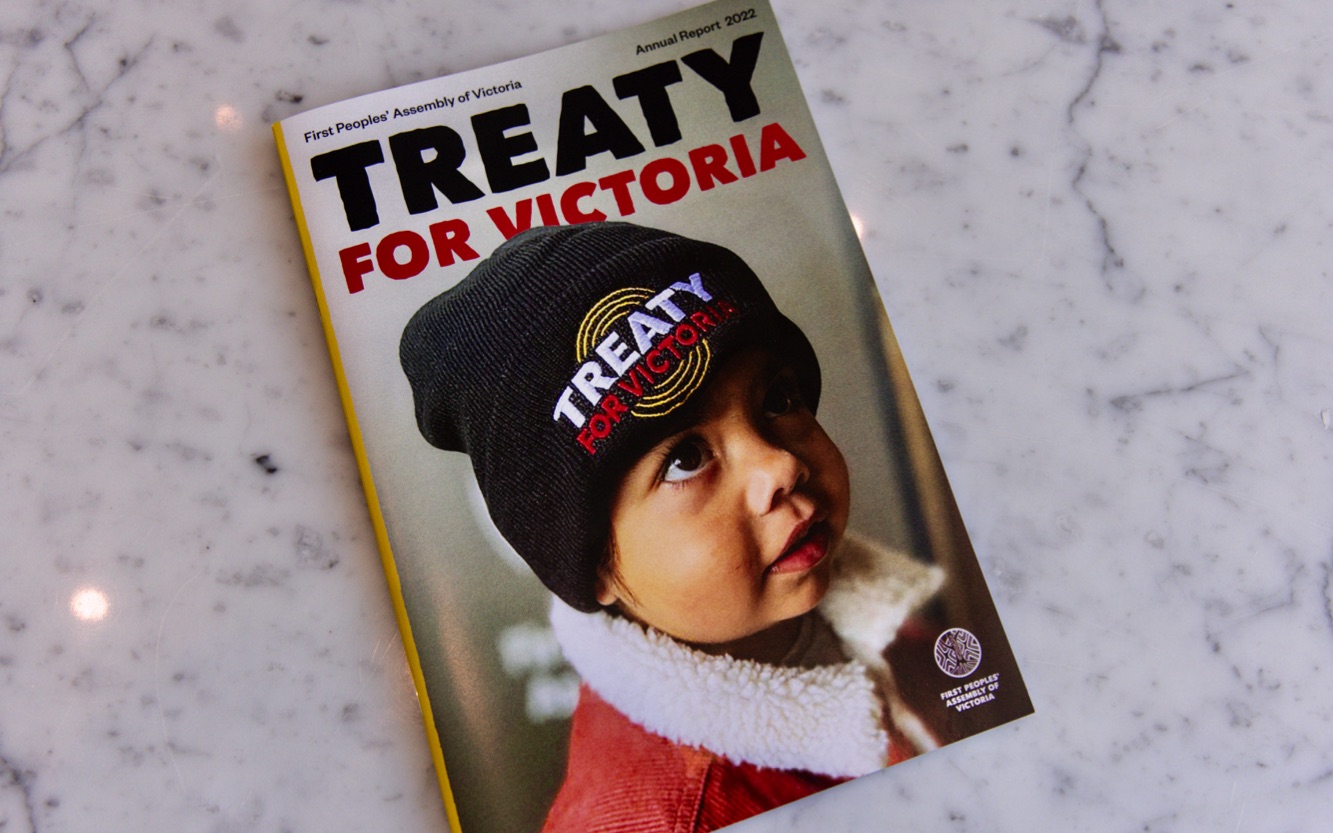
Victoria has become the first state or territory in Australia to introduce treaty legislation to parliament, with the nation lagging other Commonwealth countries on accords with its indigenous peoples.
Australia’s jurisdictional make-up allows other States and Territories to look to Victoria and learn lessons from its treaty process, UNSW law associate professor Harry Hobbs said.
“The Victorian model, if it works and is seen to be effective, could certainly suggest a path forward for other governments across Australia,” he said.
Model for other States
Treaty has come off the boil following the failed voice to federal parliament referendum in 2023, with the Queensland and NT governments abandoning their treaty processes, Assoc Prof Hobbs noted.
NSW is continuing its initial treaty consultations, while South Australia has developed a voice to parliament which might start a treaty process.
But while others might be looking to Victoria, Prof Hobbs said it took the state a decade to reach the treaty stage and no other jurisdiction was close to the same point.
Under the framework, an Indigenous representative body will be made permanent and granted decision-making powers on initiatives and services relevant to Aboriginal Victorians.
The in-principle agreement follows 10 months of negotiations between the government and First Peoples’ Assembly of Victoria and is expected to cost about $300 million over eight years.
The bill to enact it is expected to pass with the support of the upper house crossbench.
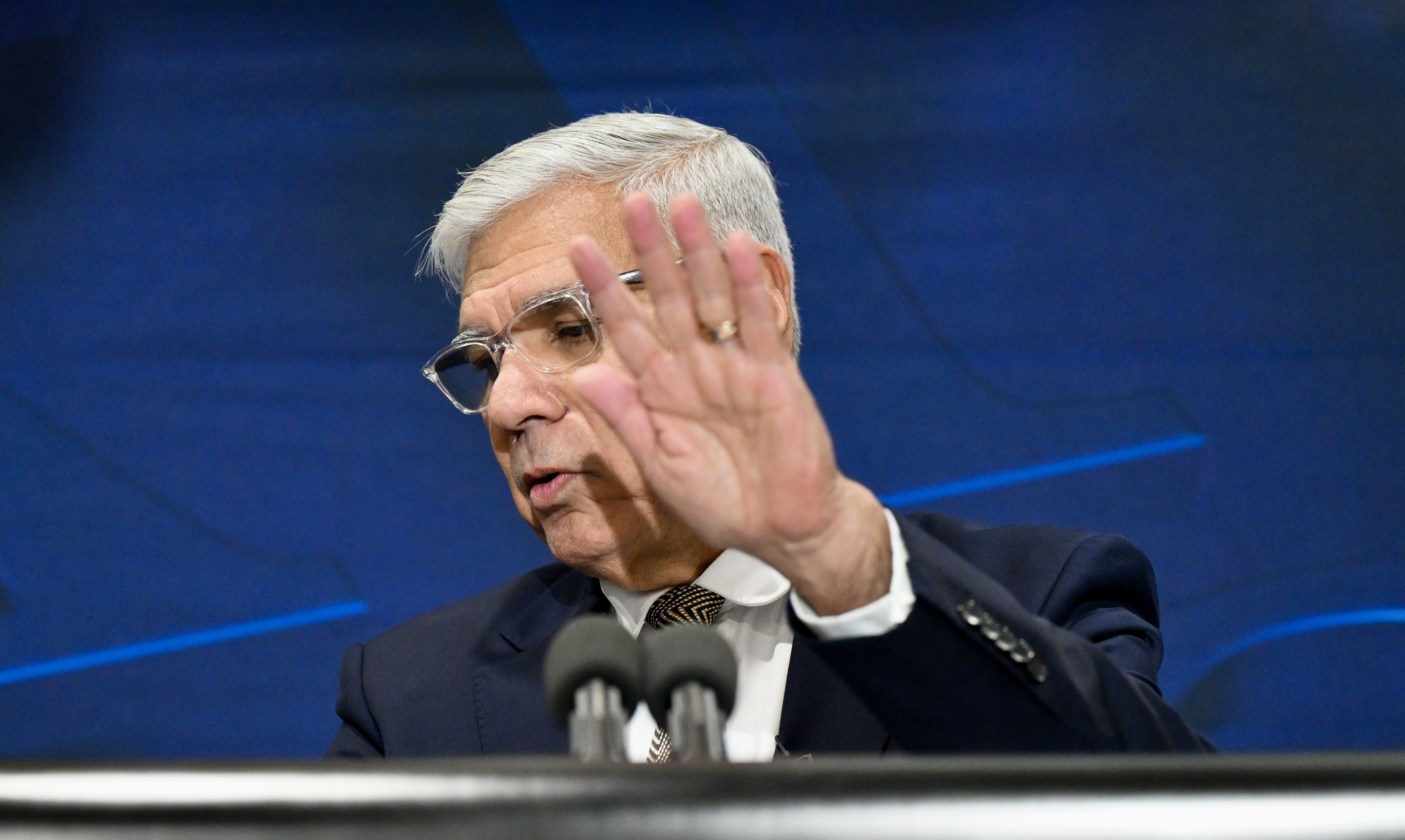
Warren Mundine wants the proposed Victorian treaty put to a referendum. (Lukas Coch/AAP PHOTOS)
Leading ‘no’ voice referendum campaigner Warren Mundine called for the treaty to be put to a referendum.
Premier Jacinta Allan dismissed the argument, saying the state Labor government’s commitment to treaty was on the ballot at the 2018 and 2022 elections.
“These questions about political processes, about putting more roadblocks in the way, are not coming from people who support treaty,” she told reporters on Wednesday.
“It’s coming from people who oppose it, who don’t want to see the better outcomes that treaty delivers.”
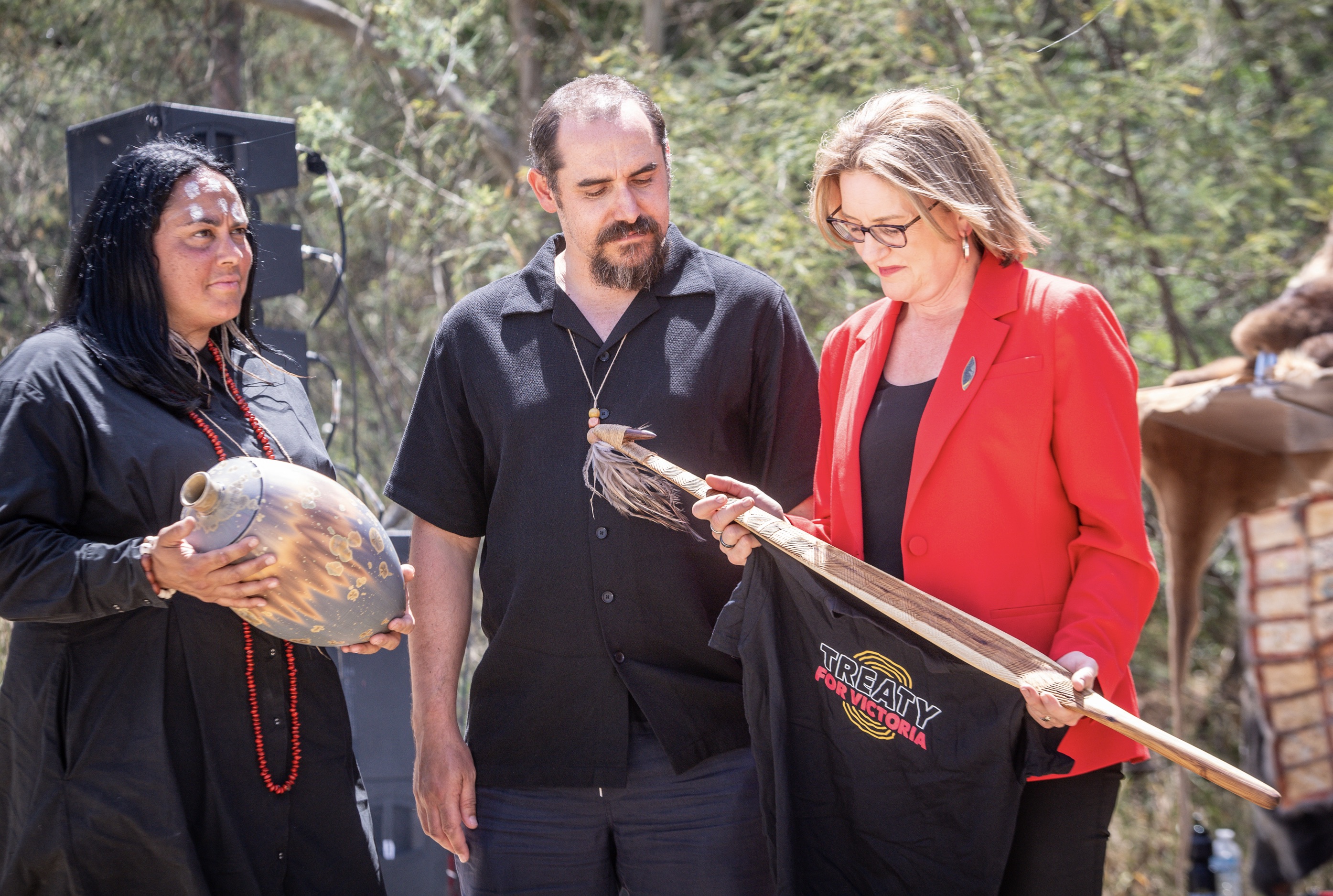
(L-R) Co-Chairs of the First Peoples Assembly Ngarra Murray and Ruben Berg exchange gifts with Victorian Premier Jacinta Allan during the Ceremonial Opening of Treaty Negotiations last year.
The treaty is not being enshrined in the Victorian constitution and there is no process for the state to hold a referendum.
The State coalition continues to compare the treaty to the voice referendum, drawing the premier’s ire.
“It’s a very, very different proposition,” Ms Allan said.
“Anyone who continues to peddle this comparison is peddling a mistruth, a misinformation that shows grave disrespect to the intelligence of the Victorian community.”
The representative body will be able to propose name changes for specified geographical features, provided they offer evidence of its offensiveness.
Public school students will be taught about Aboriginal experiences and a future apology will be made in parliament to the State’s first inhabitants.
Taught Aboriginal experiences
All States and Territories are likely to “have a look” at Victoria’s move to embed truth-telling in public school classrooms from prep to year 10, federal Education Minister Jason Clare said.
“I want our children to be taught the truth,” Mr Clare said.
Victorian independent Senator Lidia Thorpe called on the federal government to establish a truth-telling body to lay the groundwork for treaty at the national level.
The Albanese government’s promise in 2021 to set up a “Makarrata Commission to oversee a national process for treaty and truth-telling” has not materialised.