Yued Corporation seeks heritage protection for Lake Ninan
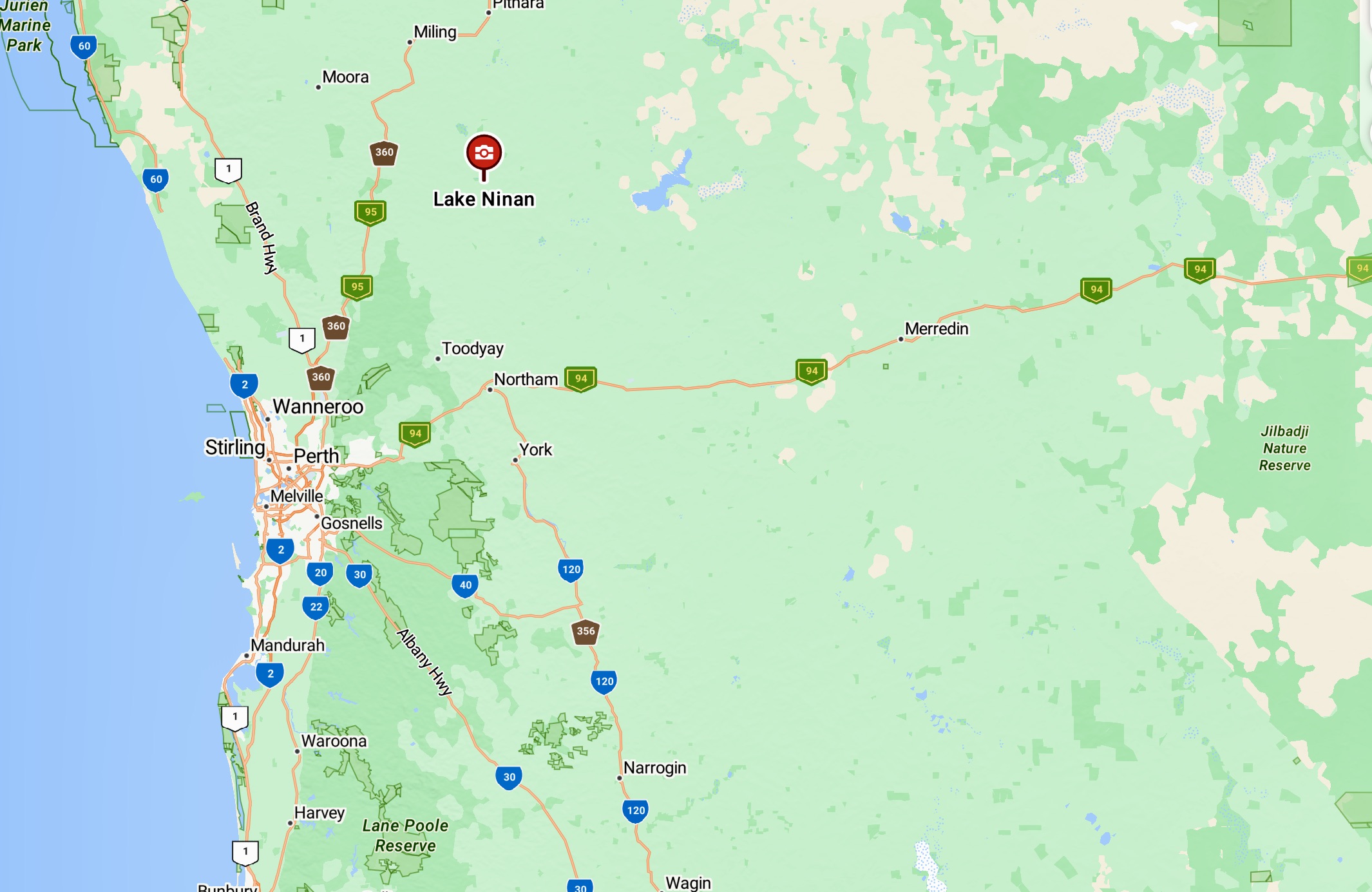
The Yued Aboriginal Corporation has collaborated with Archae-Aus to seek Aboriginal Heritage protection for the place widely known as Lake Ninan in the Shire of Wongan-Ballidu in Western Australia.
An application for registration of a site for protection under the AboriginalHeritage Act 1972 has been lodged with the Department of Planning, Lands and Heritage.
Lake Ninan is a place of Yued Nyoongar cultural significance with evidence of habitation dating to the end of the last Ice Age.
Sharna Meinertz, Chairperson of the Yued Aboriginal Corporation said it was committed to pursuing recording Elders’ cultural knowledge and protecting significant places across the Yued Agreement Area.
“Dated archaeological research for the inland Wheatbelt is extremely limited,” she said.
‘Lake Ninan offers rare potential to write our history back into a region where most recorded history is European.’
The Corporation commissioned research by Archae-Aus in 2025 to ascertain the cultural value of Lake Ninan. Protecting Yued Nyoongar cultural heritage is a core function of the corporation, which is a Noongar Regional Corporation under the terms of the South West Native Title Settlement between Noongar people and the State.
Blighted by 20th Century agriculture
Rewi Lyall, Chief Executive Officer of the Corporation said the landscape was blighted by the agricultural expansion of the 20th century, cleared of the people who had lived here for thousands of years and cleared of the plants that kept the waters fresh.
“Yued Aboriginal Corporation is dedicating itself to working with like-minded people across the community to try and bring this country back,” he said.
“The first step is protection from further impacts. The next step will be to commence a revegetation program that will increase the likelihood of bringing this system back to life.”
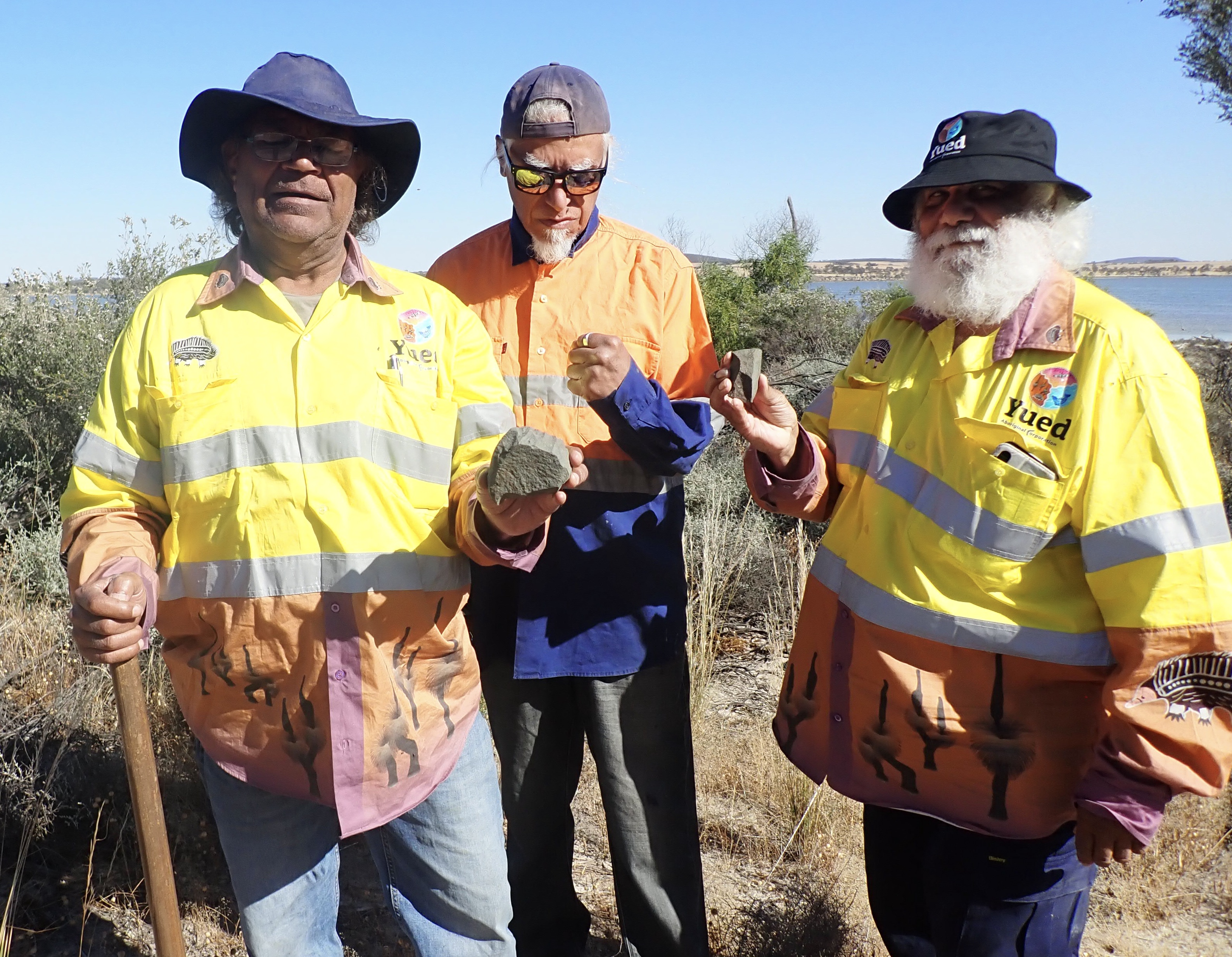
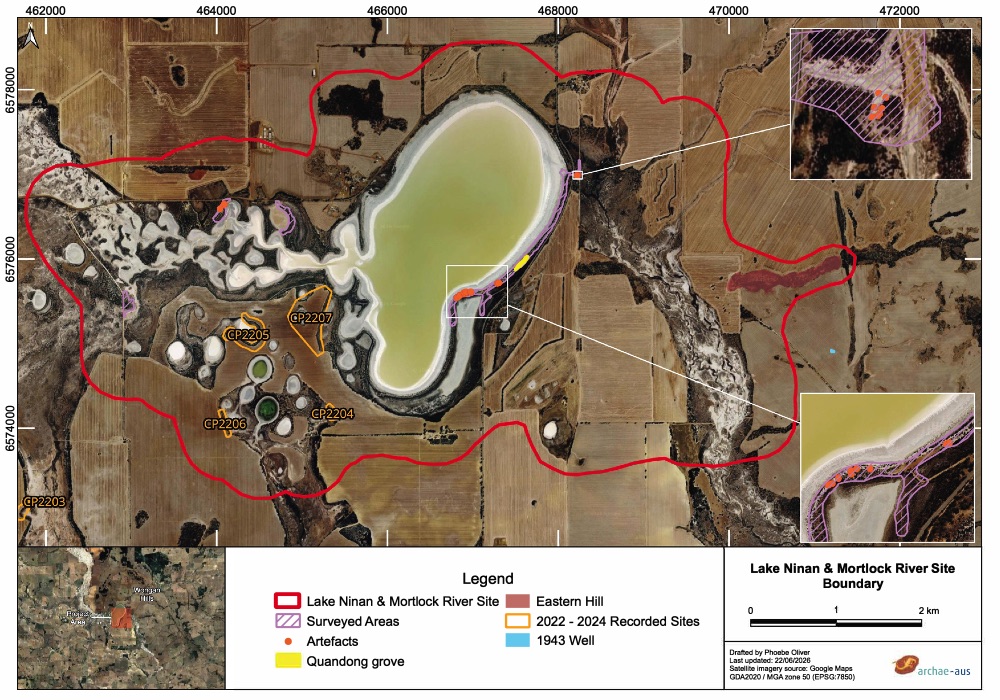
An expert survey team comprising of Yued Nyoongar knowledge holders, archaeologies and anthropologists found stone artefacts across the area, adding to four scatters previously recorded in 2022. These surface finds are the visible expression of much larger buried deposits, likely amounting in the tens of thousands.
Dating at a nearby site shows Yued Nyoongar people were living around these lake systems by at least the mid-Holocene (5,000 years ago), with the deepest artefacts from sediments older than about 14,100 years.
“When it was fresh water, there would have been kangaroos all around, emus too,” Yued Nyoongar man Clayton Mogridge said.
An unbroken thread of cultural connection
This is the oldest dated archaeological evidence in the inland Wheatbelt area of Yued Boodja.
The evidence reveals an unbroken thread of cultural connection to this landscape, of ancestral occupation over thousands of years including corroborees near the lake within living memory of Yued Nyoongar Traditional Owners. Hunting and gathering knowledge has been passed down through families, and Yued have shared childhood memories of swimming and family time when the lake was still fresh water.
A quandong grove of approximately 30 trees on the eastern shore of the lake was identified by Yued Nyoongar survey participants as evidence of ongoing Yued use and care of the area.