Why I know Charlie Kirk was wrong about affirmative action
By HARRY STEWART
“If I See a Black Pilot, I Hope He’s Qualified.” [SIC]
I never thought a single sentence could hit me like a punch to the gut: “If I see a Black pilot, I’m going to be like, ‘Boy, I hope he’s qualified.’”
I stumbled across this inflammatory quip, voiced by far-right commentator Charlie Kirk listening to the BBC’s ‘Americast’ podcast in the fallout of Kirk’s assassination.
This quip drips with the assumption that people of colour in high-skilled roles are there only thanks to affirmative action and are probably unqualified.
Kirk made a career of touring college campuses with his provocatively titled “Prove Me Wrong” events, attacking diversity, equity, and inclusion (DEI) programs. Earlier this month, in a grim turn of events, he was shot dead on stage during one such tour.
His death cast a long shadow over an already divisive debate. But as an Aboriginal Australian who directly benefited from affirmative action, I can tell you his comment is not just absurd – it’s divisive.
In this piece, I’ll show how affirmative action in Australia has built a stronger, more diverse middle class from marginalised communities, proving wrong the myth that opportunity is a zero sum game, which comes at the expense of quality or merit.
The Backlash Against DEI and the ‘Unqualified’ Myth
Charlie Kirk’s remark encapsulates a growing backlash against affirmative action and DEI programs.
In the US, we’ve seen race-conscious university admissions struck down and right-wing figures claiming that diversity initiatives produce unprepared “quota hires.”
The narrative goes that if a woman, an Aboriginal person, or any person of colour is in a job or university spot, they got an unfair leg-up and might not really be up to scratch.
Kirk’s own words extended beyond pilots – he openly questioned if a “moronic Black woman” [SIC] in customer service got her job through excellence or “because of affirmative action”.
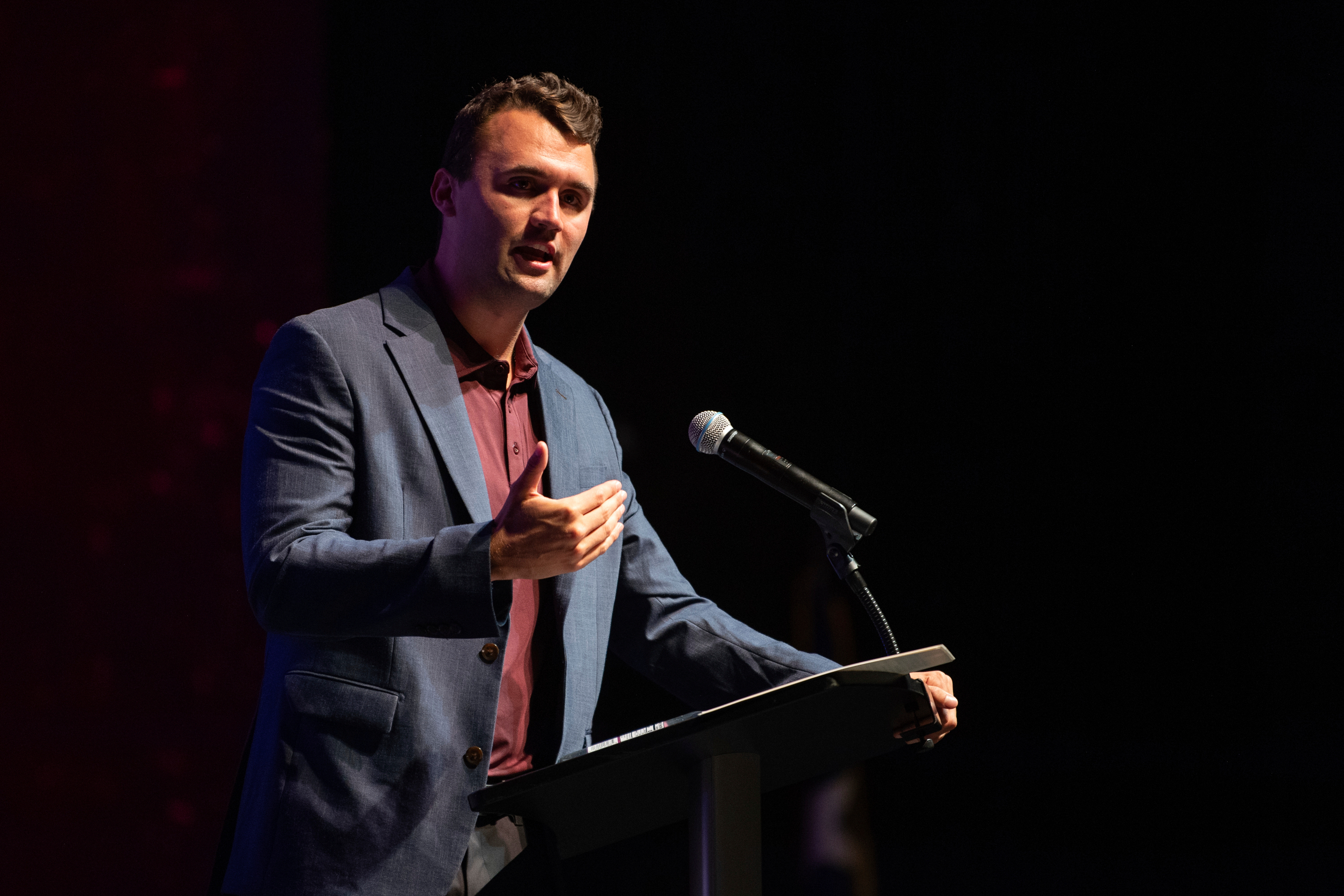
Charlie Kirk’s remark encapsulates a growing backlash against affirmative action and DEI programs.
This line of thinking is ridiculous. It ignores the very real barriers that affirmative action is designed to overcome, and it disregards the hard-earned achievements of people like me who have come through these programs.
Let’s be clear: affirmative action does not hand out free passes. Whether in a cockpit or an operating theatre, nobody wants or gets an unqualified person – lives are on the line.
What affirmative action does is ensure that capable people from historically excluded groups get a chance to qualify.
It levels the playing field in an uneven society. In Australia, we often don’t use the exact phrase “affirmative action,” but we absolutely practice it – through special entry schemes, scholarships, identified positions, and targets aimed at including those who’ve been left out.
For example, the New South Wales public service can designate some job vacancies for Aboriginal applicants only as a lawful affirmative measure. Far from lowering standards, these initiatives raise the bar over time by unlocking talent that would otherwise be wasted. The results in Australia tell a success story that belies the fearmongering.
Affirmative Action in Education – Opening University Doors
Education has been the frontline of affirmative action in Australia. Thanks to a range of programs – Indigenous scholarships, remote student pathways, bridging courses, and university quotas – many more Aboriginal and Torres Strait Islander students are getting in and getting through higher education.
The data speaks volumes: the number of Indigenous Australians attaining university degrees has surged dramatically in the past few decades. Between 1991 and 2016, the count of Aboriginal people with a university degree jumped from under 4,000 to about 15,000 graduates.
That’s nearly a fourfold increase. Not only are more Indigenous students enrolling, but they’re also completing higher degrees in record numbers. From 2010 to 2014 alone, Indigenous university graduations rose by 40 per cent, far outpacing the ~10 per cent growth for non-Indigenous graduates in that period. We are even seeing a “second generation of Indigenous PhDs,”.

Indigenous graduates have the same competence as anyone else.
These gains didn’t happen by accident. They’re the fruit of deliberate policies and support systems. Many universities have Indigenous support units and entry schemes that recognise potential beyond what standard ATAR scores might reflect.
As a result, Indigenous enrolments more than doubled from the mid-1990s to late 2010s, and by 2018 Indigenous students comprised 1.8% of all university students – still modest, but steadily climbing.
Crucially, once qualified, Indigenous graduates have the same competence as anyone else. I’ll never forget my own experience: I was admitted to a law program through an Aboriginal entry scheme. Was I nervous? Absolutely.
I came in with extra tutoring and support, but I still had to pass the same exams and meet the same requirements as every other student. Which admittedly, I didn’t do the first time around.
But I didn’t give up, I now hold an MBA specialising in Technology Management. I liked it so much; I am now back finishing my Juris Doctor. The only difference was that affirmative action opened the door that bias had kept shut. Inside that lecture hall, it was on me to prove I deserved to stay – and I did.
From Classroom to Career – Building a Diverse Middle Class
Affirmative action in hiring has extended these opportunities from campus to workplace. Over the years, government and industry employment programs have actively recruited Indigenous Australians and other marginalised groups into stable, well-paying jobs.
The positive impact on our community is evident in the rise of an Indigenous middle class. By 2006, over 14,000 Aboriginal people were employed in professional occupations – roughly 13 per cent of the Aboriginal workforce.
That number has only grown since. In fact, from 1996 to 2006 the number of well-paid Aboriginal professionals rose by nearly 75 per cent (a growth rate double that of non-Aboriginal professionals).
This translates to thousands more Indigenous doctors, lawyers, engineers, teachers, pilots, entrepreneurs, and managers contributing to Australia’s economy and society.
We can see the broader socioeconomic effects too. As more people secured skilled jobs, household incomes climbed and poverty rates in our communities inched downward.
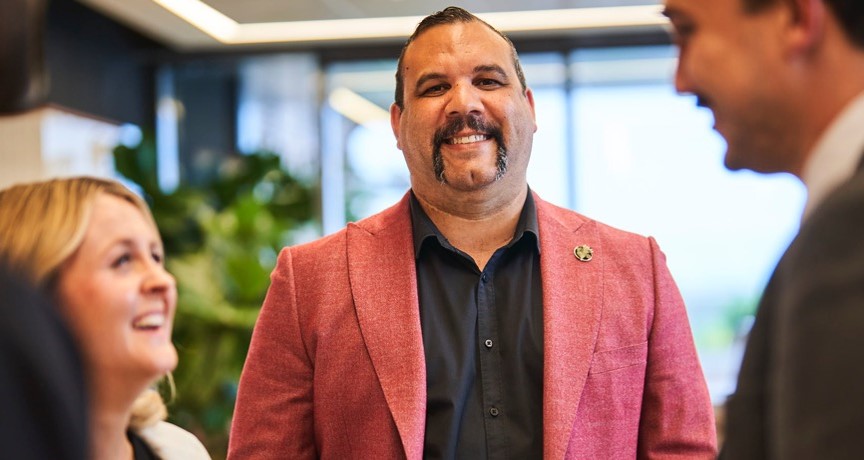
the Westpac’s Indigenous employment program didn’t throw untrained people into senior roles; it offered Indigenous recruits on-the-job training, paid internships, and career development support.
A study found that by 2016 the median disposable income of Aboriginal households had risen to 66 per cent of non-Indigenous households’ income (up from 62 per cent five years earlier) – the highest ratio on record.
National employment statistics reflect this steady progress: between 2016 and 2021, the employment rate for Indigenous Australians aged 25–64 increased from 51 per cent to 56 per cent, and the gap in employment rates between Indigenous and non-Indigenous people shrank by a couple of points in those five years.
That may seem like a small change, but it represents thousands of Aboriginal people moving into the workforce. Each percentage point uptick is hard-won, achieved through apprenticeships, traineeships, diversity recruitment drives and mentorship programs that help our mob navigate workplaces that were once closed to us.
It’s important to note that affirmative action in employment doesn’t mean hiring unqualified people – it means investing in potential.
Take the example of the Westpac’s Indigenous employment program, an Australian case study in affirmative action. Westpac didn’t throw untrained people into senior roles; it offered Indigenous recruits on-the-job training, paid internships, and career development support.
Over time this built a pipeline of qualified Aboriginal staff at most levels of the bank. Similar approaches across multiple sectors have yielded Indigenous employees who are as competent as anyone in their fields – and often bring additional cultural expertise or community networks that benefit their employers.
Qualified and Capable – Proving Them Wrong Every Day
The absurdity of Kirk’s “Black pilot” comment becomes clear when you consider how qualifications actually work.
No one becomes a commercial pilot in Australia without completing rigorous flight training, passing exams, and logging hundreds of flight hours. Airlines don’t lower their safety standards because of diversity targets – every pilot, whether Black, white, or brown, meets the same licensing requirements.
So, if you or I board a Qantas flight and see an Aboriginal pilot in the cockpit, we have zero reason to fear for our safety.
That pilot has proven their skills through countless tests. Affirmative action may have helped that person become a pilot by ensuring they weren’t unfairly passed over in training selection or hiring, but it certainly didn’t hand them a free pilot’s license.
In other words, representation and qualification are not mutually exclusive, in fact, they go hand in hand.
I think of trailblazers like Dr. Karlie James, who graduated through a medical program designed for Indigenous students in the Northern Territory.
She’s now one of the growing numbers of Aboriginal doctors (0.5 per cent of all Australian doctors, up from 0.3 per cent in 2016) working to close the health gap.
People like Dr. James directly challenge the stereotype that affirmative action beneficiaries are under-qualified. On the contrary, they often have to be extraordinarily resilient and resourceful to overcome the hurdles placed before them.
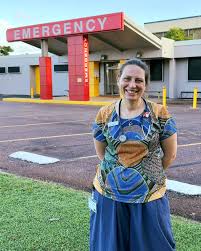
Dr. James completed her degree while raising four kids and caring for extended family. Her patients, both Indigenous and non-Indigenous, are lucky to have a talented doctor who also brings cultural understanding to her practice. That’s the real outcome of affirmative action: not “unqualified hires,” but qualified leaders who enrich their fields and serve their communities.
And it’s not just individuals; it’s a whole positive feedback loop. Every time an affirmative action program helps an Aboriginal student become a graduate or an intern lands a job at a big firm, our society gains.
These newly qualified professionals’ mentor younger Indigenous people, contribute diverse perspectives in decision-making, and often drive initiatives to make services more inclusive.
The effect is cumulative – as Dr. James said about Indigenous doctors, “we hope to have a domino effect” where success multiplies success.
I’ve seen it in my own life: after I benefited from a university scholarship and became a banker, I made it a point to volunteer with mentoring programs for Indigenous high school students.
Some of those kids are now in university themselves. I sit on the board of a non-for-profit that’s principal focus is to enhance the literacy rates of Indigenous Australians.
I have contributed directly to millions of people’s lives and the transfer of billions of dollars around the Australian economy through my work in banking. The return on investment from that one affirmative action opportunity I received is still rippling outward.
Conclusion: We Are Qualified – and We Belong
My story is just one of many. Affirmative action lifted me up, and in turn I’m lifting up others. I often reflect on how different my life would be if those programs hadn’t existed.
I was recently speaking with my mentor, in the executive suite of one of Australia’s biggest companies. She has told me to make sure I focus; I looked up and said to her “growing up, I was never given space or privilege to think that one day my life would be as full and rich as it is”.
I am right, it is just as likely that I never had gone to university, never worn a suit to work, never lived in the inner west. Today I’m a proud member of Australia’s Indigenous upper-middle class – a concept that barely existed a generation ago.
We are teachers, tradies, pilots, doctors, public servants, academics. We are proof that given a fair chance, marginalised people excel and strengthen the whole nation. Our success does not take away from anyone else; it adds to Australia’s collective prosperity and social fabric.
So, when I hear someone like Charlie Kirk sneer, “Boy, I hope he’s qualified,”. I smile, because every day that an Aboriginal pilot safely lands a plane, or an Indigenous doctor heals a patient, or an Indigenous scholar earns a PhD, we are proving him wrong.
The best response to that cynical doubt is our lived reality. Yes, we are qualified – and we’re not just flying planes, we’re flying high on the wings of hard-won opportunity. And if Kirk were here to challenge that, I’d say to him the same words he flaunted to college students: prove me wrong.