Resilience wins Darwin company national recognition
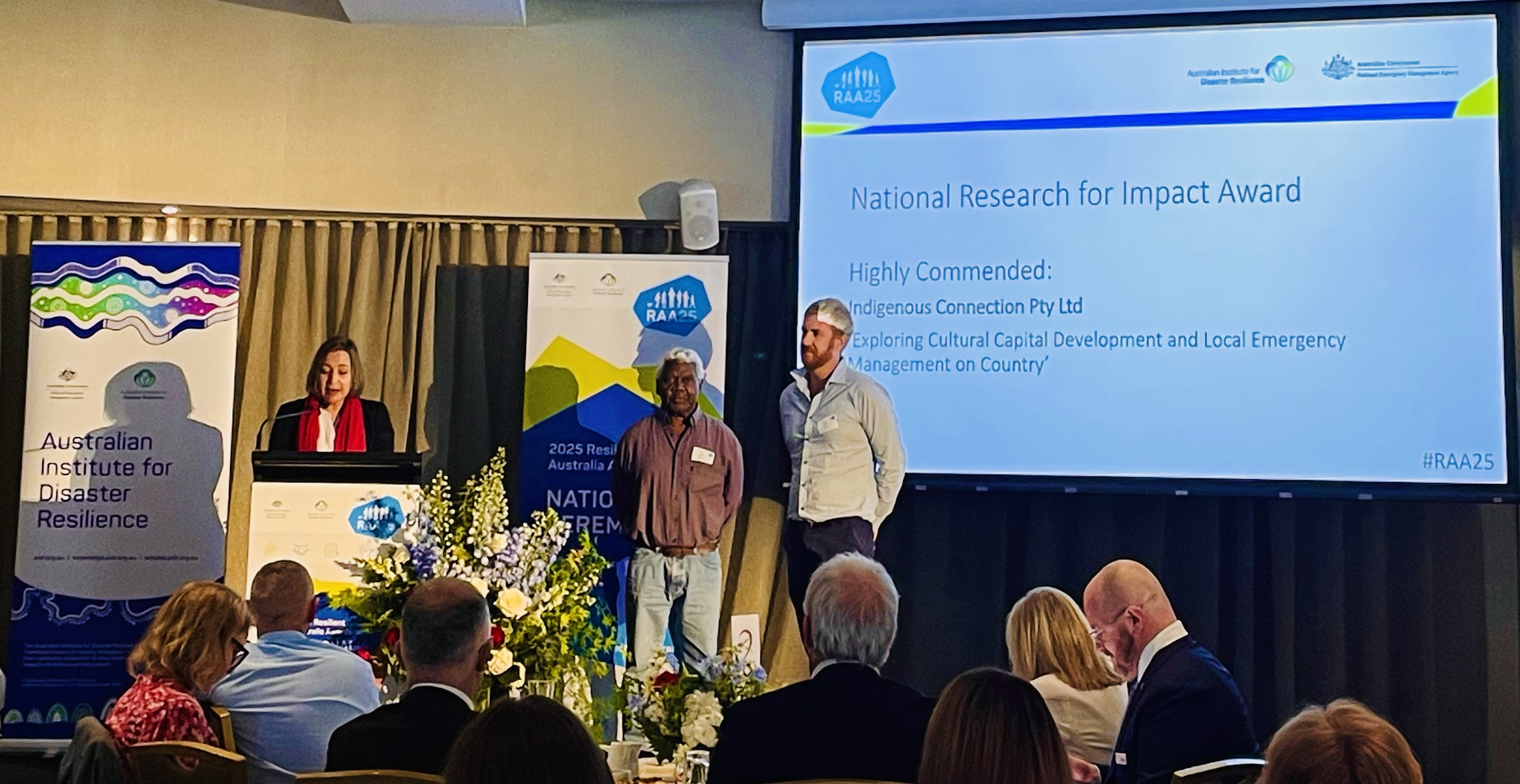
Just 48 hours after Cyclone Fina hit the Northern Territory — including the community of Wurrumiyanga on the Tiwi Islands — Darwin-based company Indigenous Connection was recognised at the 2025 Resilient Australia Awards National Ceremony in Melbourne.
The company received Highly Commended in the Resilient Australia National Research for Impact Award after a significant year of work in which Indigenous Connection, supported by the National Australia Bank Foundation and the Cooperative Research Centre for Developing Northern Australia, delivered a research initiative on the Tiwi Islands titled Exploring Cultural Capital Development and Local Emergency Management on Country.
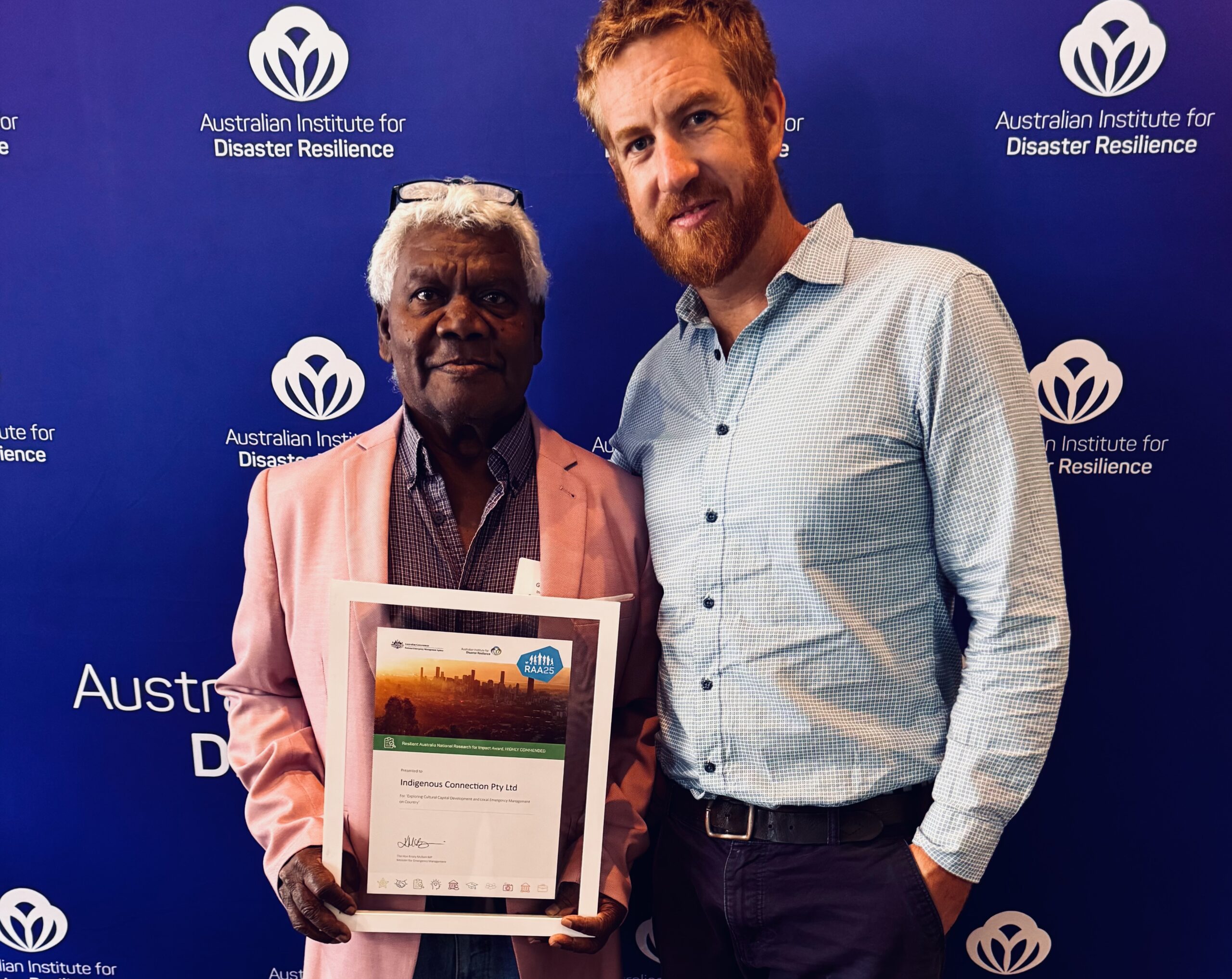
Ian Gumbula (Recognised Senior Yolngu Leader & IC Cultural Knowledge Provider, from Galiwin’ku) and Brad Martin, Indigenous Connection Executive Director at the awards.
The project was co-designed and delivered by Indigenous Connection Cultural Knowledge Providers Francilla Puruntatameri, Virgil Kerinaiua, Mary Munkara, Agnella Tupungwuti and Ian Gumbula.
Employed by Indigenous Connection, they examined how cultural knowledge can strengthen community safety and natural disaster readiness in remote northern communities.
Early this year, Indigenous Connection secured funding through the National Australia Bank Foundation Community Grants Program to design and develop a pilot project aimed at improving Remote Community Natural Disaster Readiness, while also creating paid cultural employment opportunities on Country.
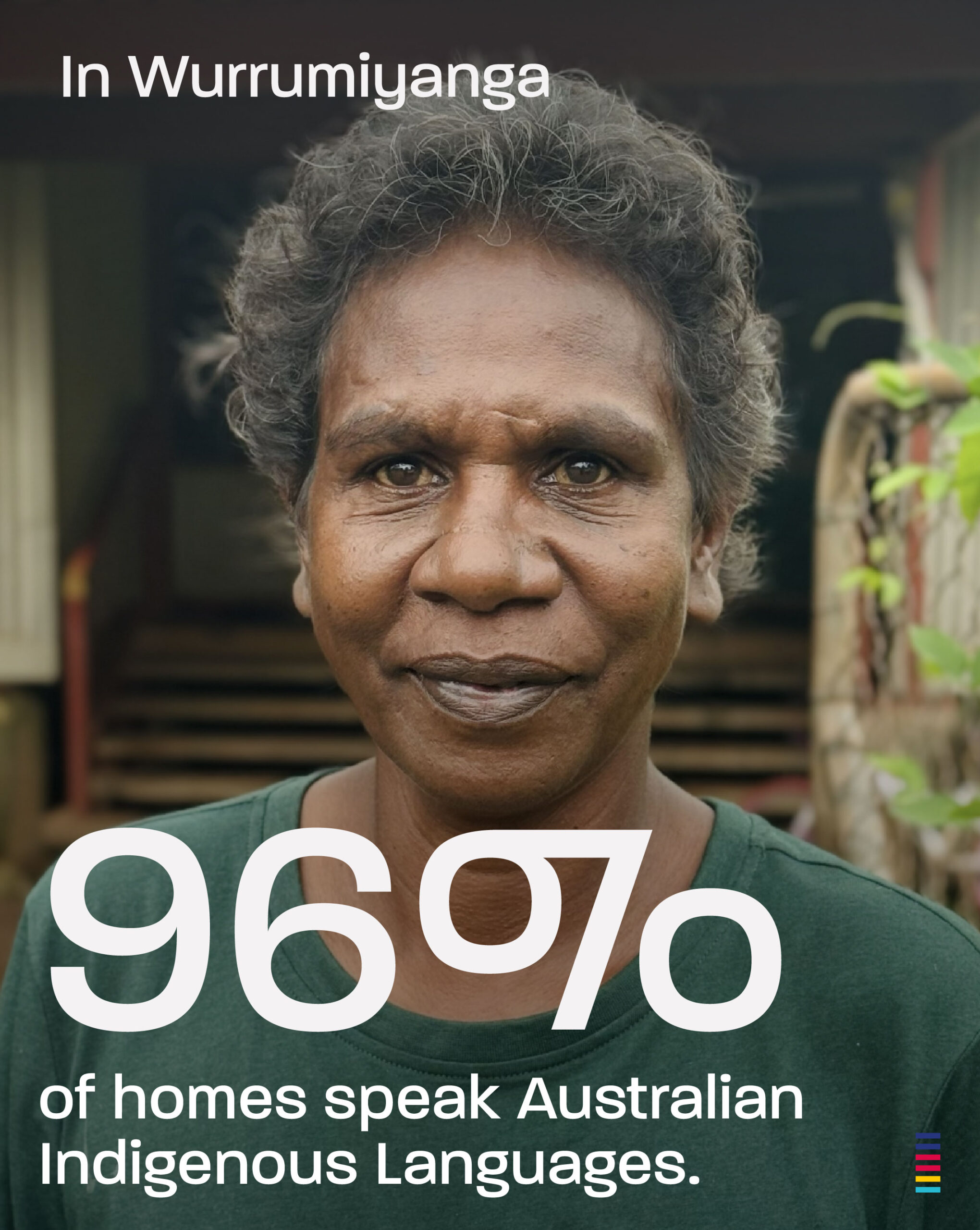
As part of this work, Indigenous Connection partnered with the Northern Territory Emergency Services (NTES) to explore Local Emergency Management processes on Country. NTES identified what was working well and where friction points existed across local emergency management. Key concerns highlighted through the collaboration related to community participation, autonomy, preparedness and resilience.
This work led to the overarching research question:
Could increasing cultural and social capital in local emergency management — including leadership, operations, policy and communications — improve natural disaster readiness across Northern Australia?
And if so:
Does willingness and capacity exist within the emergency management system to supply and demand knowledge for Country, Culture, People and Community?
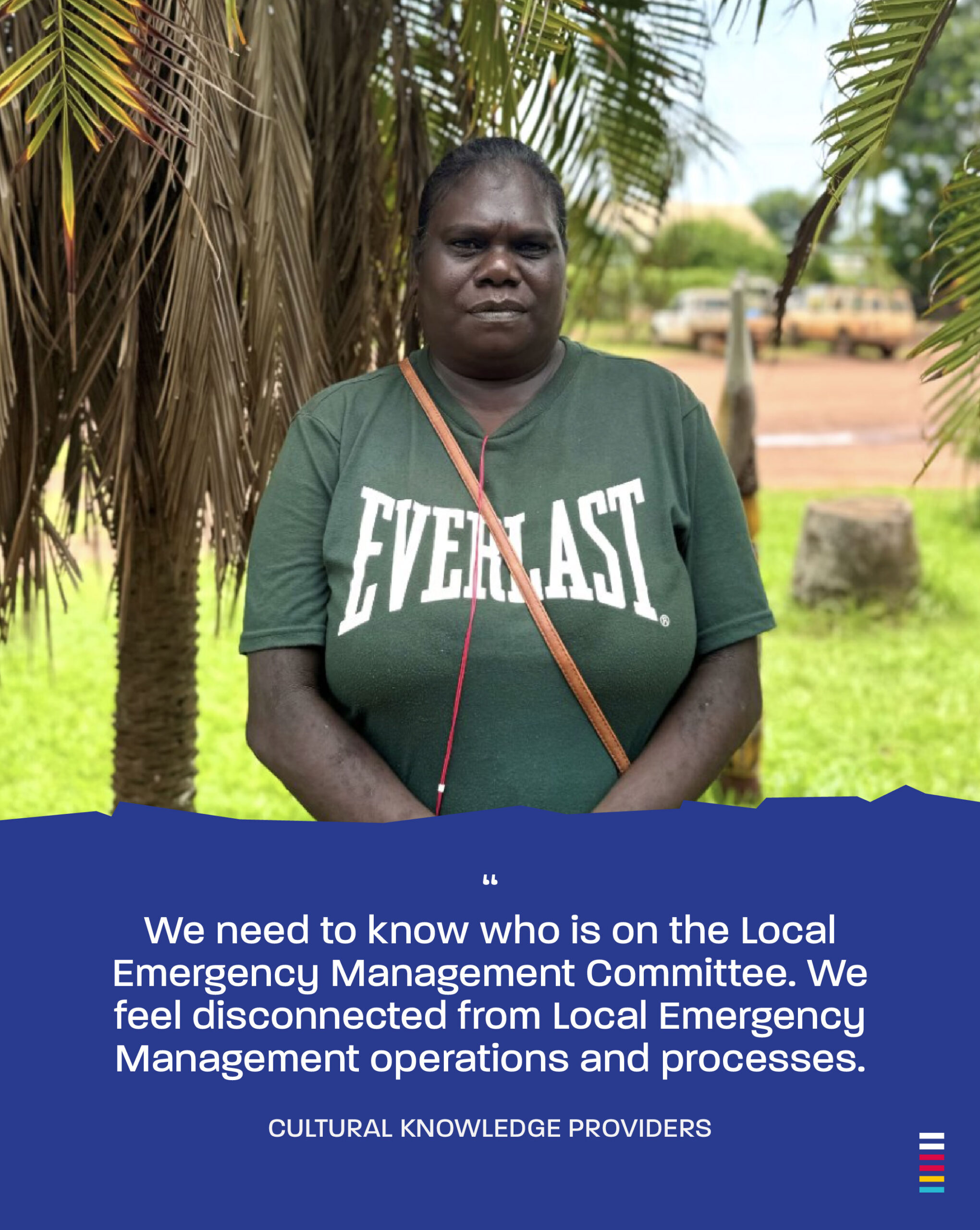
Cultural Knowledge Providers and local Police members across the Tiwi Islands participated in an applied, on-Country research process, sharing their experiences, perspectives and priorities. The project also compared voluntary community participation with paid cultural employment pathways.
Indigenous Connection staff participated in Local Emergency Management Committee meetings — demonstrating both strong community capacity and strong interest in participating formally in emergency management structures.
The research identified opportunities to embed cultural capital across four spheres of Local Emergency Management:
- Situational Analysis
- Leadership Design
- Communications
- Community Engagement
Conclusion
At a small scale, the research identified clear cultural capital gaps within Local Emergency Management processes. These gaps could be addressed through deeper investment in cultural capital development, the integration of Cultural Knowledge Providers, and the creation of expanded community employment pathways within emergency management roles.
The findings confirm that high levels of community willingness and capacity to participate in — and be employed within — Local Emergency Management on the Tiwi Islands absolutely exist.
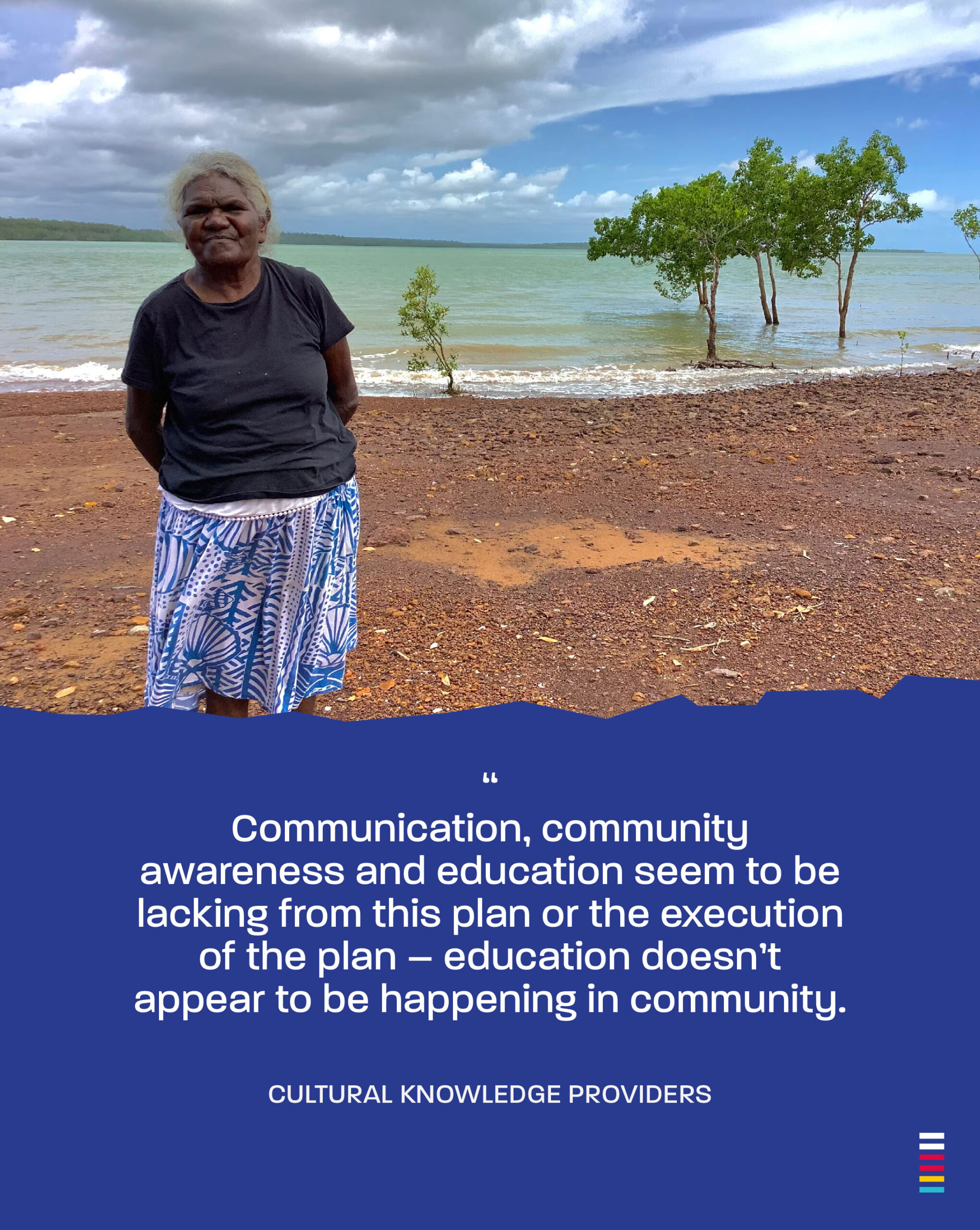
Indigenous Connection’s recognition at the 2025 Resilient Australia Awards highlights the growing importance of culturally informed, community-led approaches to natural disaster readiness across Northern Australia.
https://www.indigenousconnection.com