Police decisions questioned at inquest of Aboriginal man’s death
A coronial inquest in Victoria is scrutinising police decisions made during the arrest of Aboriginal man Jeffrey Winmar, 28, who died at Box Hill Hospital in November 2023, two days after an arrest in Melbourne’s east.
The inquest has been tasked with examining how police requested, cancelled and then re-requested an ambulance during the arrest of Mr Winmar.
It is also testing the cause of his cardiac arrest, investigating reported liver lacerations, and seeking clarification of his cause of death in general. Additionally, the court is exploring the response to his deterioration while in the presence of police.
Key Points
- Inquest examines ambulance request, cancellation and re-request during arrest
- Officer admits cancelling ambulance without full knowledge of condition
- Winmar said he could not breathe before he stopped breathing
- CPR performed by police until ambulance arrived at the scene
- Cause of death under review, including cardiac arrest and liver lacerations
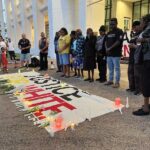
- Family holds smoking ceremony and calls for accountability
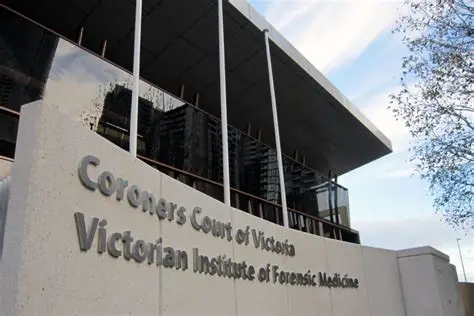
- Inquest continues at the Coroners Court of Victoria
Victoria Police Leading Senior Constable Paul Silvy recounted the arrest before the Coroners Court of Victoria on Thursday. He told the court Mr Winmar was wanted in relation to the theft of a motor vehicle and an aggravated burglary, and that he was positioned at the rear of the target property in case the wanted man attempted to evade police. A drone operator, the canine unit and detectives had been called in to assist with the operation.
Leading Senior Constable Silvy said he saw Mr Winmar appear suddenly on the roof of the property. He told the court the 28 year old did not listen to commands to stop, jumped off the roof and out of his view, and was then chased by other officers. Shortly afterwards, police caught up with Mr Winmar and Leading Senior Constable Silvy assisted with taking him into custody.
Could have acted differently
According to Leading Senior Constable Silvy, he formed the view that Mr Winmar was alert and talking and decided to call off an ambulance that had been requested. He said that decision was relayed to a senior colleague. He told the inquest that had he known Mr Winmar had been unconscious, he would have made a different decision.
Through questioning by counsel assisting, Lindsay Spence, it was put to the officer that he had called off the ambulance without knowing that Mr Winmar had been unconscious, for how long he had passed out, and without speaking with colleagues who had seen him pass out. He agreed he made the decision without being fully informed and said that in hindsight he would have acted differently.
It was further put to him that the ambulance was later re-ordered but cancelled a second time. Leading Senior Constable Silvyy said he could not recall that taking place.
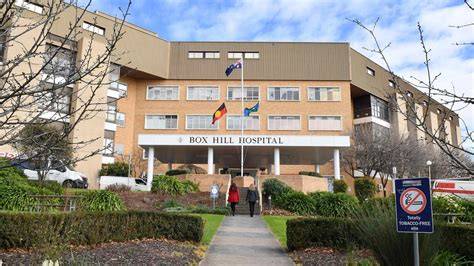
Two days after the arrest, Mr Winmar died in hospital.
Medical deterioration
Mr Winmar was moved to a footpath, where Leading Senior Constable Silvy said he told officers he could not breathe. The officer told the court he appeared drug affected. According to his testimony, Mr Winmar later stopped breathing. Leading Senior Constable Silvy, who was in tears while recounting the incident, stated that he administered CPR until an ambulance arrived.
Two days after the arrest, Mr Winmar died in hospital. The inquest is considering the medical evidence around his cardiac arrest and reported liver lacerations, along with the chain of police decisions that preceded his death.
Community impact
The case is being closely watched by community members concerned about decision-making during critical incidents involving Aboriginal people. The inquest’s focus on the timing and adequacy of medical intervention, alongside reported injuries and cardiac arrest, positions the court’s findings as potentially significant for practice and oversight. The matter remains before the Coroners Court, and the inquest continues.