‘Obscene’ rates of Indigenous child removals persist
By KEIRA JENKINS
Indigenous children continue to be removed from family at ‘obscene’ rates, as advocates urge an overhaul of how child protection is approached.
The Family Matters report has found early intervention and community-led supports are chronically underfunded, with investment instead skewing towards crisis interventions such as removals.
“Without action on the underlying causes of intervention, like poverty, housing insecurity, racism and exclusion from services, and improved supports for families experiencing crisis, little will change,” the report said.
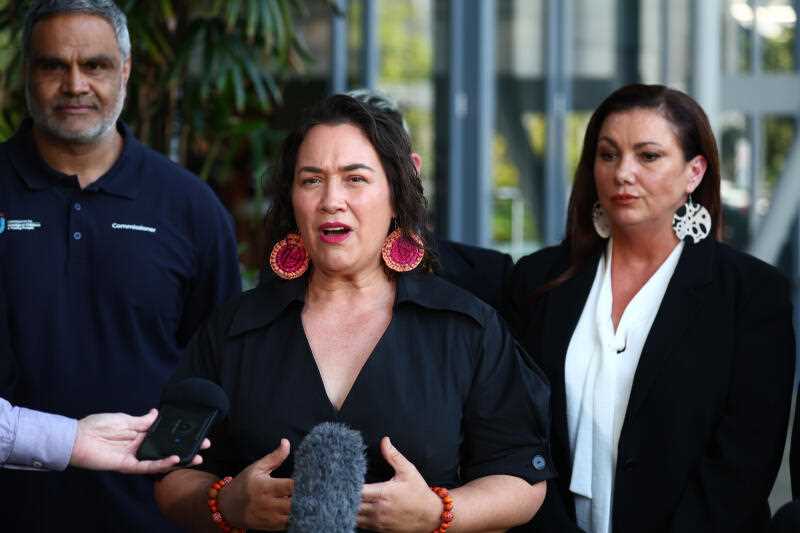
The number of Indigenous children removed from families remains obscene, Catherine Liddle says. (Jason O’BRIEN/AAP PHOTOS)
Aboriginal and Torres Strait Islander children are 9.6 times more likely to be removed from their parents than non-Indigenous kids, and make up 45 per cent of those in out-of-home care, the report found.
Catherine Liddle, chief executive of peak body for Indigenous children SNAICC, said the Family Matters report, now in its 10th year, came from a need to keep governments accountable on the number of children being removed from family.
“There were no eyes on this alarming figure,” she said.
Badly designed
“Today the number is still obscene.”
Just seven per cent of Aboriginal and Torres Strait Islander children were reunified with family, compared with 10 per cent of non-Indigenous kids.
Richard Weston is the chief executive of Maari Ma Health in the far-west NSW town of Broken Hill.
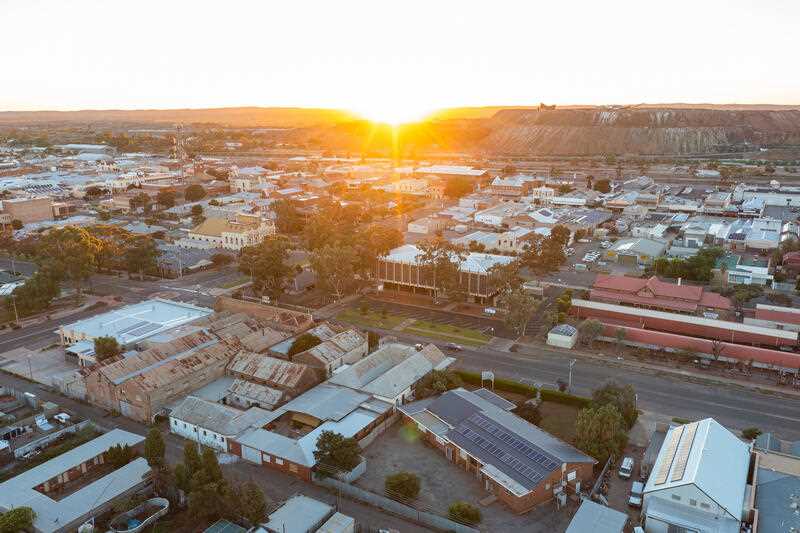
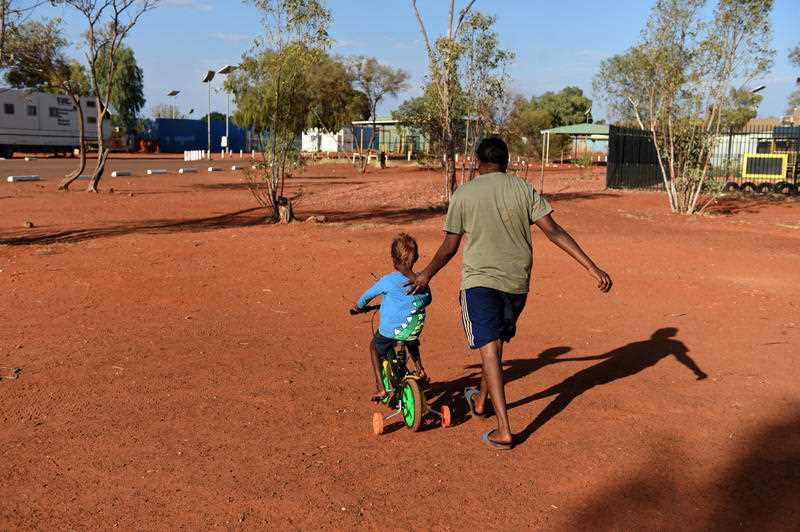
Maari Ma Health in Broken Hill is focused on supporting entire families, not just children. (Stuart Walmsley/AAP PHOTOS)
Every program the health service offers was related to the community’s needs, Mr Weston said.
Their focus was supporting entire families, with their “healthy start” and early-years programs focusing not just on children but their carers and other adults in their lives.
He said unlike Maari Ma’s approach, the child protection system was not designed to prevent families becoming at risk of having kids removed.
“It’s badged as a child protection system – I don’t think it’s a child protection system, it’s a child removal system,” he said.
Key findings
Just under 16 per cent of money spent on child protection went to family support services, which focus on early intervention tactics, while six per cent was spent on Aboriginal community-controlled organisations.
Ms Liddle said these organisations were critical to addressing the over-representation of Indigenous children in out-of-home care.
Key findings include:
- Aboriginal and Torres Strait Islander children are 9.6 times more likely to be in out-of-home care or on third-party parental responsibility orders than non-Indigenous children.
- Aboriginal and Torres Strait Islander infants are 8.9× more likely to be placed in out-of-home care than non-Indigenous infants.
- Only 7.3 per cent of Aboriginal and Torres Strait Islander children in out-of-home care or on third-party parental responsibility orders were reunified with family, compared to 10.1 per cent of non-Indigenous children.
- 37.6 per cent of Aboriginal and Torres Strait Islander children exited out-of-home care to other circumstances, including homelessness and detention.
- Only 15.6 per cent of total child protection expenditure was spent on family support services, meaning roughly 16 cents of every $1 is invested in prevention.
- Nationally (excluding WA), only 6.8 per cent of child protection spending was directed to ACCOs, with most jurisdictions spending under 10% of their child protection budgets through ACCOs.
- 32.1 per cent of Aboriginal and Torres Strait Islander children in out-of-home care were placed with Aboriginal and Torres Strait Islander relatives/kin.
“The whole system needs to be turned upside down,” she said.
“While all investment is put into the crisis end we’ll never be able to change the story at the scale and speed we need to and every time we fail to do that, we have lost an opportunity.”
Mr Weston said rather than focus on improving the child protection system, a new path needed to be forged that was focused on strengthening family units and keeping children at home.
‘Making lives a misery’
“Kids that come out of care always tell us they want to be with family, even if their families aren’t perfect,” he said.
“That’s their identity, that’s their connection to culture, to 65,000 years of history, and that’s what we should be building, a system that supports families and supports children.
“Unfortunately the child protection system doesn’t do that, it’s set up to punish vulnerable families and make their lives misery.”
Family Matters 2025 calls on governments to honour their Closing the Gap commitments by transferring power and resources to Aboriginal and Torres Strait Islander communities.
This includes:
- Guaranteeing equitable access to culturally safe, community-led early years and family support services.
- Transferring authority and decision-making to Aboriginal and Torres Strait Islander people and organisations, including legislated ACCO-led family decision-making and youth participation frameworks.
- Ensuring culturally safe and responsive laws, policies and practices that uphold the Aboriginal and Torres Strait Islander Child Placement Principle, end adoption from out-of-home care, and strengthen reunification supports.
- Building transparency and accountability through Aboriginal and Torres Strait Islander peak bodies and Commissioners for Aboriginal and Torres Strait Islander children and young people in every jurisdiction, supported by stronger data to track progress and outcomes.
13YARN 13 92 76
Lifeline 13 11 14
AAP