Marree Man geoglyph still a mystery
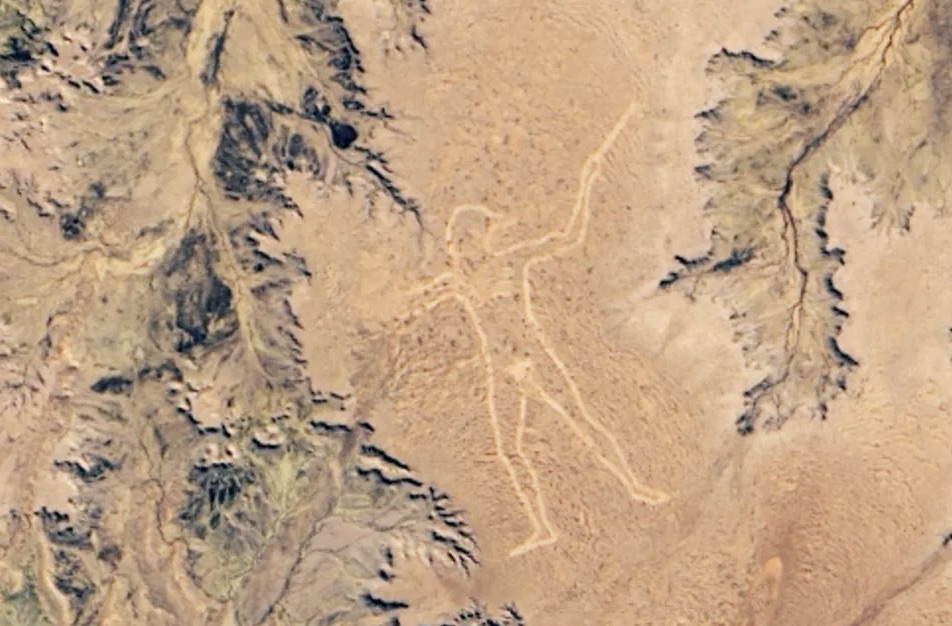
First discovered by a passing pilot in 1998, the giant ‘Marree Man’ carving, or geoglyph, in South Australia is still a mystery to scientists.
The Indigenous-inspired artwork covers 3.5km across at its widest point on the Finniss Springs Plateau and depicts an Indigenous man throwing either a woomera stick, or a boomerang. Experts are still no wiser as to who carved the original, which was re-carved using a digger and GPS systems in 2016, as is slowly disappeared due to wind erosion.
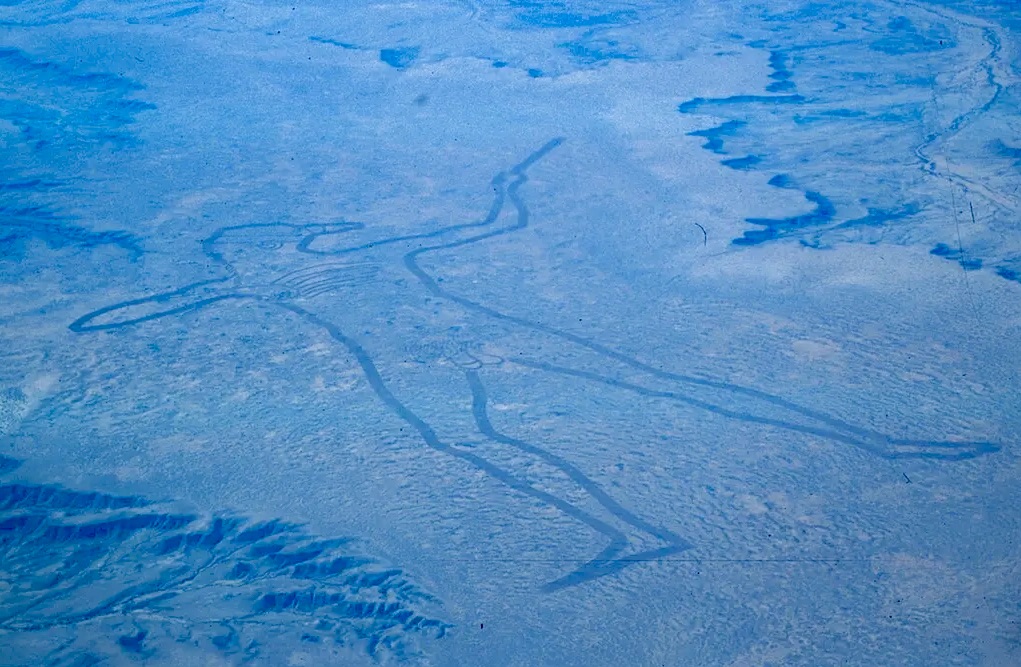
The Marree Man was discovered by a charter pilot in 1998. This image was the image captured by another pilot a few weeks later. (Image credit: Peter Campbell/Wikimedia)
That job took about 60 hours to complete, which has raised questions as to how the original was created.
Dick Smith offered $5000 reward for any information about its origin in 2018, but to this day there is still no authentic proof.
The name Marree Man is a link to the nearest township of Marree, nearly 600km north of Adelaide.
Harry Baker, a UK journalist writing in Live Science, suggested it could be relatively new, compared to other similar sites around the worked that date back centuries.
“There is also evidence that it may have been created by American personnel at a nearby Royal Australian Air Force base, as a small plaque with the US flag was uncovered near the giant’s head,” Baker wrote.