Wyatt urges action as ‘black cladding’ claims mount
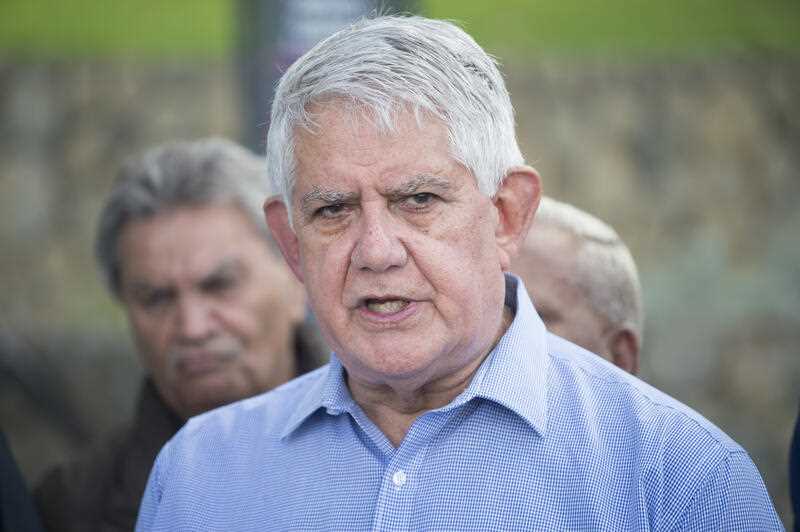
Former Aboriginal affairs minister Ken Wyatt has called for decisive action to address alleged ‘black cladding’ within the Commonwealth’s Indigenous Procurement Policy, warning that if systemic rorts continue, the program should be shut down.
His concerns focus on joint ventures he says use token Aboriginal participation to win contracts without genuine Indigenous leadership or control.
Key Points
- Ken Wyatt warns the Indigenous Procurement Policy risks systemic ‘black cladding’
- Wyatt cites token joint ventures that secure contracts without real Aboriginal control
- ANU analysis found contract value highly concentrated among few businesses
- 27 per cent of total contract value had unidentified Indigenous ownership status
- Canberra firms received 18 per cent of Commonwealth contracts, Wyatt noted
- From July 1, IPP lifts required First Nations ownership to 51 per cent
Concerns over procurement integrity
Wyatt, the former member for the WA federal seat of Hasluck, said legitimate Aboriginal-owned companies are being sidelined by entities that pair with Indigenous partners primarily to qualify for Commonwealth contracts. He described this as a proliferation of ‘false flagged’ arrangements in which on-paper partnerships mask non-Indigenous control of delivery and decision-making.
He characterised ‘black cladding’ as deals where a company pays an Aboriginal partner to lend their name to a venture, while the non-Indigenous principal retains capacity and control.
He recounted a visit from three non-Indigenous men and two Aboriginal elders who told him they had started a joint venture. When he asked the elders about their role, he said they described a fixed payment in a way that, to him, demonstrated the practice was not theoretical. Mr Wyatt claimed he knew of several Indigenous directors who receive only a salary and have very limited participation, which he considers a hallmark of black cladding. He argued that a genuine Aboriginal business partner should co-lead and be involved in decision-making, consistent with corporate governance expectations.
“If that is happening, then something needs to be done. Or alternatively, the government should shut the program down,” Mr Wyatt said.
He said he raised the issue with Prime Minister Anthony Albanese and Federal Minister Malarndirri McCarthy in October last year. As Aboriginal Affairs minister, he said he ordered a Cabinet paper to tighten regulation and improve the integrity of identifying genuine businesses, but reform was halted by the 2022 election.
Concentration of contracts and geographic skew
Recent analysis by the Australian National University has added weight to concerns about the distribution of contracts under the Indigenous Procurement Policy since its inception in 2015. Social policy researcher Christian Eva found that, while the program generated contracts for 3900 Indigenous businesses, half of all contracts over $10,000 went to just 11 businesses. Eva also found that half of the accumulative value of contracts above $10,000 was awarded to 18 businesses.
Eva reported that 27 per cent of the total value of all contracts went to businesses with an unidentified Indigenous ownership status, describing that finding as deeply troubling and questioning how the program’s main requirement could be treated so flexibly. Wyatt said the pattern of awards raises further questions about whether the program is working as intended across communities, particularly outside major capitals.
According to Mr Wyatt, contracts have flowed mainly to businesses in major cities despite most Indigenous Australians living outside those centres. He noted what he called a curious concentration in Canberra, where the ACT has only 1 per cent of Australia’s Indigenous population yet secures 18 per cent of Commonwealth procurement contracts.
He said very few Indigenous groups in regional Australia access the program and that this disparity should have triggered a government probe into potential misuse of significant public funds.
From July 1, the Indigenous Procurement Policy will increase the required First Nations ownership and control threshold to 51 per cent. Mr Wyatt said this shift will not, on its own, resolve black cladding. He argued that joint ventures can still be structured so that, despite a nominal 51 per cent Indigenous shareholding, non-Indigenous control remains in practice.
Mr Wyatt also rejected claims that a lack of board-ready Indigenous candidates is a barrier to genuine leadership. He said that where local expertise is not immediately available, companies can bring in a couple of executive directors to work with community representatives and manage in line with their wishes and Commonwealth legislation. He urged boards to identify bright community members, mentor them, and develop their capacity — from reading papers and shadowing meetings to making decisions and asking the right questions.




- ACT
- AFL / AFLW
- Arts
- Athletics and Olympics
- Business
- Conditions and Research
- Culture
- Elections
- Employment and Careers
- Enterprise and Startups
- Entertainment
- Events and NAIDOC
- Fashion
- Film and TV
- Food
- Government and Policy
- Grants and Funding
- Health
- Healthcare and Services
- Heritage and History
- International
- Language
- Legal and Justice
- Lifestyle
- Mental Health and Wellbeing
- Music
- National
- News
- NRL and Rugby League
- NSW
- NT
- Olympics
- Opinion
- Other Sports
- People and Profiles
- Podcast
- Politics
- Property and Land
- QLD
- SA
- Sports
- TAS
- Technology
- Travel
- Treaty and Truth-telling
- VIC
- Voice and Referendum
- WA