Study targets gaps in Indigenous bone screening
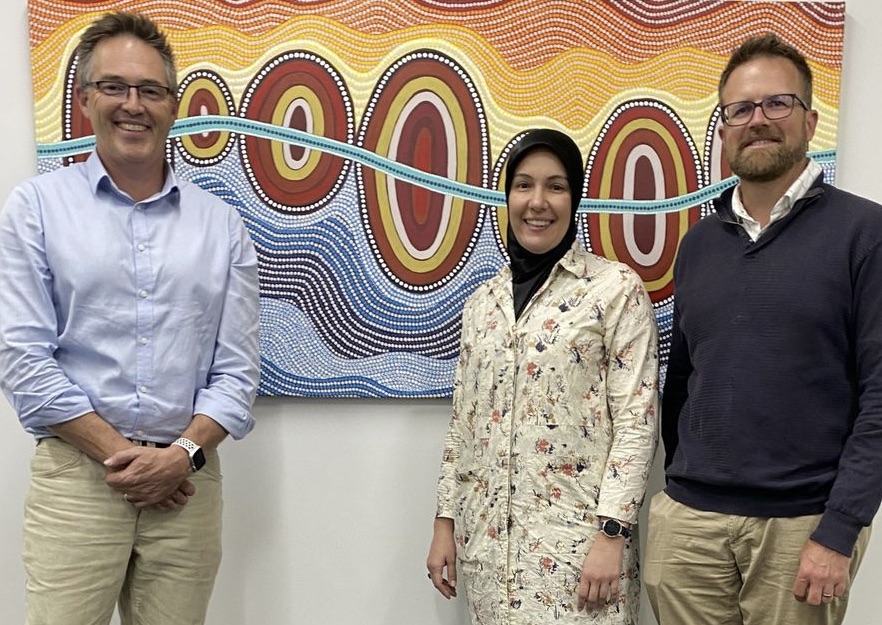
Spartan First Imaging and academic partners from Monash University and Edith Cowan University have launched advanced bone imaging work in Kalgoorlie-Boulder this week, aiming to reshape how osteoporosis risk is identified and managed for Aboriginal and Torres Strait Islander peoples across Australia.
Leading researchers, Associate Professor Ayse Zengin and Professor Josh Lewis, visited Kalgoorlie-Boulder to calibrate peripheral quantitative computed tomography (pQCT) technology and train Spartan First Imaging’s local team.
The work is part of the SIMBA (Study of Indigenous Muscle and Bone Ageing) project, which will combine dual-energy X-ray absorptiometry (DXA) with pQCT to capture detailed bone and muscle data.
Key Points
- SIMBA project calibrates advanced pQCT imaging in Kalgoorlie-Boulder
- Monash and Edith Cowan researchers train Spartan First Imaging team
- Study builds first Indigenous-focused musculoskeletal ageing database
- Aims to advocate earlier Medicare-rebated bone density screening
- Seeks population-specific bone density and fracture risk standards
- Project combines DXA and pQCT for detailed bone assessment
- Indigenous-led delivery emphasises cultural safety and participation
The collaboration is framed as a response to the under-recognition, under-screening, and under-treatment of bone disease affecting many First Nations Australians. Researchers and clinicians involved in SIMBA say longstanding screening frameworks and reference standards have not adequately reflected Indigenous health risks, lived realities, or population characteristics.
“Too often, Aboriginal and Torres Strait Islander peoples have been expected to fit within healthcare frameworks that were never properly designed to reflect their unique health profiles, communities, or lived experiences,” Des Headland, CEO of Spartan Imaging, said.
According to the project partners, current Medicare-rebated bone mineral density (BMD) screening criteria frequently miss the earlier onset and disproportionate burden of musculoskeletal disease observed in many Indigenous Australians. As a consequence, opportunities for timely diagnosis, prevention, and clinical management can be lost.
Evidence base to change national screening policy
SIMBA seeks to generate the first detailed musculoskeletal ageing and bone density database specifically focused on Aboriginal and Torres Strait Islander populations. By pairing “gold standard” DXA with advanced pQCT tomography, the consortium plans to build an evidence base to inform policy and practice.
Researchers say the database will be used to:
- Advocate for lowering the Medicare rebate eligibility age for Indigenous Australians to better match real-world disease burden
- Develop appropriate population-specific reference standards for bone density and fracture risk assessment
- Improve early diagnosis of osteoporosis and related bone disorders
- Guide culturally informed prevention and treatment strategies
- Reduce preventable fractures, disability, and associated chronic health complications
- Support Indigenous Australians to remain healthy, independent, connected to family, and on Country for longer
Indigenous-led delivery and cultural safety
Spartan First Imaging is Australia’s first private Indigenous-owned medical imaging provider and says it is honoured to help lead the SIMBA work from regional Western Australia.
By bringing research-grade infrastructure to Kalgoorlie, the organisation says it aims to show that rural and Indigenous communities should not be excluded from cutting-edge scientific advancement.
Indigenous-led healthcare delivery, local partnerships, and culturally meaningful settings can improve participation, trust, and outcomes in communities historically underserved by mainstream systems. The organisation also stated that equitable access to accurate screening and evidence-based care should not depend on geography or heritage.
- AFL / AFLW
- Arts
- Athletics and Olympics
- Business
- Conditions and Research
- Culture
- Elections
- Employment and Careers
- Enterprise and Startups
- Entertainment
- Events and NAIDOC
- Fashion
- Film and TV
- Food
- Government and Policy
- Grants and Funding
- Health
- Healthcare and Services
- Heritage and History
- International
- Language
- Lifestyle
- Mental Health and Wellbeing
- Music
- News
- NRL and Rugby League
- Olympics
- Opinion
- Other Sports
- People and Profiles
- Podcast
- Politics
- Property and Land
- Sports
- Technology
- Travel
- Treaty and Truth-telling
- Voice and Referendum