Indigenous knowledge blossoms in classrooms across the Pilbara
A partnership between Chevron Australia and the CSIRO has successfully delivered a unique program across schools in the Pilbara, in northern Western Australia.
The Living STEM program supports primary and secondary school teachers to embed Indigenous scientific knowledges in classes, through hands-on inquiry projects, increasing student engagement and achievement in Science, Technology, Engineering and Maths (STEM).
Living STEM Project Coordinator and former science specialist teacher, Mhairi King, has hosted several Living STEM workshops and a showcase on behalf of CSIRO, throughout the year.
“The premise of Living STEM is acknowledging that Aboriginal and Torres Strait Islander Peoples are our Nation’s first scientists,” she said.
The annual Living STEM showcase was recently held in Dampier with 52 participants committed to bringing Indigenous knowledges into classrooms. Schools, local organisations and community groups had the opportunity to share stories, projects and experiences highlighting Indigenous scientific knowledge in action.
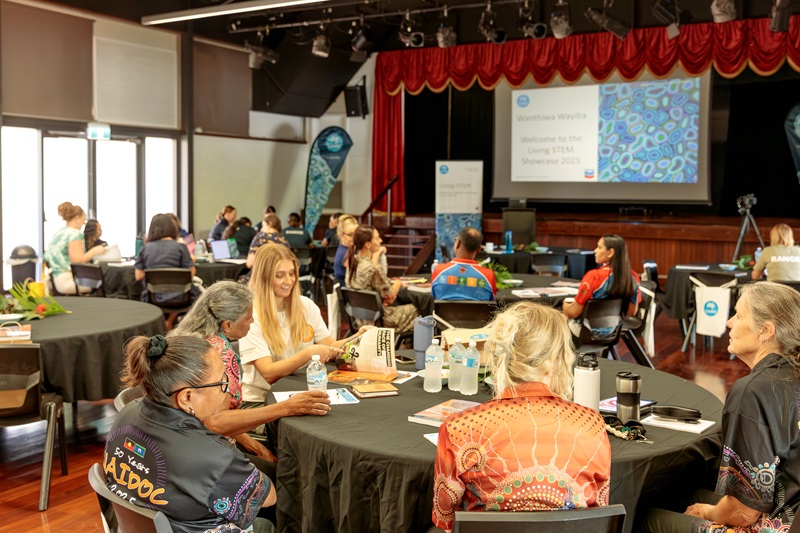
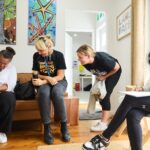
Living STEM showcase participants looking at the Two-Way Science book.
From principals and deputy principals to Aboriginal and Islander Education Officers, Elders, Indigenous Rangers, Aboriginal business owners, CSIRO staff and other government representatives, the Showcase brought the science education ecosystem together.
This year’s showcase followed a botanical theme which featured interactive workshops, school and community presentations and opportunities to hear directly from rangers, scientists and community leaders.
South Headland Primary School Deputy Principal, Adeline Monaghan, said she and other educators are excited about taking their learnings back to their school as they now see it’s achievable to embed the Living STEM program into their curriculum.
“We can get our Rangers to come into the school, work out what plants we can grow, have a trail, have a story, get the Elders to come in,” Ms Monaghan shared.
Showcase participants learnt how they could incorporate local cultural practices from around the Pilbara and engage their own students in Indigenous science practices like using plant dyes on fabrics, making bush medicine and distillation using small-scale laboratory equipment to make essential oils from plants found across the region.
Sara Finn, Head of Department of Science at Hedland Senior High School, attended the showcase for the first time this year.
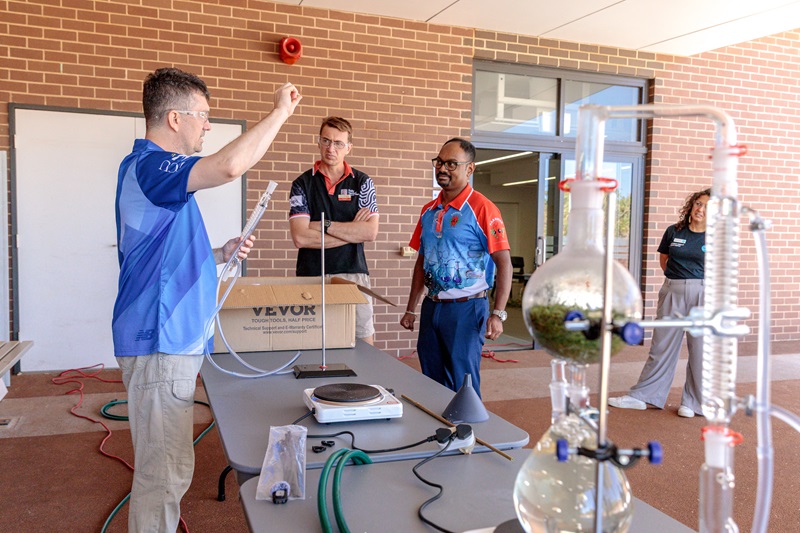
Small scale laboratory equipment set up for the oil distillation workshop with Tristan Gibbs.
“I did the distillation…the essential oils separation, and it was really nice to go back to my chemistry roots to look at how I can embed my own knowledge and experience into on Country learning as well,” Ms Finn said.
All showcase participants were eager to learn about how Indigenous knowledges can blossom in the classroom using local plants. Following the showcase, teachers will adapt these cultural practices and techniques into classroom activities and on Country learning experiences. This approach to Two-Way Science supports best practice Indigenous STEM education and continues to embed Indigenous STEM knowledge and perspectives.
Educators travelled from schools around Karratha and across the Pilbara to use the showcase as a networking opportunity, share how they have been implementing the science curriculum and using Two-Way Science to engage their students and local community. Educators were also able to use the showcase as a learning and development opportunity.
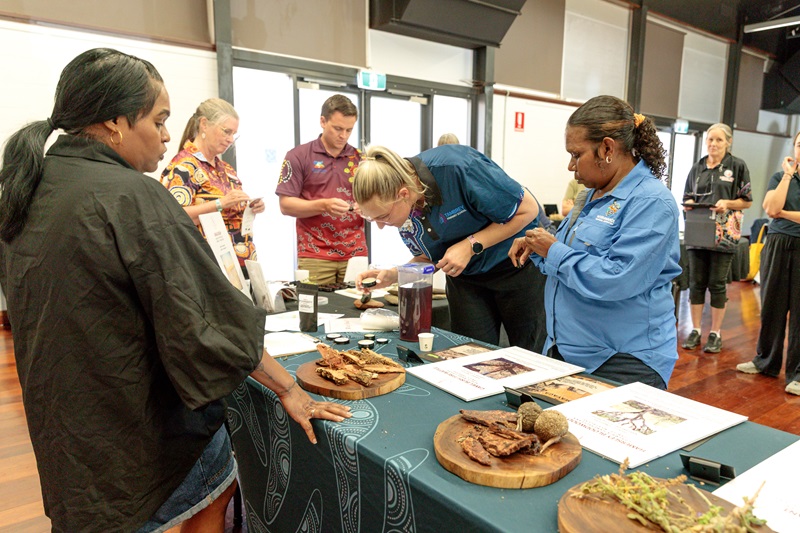
Making bush medicine with Cherylea Walker from Pilbara Bush Remedy.
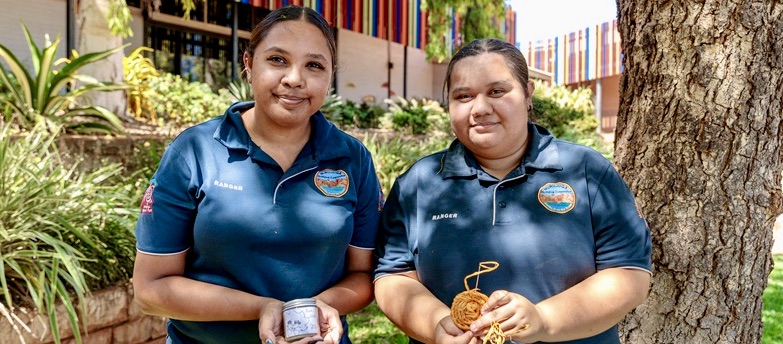
As a spotlight session in the program, local rangers Sarah Hicks and Jade Churnside from Murujuga Aboriginal Corporation explained how they’re working with local schools to pass on their Indigenous knowledges of the Pilbara region like their weaving techniques and making Bush Vicks.
Showcase participants also got to explore Country and cultural knowledge with the Culture of Excellence Virtual Reality program and saw an example of how Year 6 students from Halls Creek District High School, in the east Kimberley region, had developed their own virtual universe.
Implementing the Two-Way Science approach means that teachers are integrating learning programs connecting the cultural knowledge and language of the local community with western science and the Western Australian Curriculum.