IBA and UTS to analyse Indigenous pay gap
Indigenous Business Australia and the University of Technology Sydney’s Centre for Indigenous People and Work have announced a new research partnership to calculate and analyse the pay gap between Indigenous and non-Indigenous people in Australia.
This Indigenous-led initiative seeks to shape national dialogue around economic equality and the Indigenous economy and build the evidence base required for systemic reform in employment, economic policy and Indigenous wages.
At its core, the research recognises that Indigenous wages are a critical driver of both the Indigenous economy and Australia’s broader economy, supporting household incomes, community wellbeing, and national productivity.
Key Points
- IBA and UTS’s CIPW announce Indigenous-led pay gap research partnership
- Project to calculate and analyse Indigenous–non-Indigenous wage disparities
- Focus on fair pay, secure employment, and economic participation
- Findings to build evidence for systemic employment and policy reform
The partnership will also highlight the demographic dividend of a growing, increasingly educated First Nations workforce, and the role that fair pay and secure employment play in boosting workforce participation, productivity and economic growth across Australia.
While Indigenous-owned and operated businesses are an essential and growing part of the Indigenous economy, many Aboriginal and Torres Strait Islander people contribute economically through their work as employees across mainstream industries and workplaces – and have always sought to do so despite active societal and market exclusion.
Ensuring fair pay and secure employment conditions in these workplaces is therefore central to strengthening economic participation, closing income disparities, and supporting long-term prosperity.
“We know that Indigenous wages matter”
— Professor Nareen Young
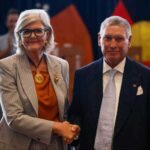
Professor Nareen Young, Associate Dean (Indigenous Leadership and Engagement) at UTS Business School and lead at CIPW, emphasised the project’s focus on employment equity.
“We know that Indigenous wages matter — not just for individual workers, but for families, communities, and the economy as a whole,” Professor Nareen Young said.
“By measuring the Indigenous pay gap, we can clearly show how fair pay translates into higher lifetime earnings, stronger superannuation outcomes, and greater intergenerational economic security for Aboriginal and Torres Strait Islander people.”
Sean Armistead, Deputy Chief Executive Officer of IBA, highlighted the importance of understanding pay and employment outcomes alongside business development.
“Supporting Indigenous entrepreneurship remains vital, and so is ensuring Indigenous peopl are fairly paid for their work across the wider labour market,” he said.
“Supporting Indigenous entrepreneurship remains vital”
— Sean Armistead
“Because that is the largest single contribution that First Nations people make to the economy. This research aligns with IBA’s Strategy Towards 2030 by strengthening the evidence base needed to expand economic opportunity, financial independence, and long-term prosperity for our communities.”
About the Centre for Indigenous People and Work
Established in 2025 as a partnership between the UTS Jumbunna Institute and UTS Business School, CIPW is a First Nations-led research centre dedicated to addressing systemic inequities in Australia’s labour market – including racism, underemployment, and exclusion from leadership – through rigorous research, policy development, and workplace solutions.
By placing Indigenous voices at the forefront, CIPW aims to transform the national conversation on Indigenous employment and drive changes that ensure all Aboriginal and Torres Strait Islander women can thrive in workplaces free from discrimination