From Footy Star to Food Guru: Marlon’s Still Kicking Goals
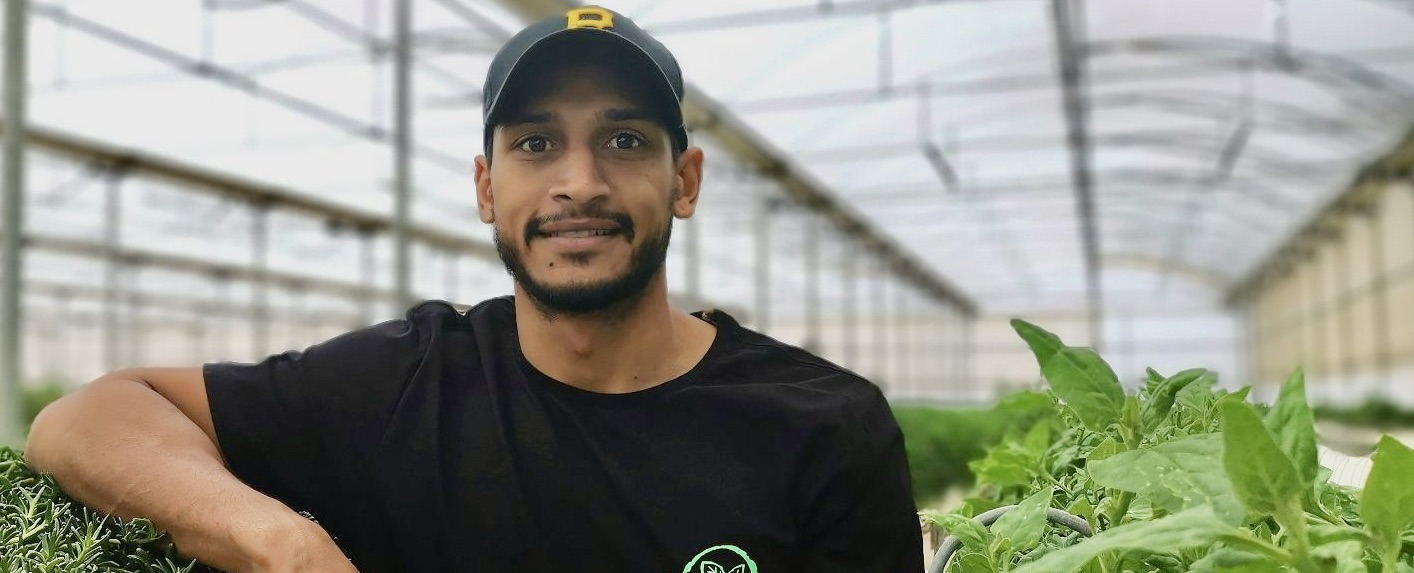
Growing up in Darwin, sitting at his grandmother’s knee, learning to play the guitar Marlon Motlop had no idea he would one day become a food guru.
He wanted to be a footy star – and he achieved that, being drafted by Port Adelaide to play in the AFL in 2008 before a stellar career in the South Australian National Football League and the Western Australian Football league with West Adelaide, Peel Thunder, North Adelaide and finally Glenelg.

Marlon playing for the Glenelg Tigers in the SANFL.
His father a Larrakia man and mum Kungarakany with some Torres Strait Island heritage as well, his Dad insisted he learned to play the guitar, something which has stood him in good stead.
“We had a lot of music in the family,” he told First Nations News.

In fact in his final year in footy he teamed up with Rulla Kelly Mansell to form a duo. Mrin x Rkm and they opened for Midnight Oil at a concert in Adelaide in 2021.
He’s performed at many festivals around the country and on Indigenous Round days in the AFL.
But his life took a new turn – after 12 years of football – when he worked with a company, Something Wild, in the Adelaide Central Markets.
“Then came Native Co with native herbs and produce before Native Kitchen now,” he said.
“I believe there is a gap in the market understanding First Nations and the native food sector.”

Marlon Motlop in action for Port Adelaide n the AFL.
Marlon became a Nuffield scholar in 2020. Nuffield Australia awards scholarships every year to progress farming and agriculture across the country.
“As a result I had the opportunity to travel around the world to meet other Indigenous farmers and learn about First Nations food culture, he said.
“South America, Europe, Canada, Asia and New Zealand. It was an amazing opportunity.”
It has given Marlon the chance to explore what would be possible. How can First Nations people grow that space?
But breaking through on a national scale is a challenge. A challenge to educate on the benefits of so many native foods and then the challenge of scale.
“There is interest in native foods,” he said. “Both nationally and globally.
“Kakadu Plum has one of the highest Vitamin C contents of any fruit and Warrigal Greens, a native spinach alternative, are also rich in vitamins.”
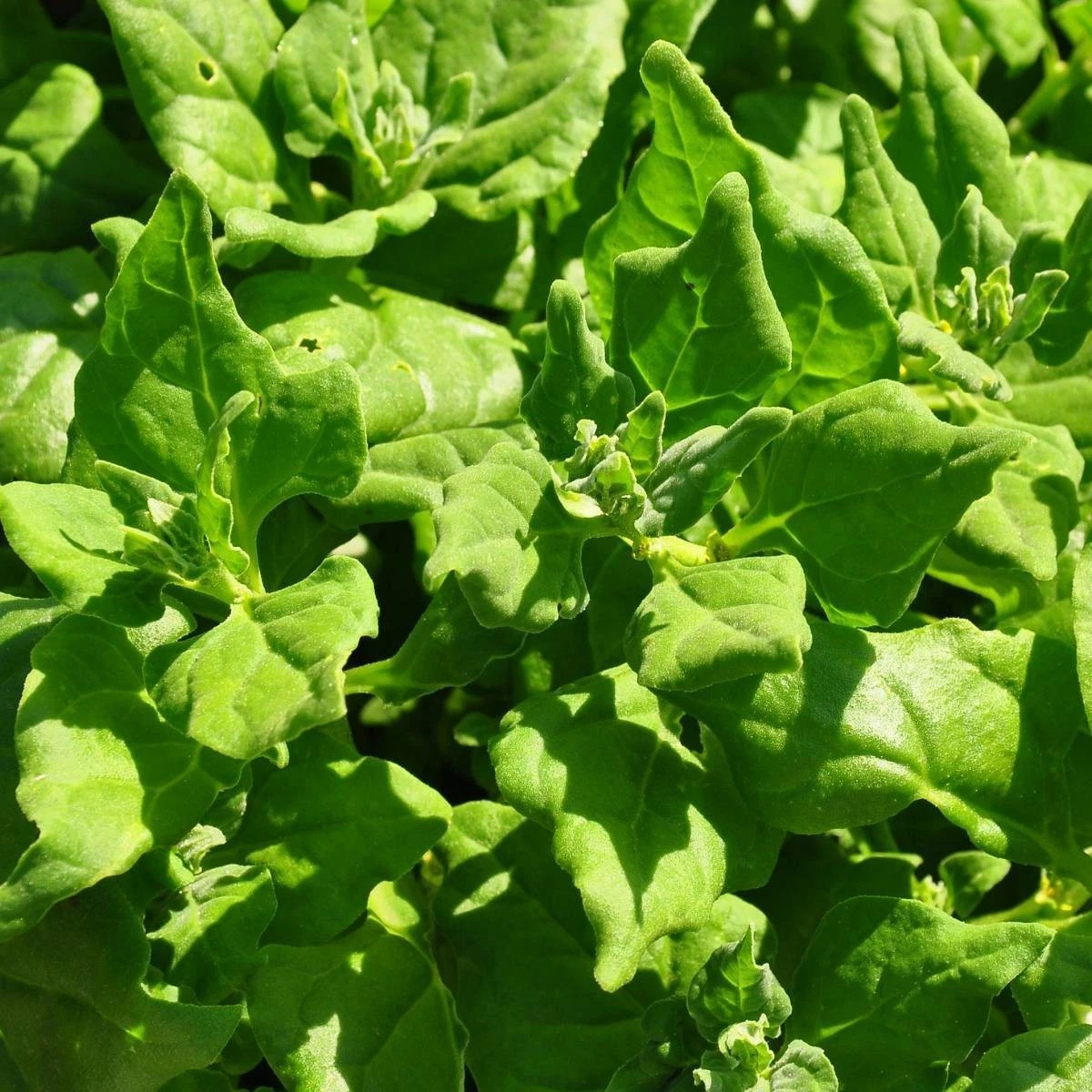
Warrigal Greens are rich in vitamins.
Kakadu Plum
The Kakadu Plum (Terminalia Ferdinandiana), also known as gubinge or billygoat plum, is a small fruit found in the Eucalypt open woodlands across Northern Australia.
- Highly nutritious
- Richest food source of vitamin C
- Good source of ellagic acid
- Great source of antioxidants
- May have cancer-fighting properties
- May protect against inflammatory diseases
- May offer natural antibacterial properties
It’s pale green with a stone in the center, over half an inch (1.5–2 cm) long, and weighs 0.1–0.2 ounces (2–5 grams). It’s fibrous and has a tart, bitter taste.
In traditional medicine, Kakadu Plums were used to treat colds, the flu, and headaches. They were also utilised as an antiseptic or soothing balm for the limbs.
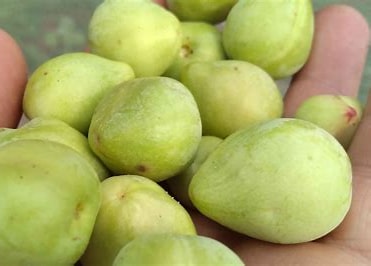
Kakadu plums have been used to treat colds, the flu, and headaches.
Marlon works in a consulting role today, but is hoping to establish a First Nations horticulture centre, possibly in South Australia, where everyone can come together to explore the health and economic benefits of native foods.
“There are major health benefits, real medicinal properties and so much historical information gained over 60,000 years. It’s an amazing story,” Marlon said.
“But we have to safeguard that knowledge and use it properly.”
For Marlon though his dream is to help provide food security for First Nations communities and to bring everyone together to build a sustainable agricultural business that puts native foods in front of mainstream retailers and eventually, all Australians.
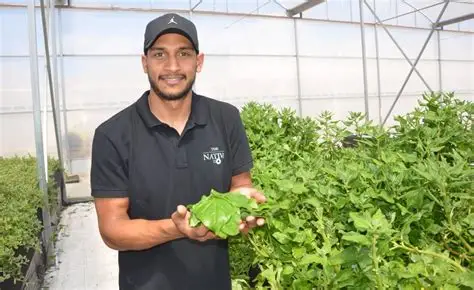
Marlon wants to help provide food security for First Nations communities.
It’s a challenge, he admits, but one that is achievable.
“We need the infrastructure to grow, but we can do it. Barriers? Yes. Limited access to private investment, and government investment is one currently.
“We have spoken to supermarkets. They are interested, we need to look at supply chains, access to capital and how we scale up.
“In New Zealand there are community co-operatives that we can look at. It’s a tremendous opportunity.”
Marlon is passionate about everything he does. Music, footy and now … native foods!