First Nations trainees play key role in conservation project
Taronga Western Plains Zoo-bred Chuditch and Bilbies are thriving in the wild in north-west NSW, according to recent data from the Wild Deserts Partnership Project.
And First Nations trainees are playing a key role in the operation.
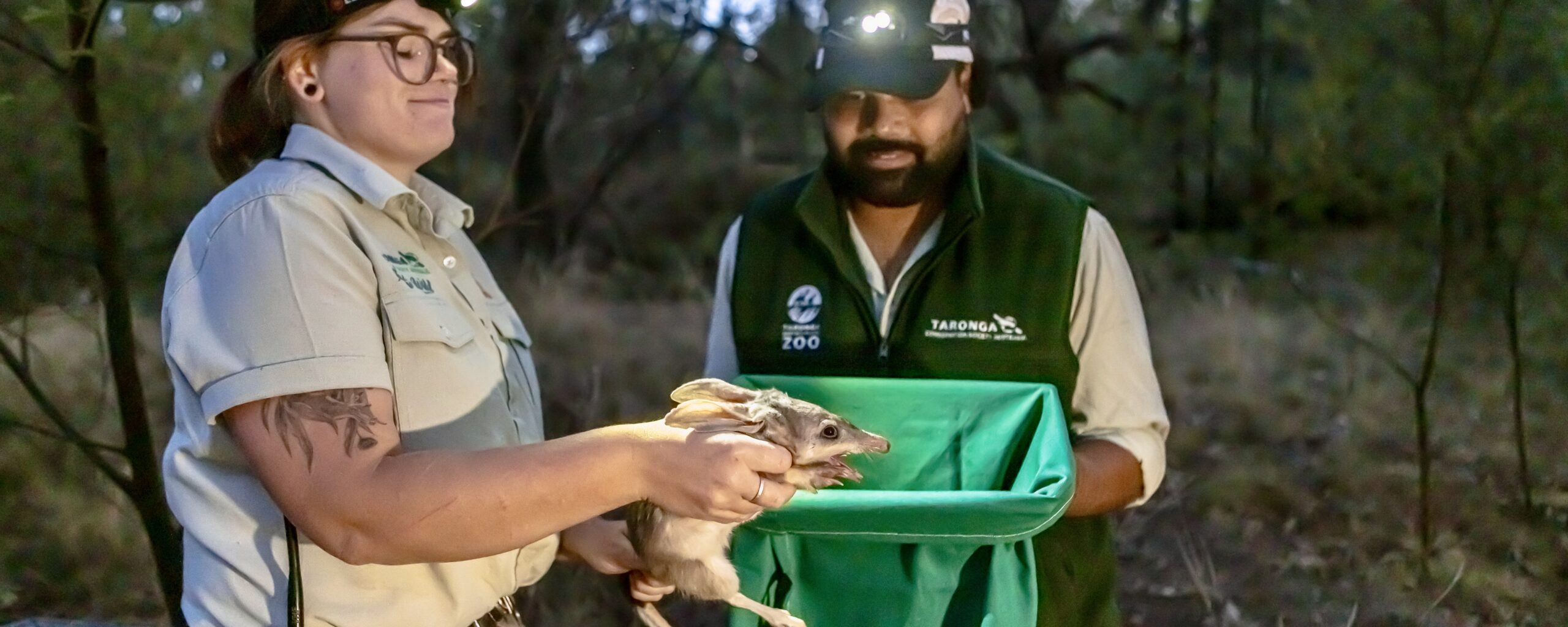
Taronga Community Support Officer, Trainee Keeper and Kamilaroi Barkindji man Jarred Clark has worked alongside conservation keepers to prepare zoo-bred Bilbies for release to the wild and also travelled to Sturt National Park to assist with the population monitoring.
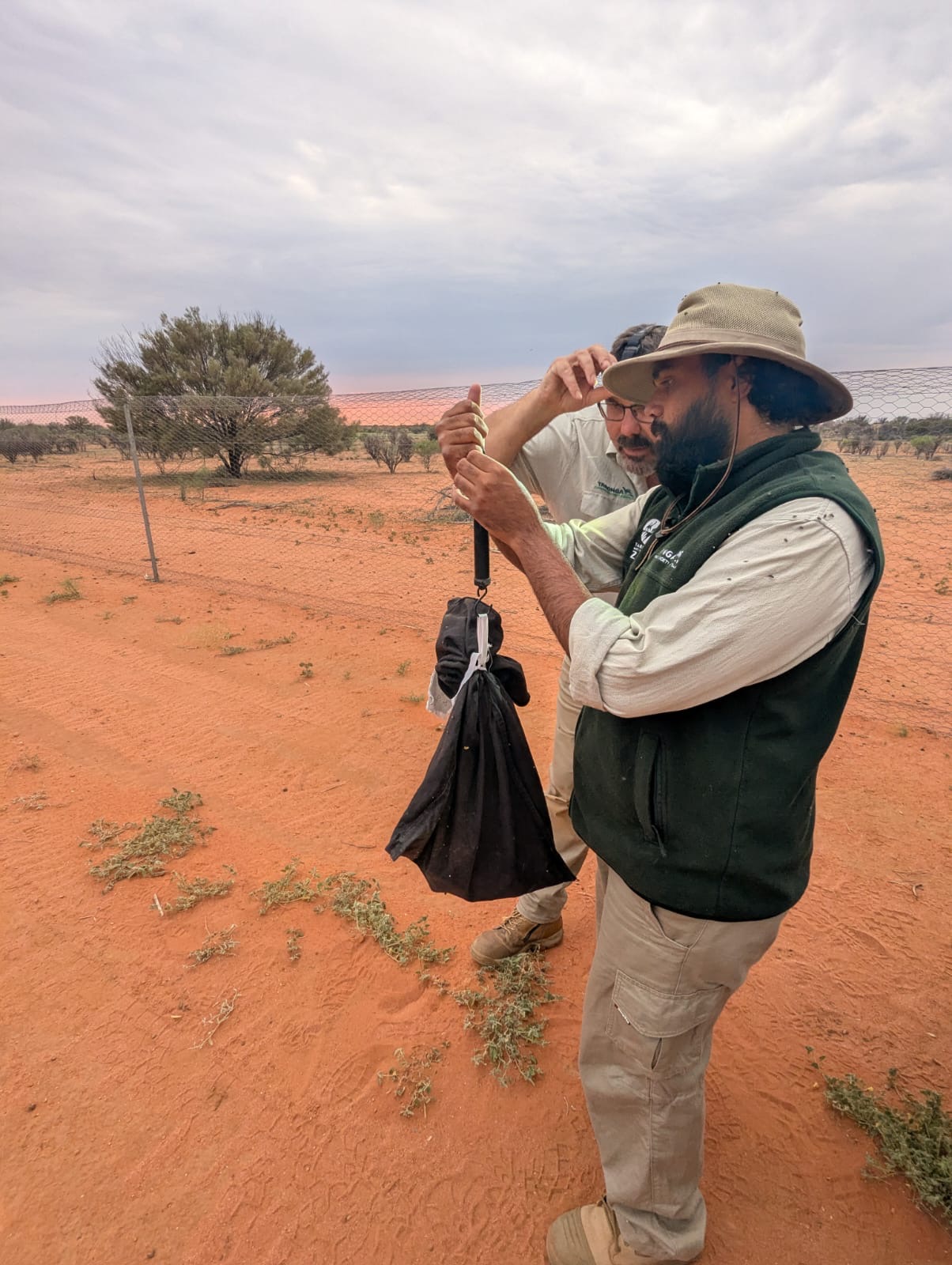
Support officer Jarrad Clark at. Sturt National Park.
“I’m just so ecstatic to be able to work on these projects where we’re reintroducing species back onto Country where they haven’t been around for over 100 years,” community support officer and trainee keeper Mr Clark said.
“These species have such strong cultural and ecological importance to be able to work hands on with them and see them thriving is something that I’m really proud to be a part of.”
“It feels like I’m contributing to something that’s bigger than myself.” – Jarrad Clark
New population monitoring in the WTZ has confirmed breeding and survivorship of over 12 months for Chuditch bred in the Taronga Sanctuary, a 110 hectare feral predator-proof area behind the scenes at Taronga Western Plains Zoo on Wiradjuri Country near Dubbo.
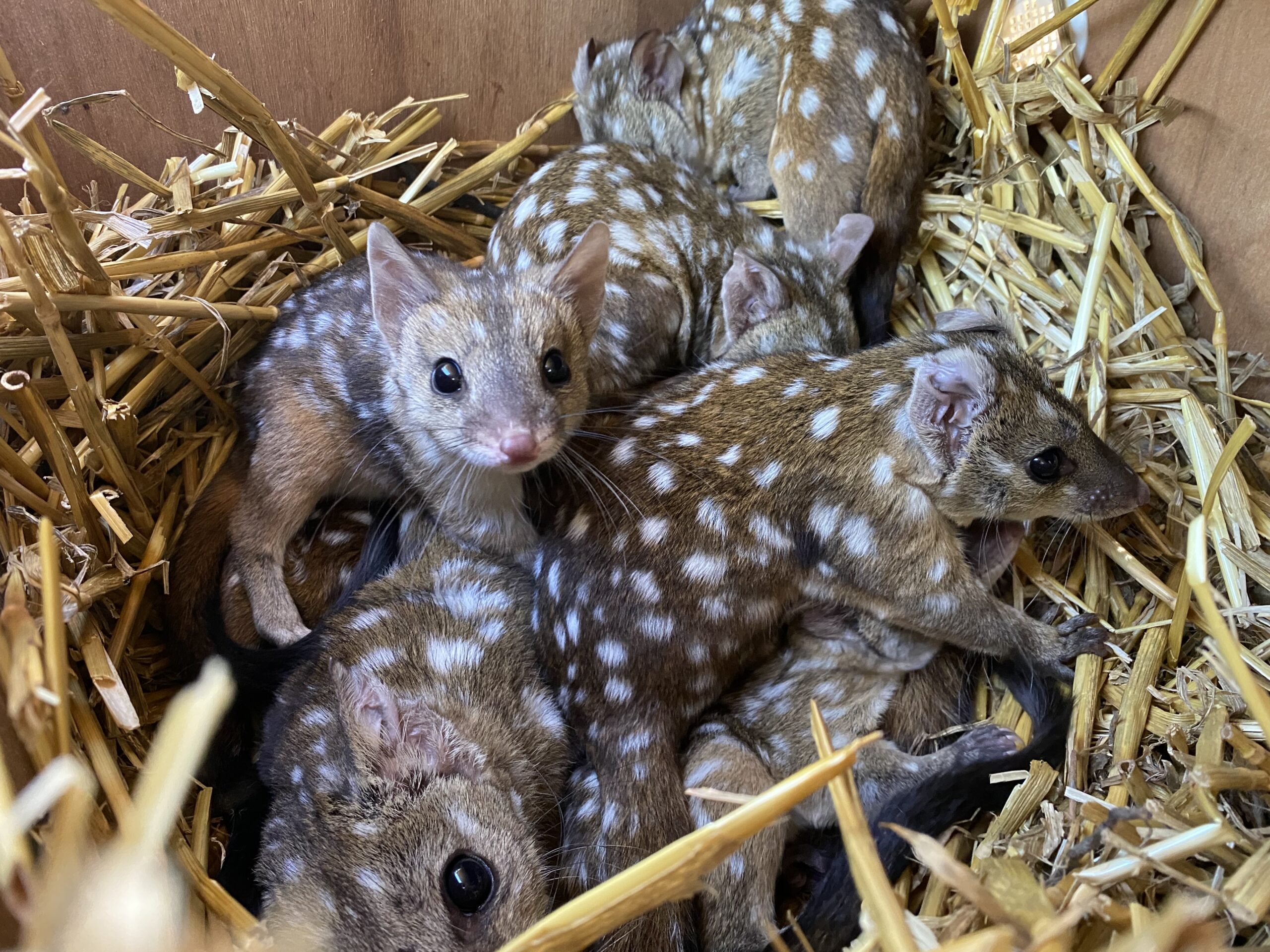
Chuditch joeys in the Taronga Sanctuary.
Over four days in late 2025, teams captured 57 individuals including six new animals which confirmed breeding in the WTZ. Taronga Indigenous Trainee Keeper Vincent Hamilton was part of the team that discovered a new juvenile Chuditch born in the WTZ that had never been captured before.
“He was actually in our very last trap and we thought it was a Golden Bandicoot at the time, and then opened the trap and here comes this beautiful, very young boy who hasn’t been caught or seen before,” Mr Hamilton said.
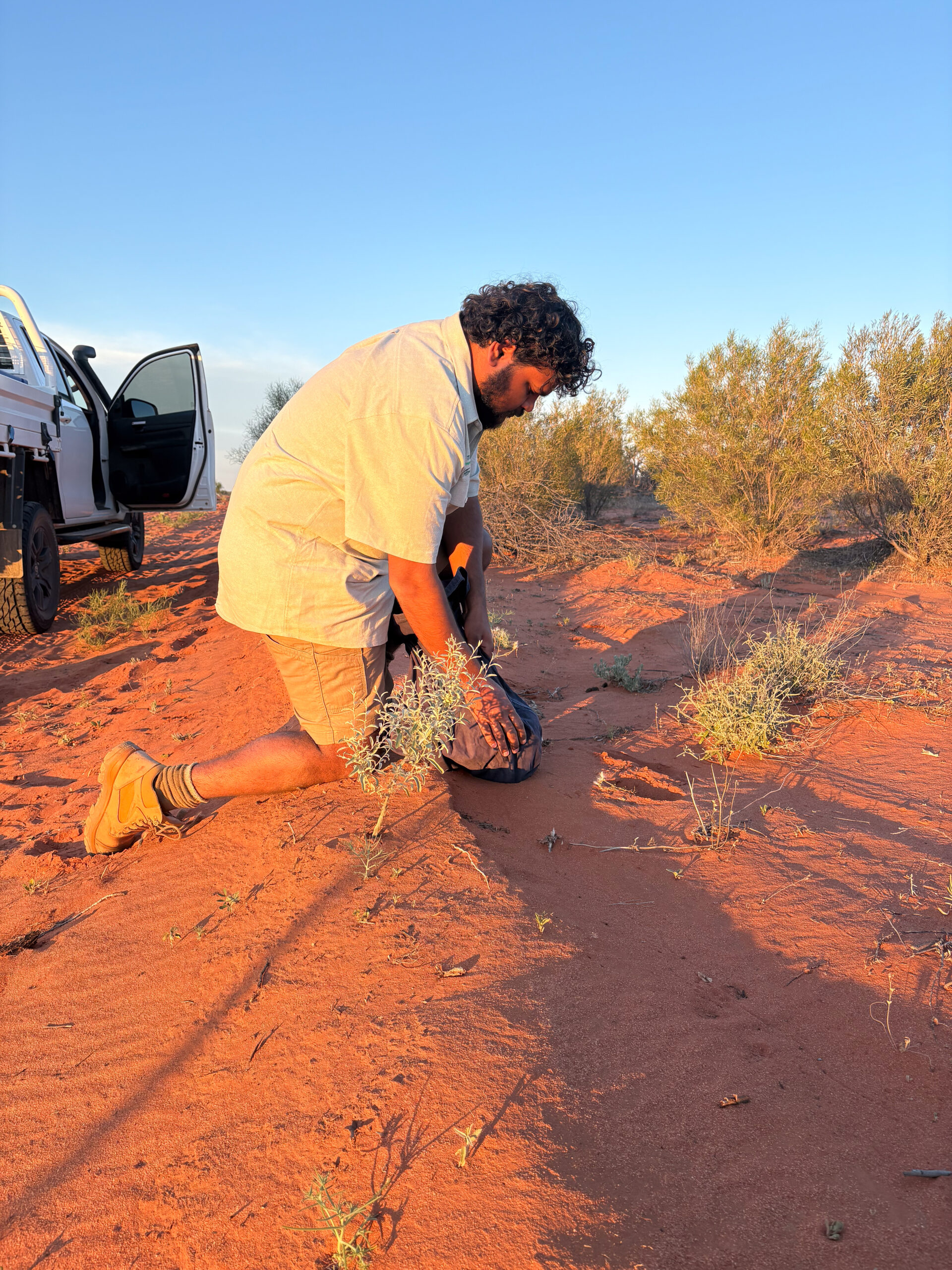
Taronga Trainee Keeper Vincent Hamilton at Sturt National Park.
“We measured and weighed him, took samples of his skin and photographed his spot patterns for researchers, and then I actually got to release him.
“Sending this young juvenile quoll on its way, knowing that it’s a new quoll and it’s going to start a new life, I actually was pretty emotional. Everyone was very happy that day.”
Managed by UNSW Sydney’s Centre for Ecosystem Science in collaboration with Taronga Conservation Society Australia (Taronga), NSW National Parks and Wildlife Service (NPWS) and Ecological Horizons, Wild Deserts has seen 72 Chuditch (also known as Western Quoll) and 305 Bilbies released into the Wild Training Zone (WTZ), a 100km2 area within Sturt National Park where feral predators have not been eradicated but instead are carefully managed.
Taronga Wildlife Conservation Officer Rachael Schildkraut said a key objective of Taronga’s breed-for-release programs to deliver broad conservation benefits, and healthy, genetically robust animals with behavioural skills to survive post-release.
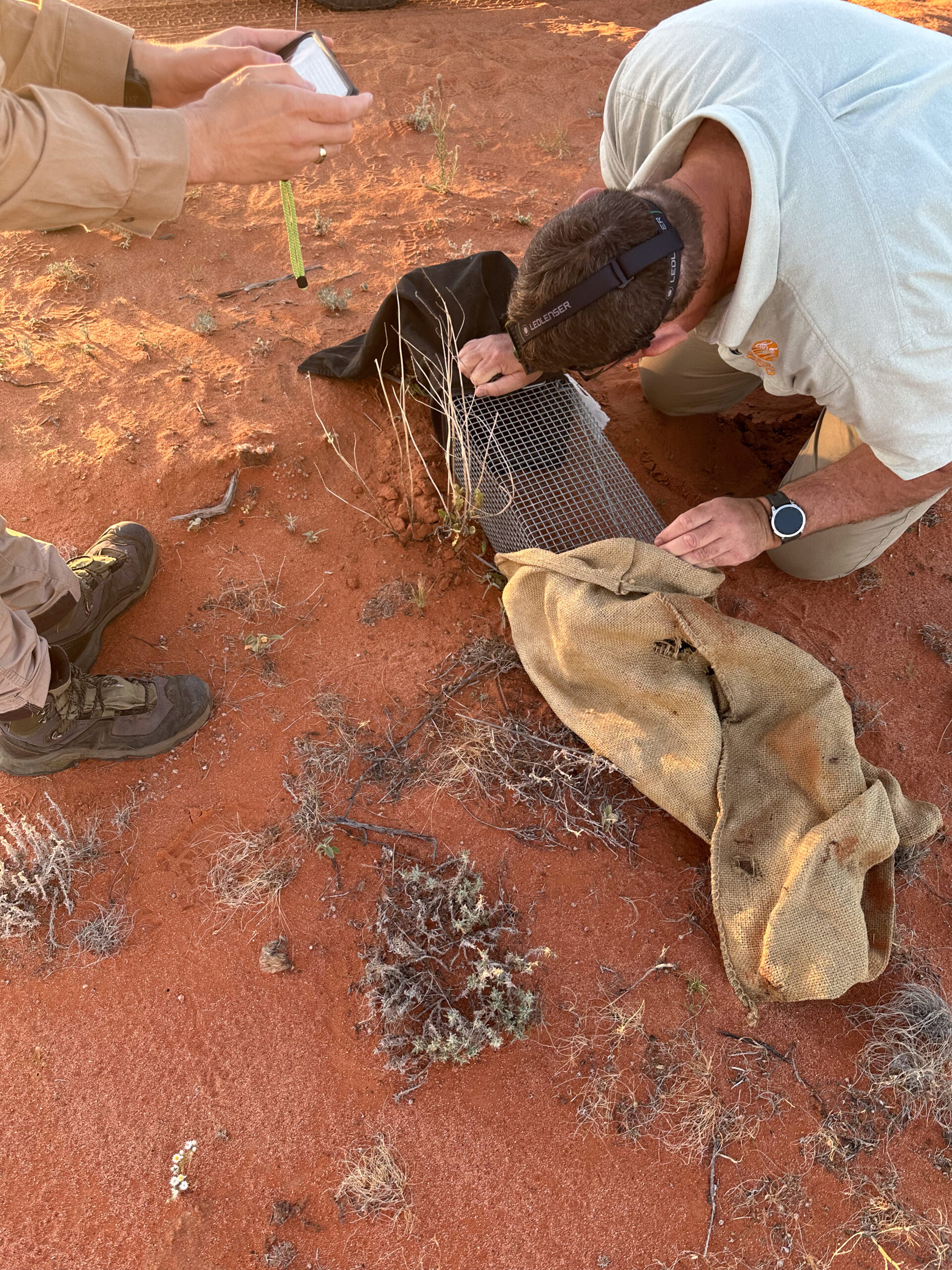
Taronga Counservation Supervisor Steve Kleinig inspects a trap at Sturt National Park.
“To see some of the original Taronga-bred Chuditch now producing wild-born young of their own in Sturt National Park, that’s the ultimate goal of our program,” she said.
“It’s a real highlight to see them thriving, and also to work together with Taronga’s Cultural team and First Nations stakeholders to achieve these significant conservation milestones.”
Mr Clark said the week at Sturt National Park was an amazing opportunity.
“As a proud young Indigenous man, it means a lot to be a part of this project,” he said.
“It feels like I’m contributing to something that’s bigger than myself.
“Caring for Country isn’t just a job; it’s something that’s deeply rooted in who I am. I hope this shows other young Indigenous people that there’s a role for us in conservation.”