Elevated fire warning across several States
Indigenous communities across several States have been warned of heightened bushfire potential over coming months after a report by the Australian and New Zealand Council for fire and emergency services identified the likelihood of significant bushfire activity.
The Seasonal Bushfire Outlook for autumn 2026, has warned of heightened bushfire potential in NSW, Victoria and Western Australia, with additional areas of concern in parts of southeast South Australia.
The Outlook provides Australia’s national picture of fire potential for the coming three months and identifies regions where significant bushfire activity is above the usual seasonal baseline.
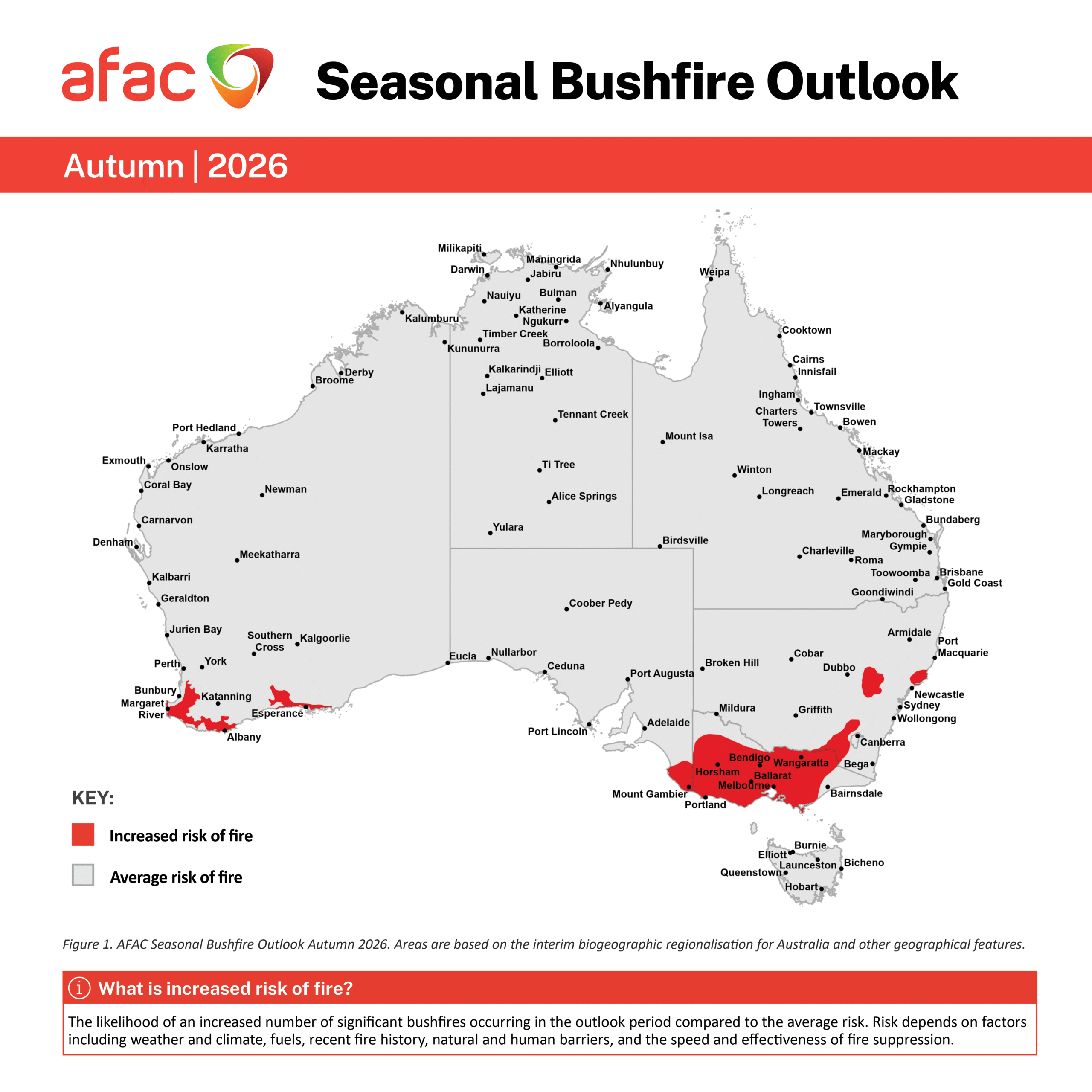
The increased risk also encompasses regions in southern, central and eastern NSW, large parts of Victoria extending into parts of southeast South Australia, and parts of southern WA.
Key Points
- Outlook highlights heightened autumn bushfire risk for NSW, Victoria and WA
- Risk zones include southern, central and eastern NSW, and large parts of Victoria
- Increased risk extends into parts of southeast South Australia and southern WA
- Drivers cited include long‑term dryness and soil moisture deficits
- Prescribed burning opportunities may be delayed by underlying conditions
According to AFAC the assessment compares the potential for significant bushfire activity against an average risk profile for the season.
AFAC has attributed the elevated risk profile to increased long‑term dryness and persistent soil moisture deficits.
While autumn can bring a gradual reduction in fire danger in many parts of southern Australia and expand opportunities for prescribed burning, AFAC advised these programs may be delayed in some areas due to the underlying conditions.
“The increased bushfire risk is driven by increased long term dryness”
— Rob Webb, AFAC
AFAC has emphasised that even with anticipated short‑term rains in the southeast, substantially more rainfall would be required to offset long‑term moisture deficits. Areas marked red on the accompanying map signal an increased likelihood of significant bushfires occurring in autumn relative to average conditions. AFAC further noted that fires can occur in areas assessed as having average risk.

Regional risk overview
New South Wales
AFAC has identified increased autumn bushfire risk across regions in southern, central and eastern NSW. The organisation recommended that communities in these areas remain vigilant, monitor official updates and be prepared for changing conditions throughout the season.
Victoria and southeast South Australia
Large parts of Victoria have been assessed with above‑average fire potential, extending into parts of southeast South Australia. The Outlook underscores that, while autumn traditionally brings a moderating trend in fire weather, long‑term dryness and soil moisture shortfalls are expected to influence conditions and operational planning.
Western Australia
Parts of southern WA are also listed as having heightened fire risk for autumn 2026. AFAC advised that, where safe and suitable, prescribed burning windows may widen during autumn; however, localised delays are possible given the underlying dryness and associated constraints.
Expert analysis
The Seasonal Outlook is the culmination of complex analysis undertaken by expert fire specialists across Australia, together with climate prediction and fire weather experts from the Bureau of Meteorology. This collaborative process brings together assessment of seasonal fire potential with current and antecedent environmental drivers that can shape the fire landscape over the coming three months.
AFAC has stressed the Outlook’s intended purpose: it identifies areas of increased risk of bushfire in comparison to areas of usual risk for the season. It is not a prediction of where and when bushfires will occur. Rather, it provides guidance to agencies and communities on relative risk, enabling informed preparedness, resource planning and public awareness aligned to likely conditions.
AFAC’s analysis also recognises the dynamic nature of autumn conditions in southern Australia. While many regions typically experience a gradual reduction in risk during this period, persistent soil moisture deficits and long‑term dryness can sustain elevated potential for significant fires. In this context, operational planning may prioritise hazard‑reduction opportunities where conditions permit, while acknowledging that the underlying dryness can delay prescribed burning activities in some localities.
Community guidance and preparedness
AFAC has advised communities to seek the latest advice from their local fire authority throughout autumn.
The organisation underscored the importance of maintaining awareness in both elevated‑risk and average‑risk areas, as bushfires can occur even where risk is not above the seasonal norm. Community vigilance and adherence to official guidance remain central to safe decision‑making during periods of heightened potential.