Earbus transforms Indigenous children’s health and schooling
Health, education, and wellbeing outcomes for Aboriginal children in Western Australia are reporting marked gains, with hearing loss rates nearly halved to 5.6 per cent across communities participating in the Earbus Program.
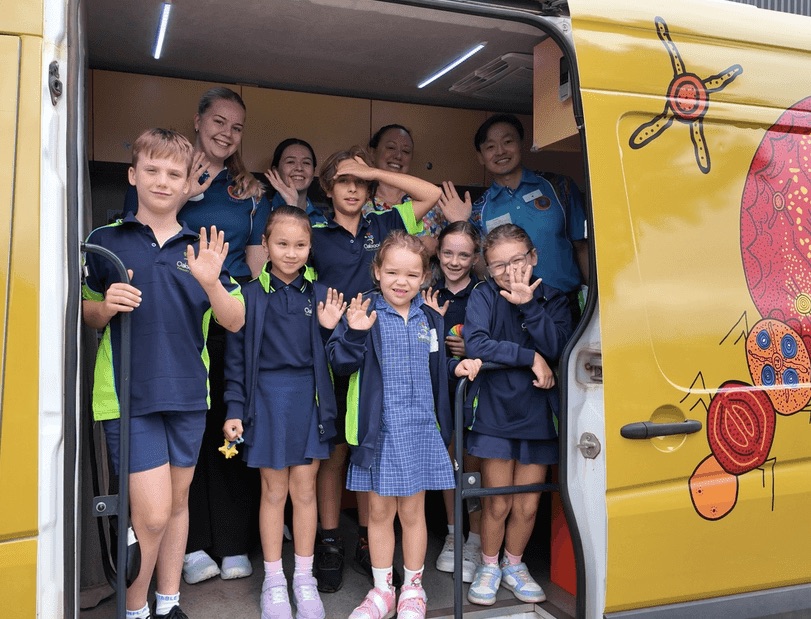
The Alcoa Foundation Earbus mobile clinic visits schools and daycares across Boorloo/Perth, Peel and the Upper South West to reduce the impacts of ear disease on listening and learning.
Key Points
- Hearing loss nearly halved to 5.6 per cent in participating WA communities
- Earbus mobile clinics operate across Boorloo/Perth, Peel and the Upper South West
- More than 1,700 children screened last year through the Earbus Program
- Total 4,136 children and 18,436 screenings since support began in 2018
- CSOM reduced to 0.67 per cent, below WHO’s four per cent benchmark
- Aboriginal children average 32 months of middle ear disease by age five
- Service model provides immediate treatment and continuous care on site
Hearing loss rates fall
Mobile Earbus teams travel to school and childcare settings in Boorloo/Perth, Peel and the Upper South West. This approach is intended to address access barriers by bringing services directly to families.
Each visit is designed to identify issues quickly and provide care on site, reducing delays between screening and treatment. The emphasis is on functional improvements that help children engage in class, participate socially, and sustain learning progress.
Last year, more than 1,700 Aboriginal and at-risk children were screened for ear disease through the Earbus Program. Since support began in 2018, the program has reached 4,136 individual children and delivered 18,436 screenings.
The program reports specific gains in reducing Chronic Suppurative Otitis Media (a persistent middle ear disease). Across schools within the Alcoa Foundation Earbus Program, rates of Chronic Suppurative Otitis Media fell to 0.67 per cent last year, well below the World Health Organisation’s four per cent benchmark.
Why middle ear disease matters
On average, Aboriginal children suffer from middle ear disease for 32 months of the first five years of life, compared to three months for non-Indigenous children. The burden has direct implications for speech perception, classroom engagement, and broader developmental milestones.
Ear disease is often mistaken for classroom conduct issues, masking the underlying hearing challenge. According to Earbus chief executive and co-founder Dr Lara Shur, undiagnosed cases can lead to negative feedback and disengagement from school.
Dr Shur noted that children who cannot hear clearly may be seen as inattentive or disruptive, when they are in fact struggling to hear. Over time, this misinterpretation can contribute to disengagement from school. The program emphasises that hearing health is tightly linked to social development, emotional regulation, and sensory integration.
Each Earbus has a clinical team comprising a Screener, a General Practitioner or Nurse Practitioner, and an Audiologist. This multidisciplinary structure supports on-the-spot decision-making and continuity across school terms.
Geographic focus
The Alcoa Foundation’s support has been life changing for many children in the Perth Metro and southwest. Despite proximity to hospitals and clinics, the program reports that metropolitan families still face ear disease at significant rates, underscoring the need for proactive in-school services.