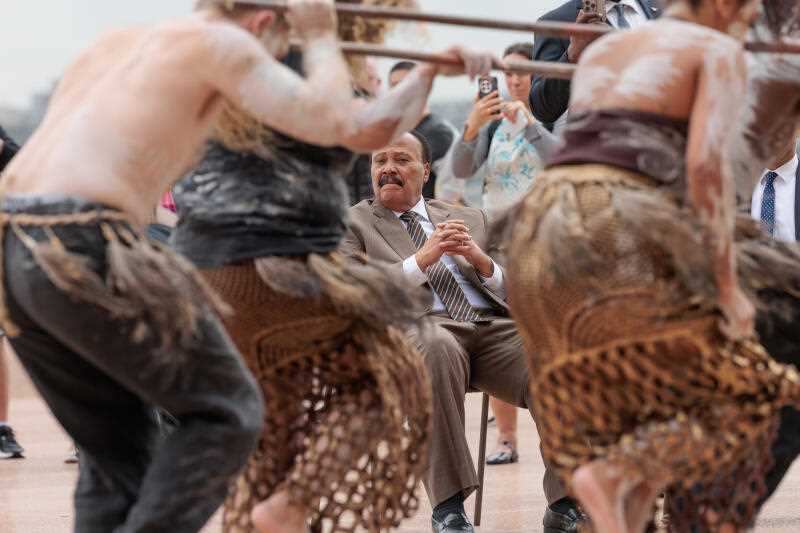
‘Don’t give up’, MLK Jr’s son tells Indigenous people
By KAT WONG
The oldest son of US civil rights leader Martin Luther King Jr has urged Australians not to give up on First Nations justice after the failed voice referendum dealt a blow to the movement.
The Federal push towards other tenets of the Uluru Statement from the Heart has struggled to regain momentum since Australia voted against enshrining an Indigenous voice into its constitution in 2023.
But Martin Luther King III says the rejection of the voice should not halt progress.
He pointed to the countless setbacks faced by his father, a pivotal figure in advocating for Black Americans, before they were given the right to vote.
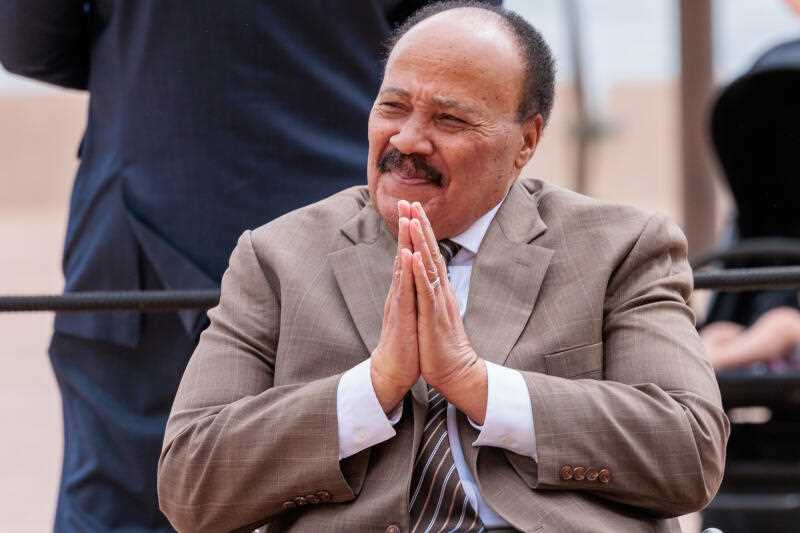
Martin Luther King III is welcomed to Australia. (Kat Wong/AAP)
“There are many battles my dad, his team and my mother engaged in where it didn’t happen until it happened,” Mr King told AAP on Wednesday.
“I hope young people and the population would not give up just because it didn’t happen on that vote a few years ago.
“You have to desire to bring it back again and again, because progress is not always immediate … it’s sad it’s taken this long, but it does not mean that progress can’t happen.”
Recent progress includes Victoria striking a nation-first treaty agreement with its First Nations people in September and South Australia legislating a voice to parliament in 2023.
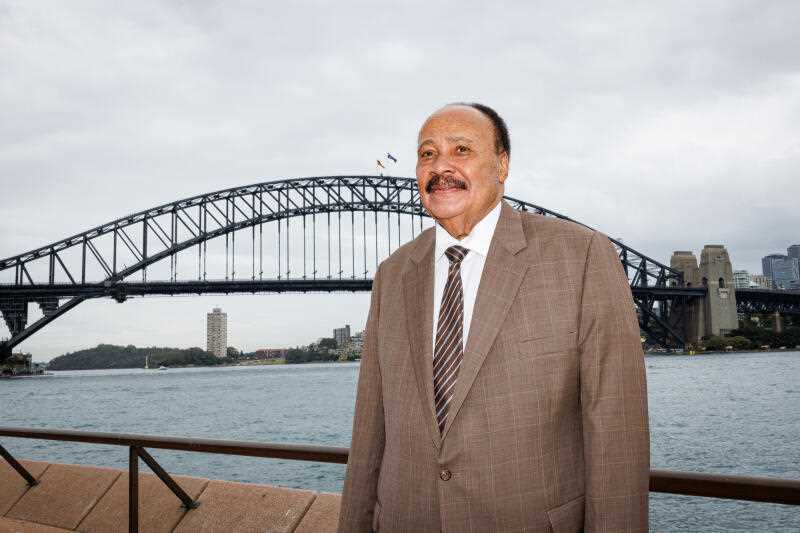
Martin Luther King III says Australia’s rejection of the voice should not halt Indigenous progress. (Nadir Kinani/AAP PHOTOS)
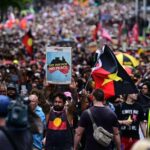
But Indigenous community groups continue to protest the high number of deaths in custody and other aspects of entrenched disadvantage.
Meanwhile, police concerns over community safety after the December 14 Bondi terror attack has restricted public rallies in Sydney since Christmas.
The King family are perhaps best known for their advocacy of peaceful protest in pursuit of civil rights, and Mr King said he remained concerned about violence generally.
Who was Martin Luther King Jr?
- Martin Luther King Jr. (1929–1968) was a Baptist minister and the primary leader of the American Civil Rights Movement from the mid-1950s until his assassination.
- He is globally renowned for using nonviolent resistance and civil disobedience to combat racial segregation and achieve legal equality for African Americans.
- Assassination: On 4 April 1968, King was fatally shot by James Earl Ray while standing on a balcony at the Lorraine Motel in Memphis, Tennessee.
“Picking up guns and shooting innocent people is unacceptable,” he said.
“You’ve got to figure out: where is the balance? Where is it that people can protest peacefully?
“You shouldn’t just disallow protesting, I don’t think that’s ever productive.”
Mr King is in Australia to advocate for Indigenous economic participation, highlighting the benefits of shared prosperity and inclusive companies.
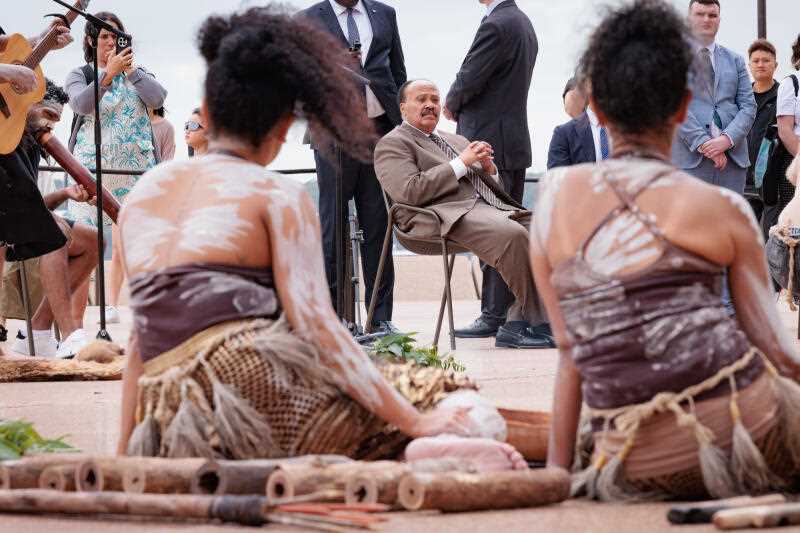
“Picking up guns and shooting innocent people is unacceptable,” Martin Luther King III says. (Nadir Kinani/AAP PHOTOS)
Census data shows one in eight Indigenous workers is employed in professional roles, half the number of non-Indigenous workers.
The gap is more stark in senior leadership roles with only four Indigenous people sitting on ASX200 company boards.
CareerTrackers, which offers pathways to professional careers for Aboriginal and Torres Strait Islander students, said Mr King’s father reminded the world that people had to work for decades to create and keep doors open.
“Civil rights and racial equality and access to the economy are absolutely intertwined,” chief executive Adam Davids said.
AAP