Community returns to bury remains found on Wadjemup
Aboriginal elders and community members have returned and buried human remains found in an unmarked grave on Rottnest Island, also known as Wadjemup, after forensic testing confirmed Indigenous ancestry.
The discovery has prompted further investigations into possible additional burial sites across the construction area.
Key Points
- Remains found during bus stop works at Holy Trinity Church site
- Forensic pathologist confirmed human bones and Indigenous ancestry
- About 30 people led a cultural burial on Saturday
- Remains were wrapped in paperbark and returned by ferry
- Survey identified twelve further possible burial sites for investigation
- Rottnest Island was an Aboriginal prison from 1838 to 1931
- Separate site holds 373 unmarked graves with a memorial due this year
Remains discovered during bus stop works
Human remains were uncovered on the island last month during groundwork for the expansion of the now-tourist island’s main bus stop. The bones were unearthed on the grounds of the Holy Trinity Church. A forensic pathologist confirmed the bones were human, and samples taken for further testing confirmed Indigenous ancestry.
The discovery halted works and prompted a ground-penetrating radar survey of the entire construction footprint. That survey identified a further twelve possible burial sites, which will be investigated further from Monday. Located 19 kilometres off Perth’s coast, Rottnest Island was previously used as an Aboriginal prison.
Community-led return and ceremony
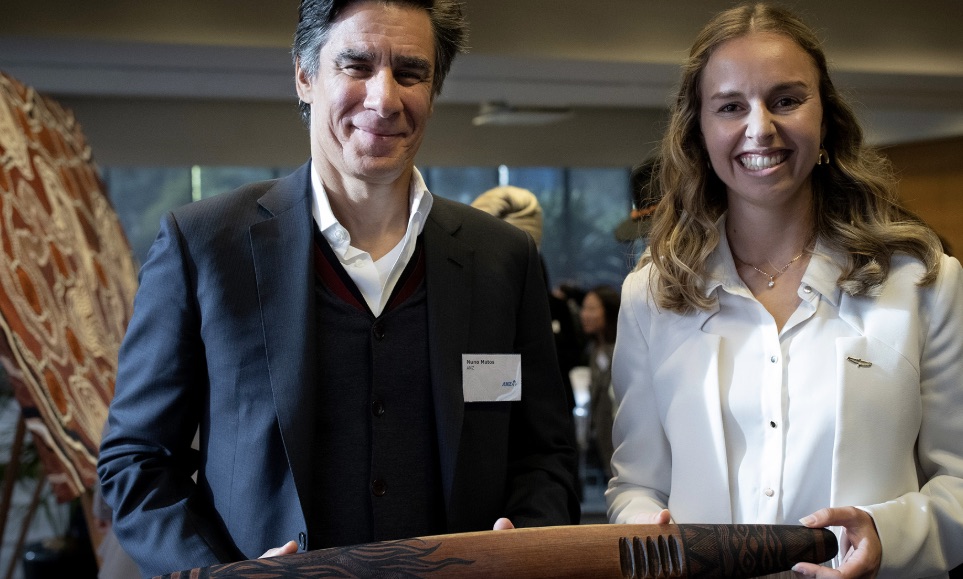
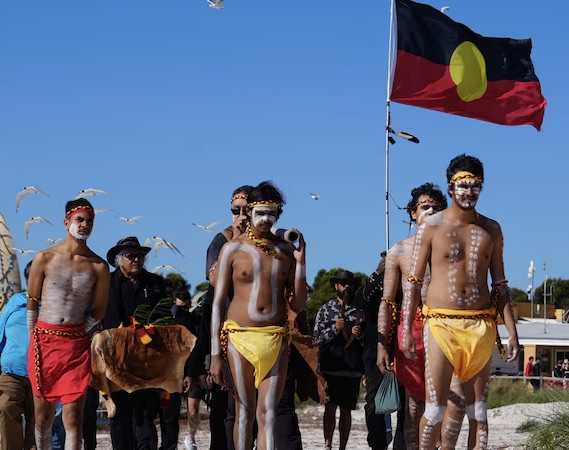
On Saturday, a sample of the human remains that had been taken to the mainland for testing was returned to Wadjemup by ferry. Those involved in the procession disembarked with the remains. The sample, wrapped in paperbark, was buried in line with cultural practices after a smoking ceremony. The burial was led by a group of roughly 30, including Aboriginal elders.
Noongar man James Webb, who played the didgeridoo as part of the ceremony, said he was relieved the bones were noticed during construction. He also described the significance of the moment for people connected to the island’s history.
“It united all the State, because people from all over the State were incarcerated in the harsh conditions in this place,” he told the ABC.
Dark history
Rottnest Island, now well-known as a holiday destination, was used as an Aboriginal prison between 1838 and 1931. State records show more than 3,700 men and boys from across the state were imprisoned there. Hundreds of prisoners are estimated to have died on the island, with many buried in unmarked graves.
This latest discovery of human remains is at a separate location from a further 373 unmarked graves, in an area once used as a camping ground and now referred to as the Wadjemup Aboriginal Burial Ground.
A memorial for that site is expected to be completed later this year, as part of the Wadjemup Project to educate visitors on the island’s history. Commercial accommodation at The Quad, a former prison site, was also closed in 2018 and conservation works began to return it to its original appearance as part of the Wadjempup Project.
Community members said the burial was a step toward truth-telling about the treatment of Aboriginal people on Rottnest Island. With twelve more possible burial sites identified for investigation, they emphasised the importance of culturally appropriate processes and efforts to better understand the origins of those who were buried without markers.