Communities cut off as cyclone threatens more flooding
By ZAC de SILVA, REX MARTINICH and ROBYN WUTH
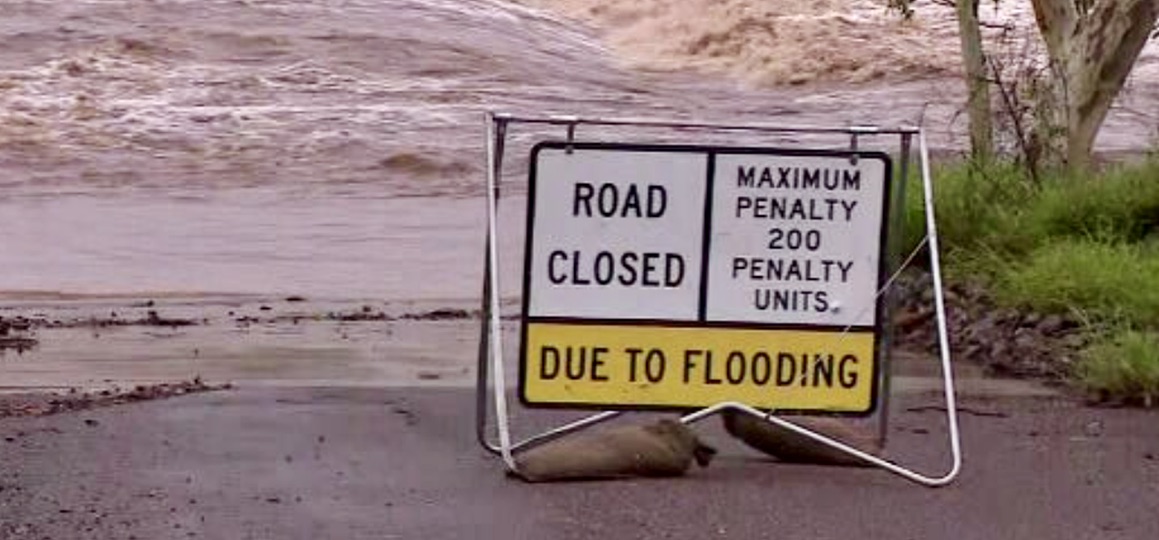
Government officials are deeply concerned about the prospect of more flooding in north Queensland as a possible tropical cyclone threatens to inundate saturated catchments.
More than 20,000 cattle are believed to have been killed or washed away in major floods which have devastated businesses and severed local roads, leaving some towns and Indigenous communities cut off.
A tropical low is sitting in the Coral Sea off the Queensland coast and could develop into a tropical cyclone.
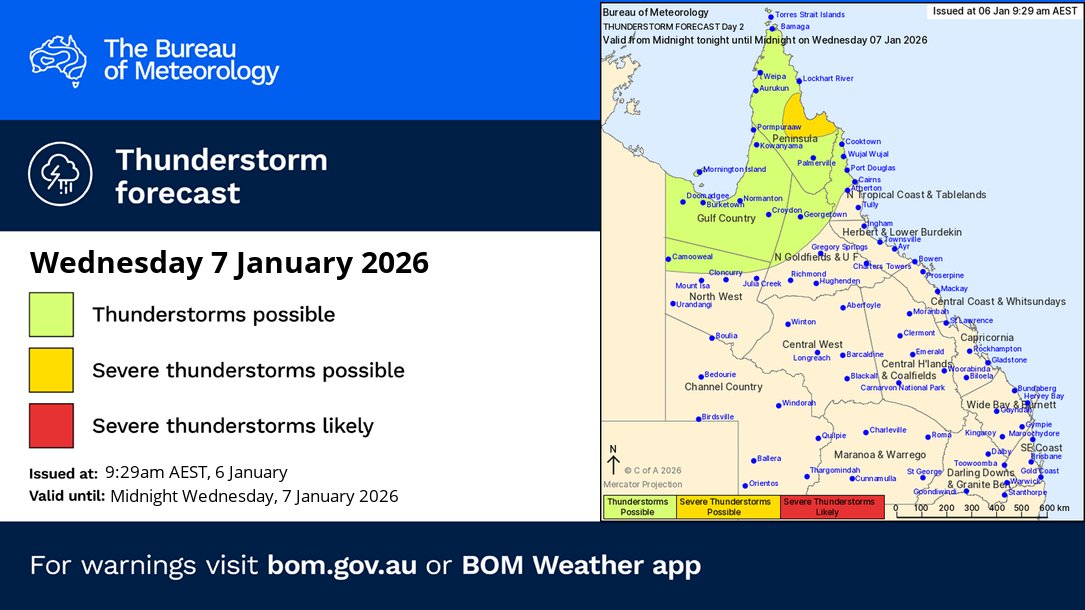
Key concerns
- Storms possible about the north of the State tomorrow
- Severe storms with heavy rainfall about the are possible about eastern Cape York between Cooktown and Lockhart River
Visiting the outback town of Cloncurry to announce a multimillion-dollar rescue package for flood-ravaged parts of the state, Prime Minister Anthony Albanese said the prospect of more rain was concerning.
“We’re very worried,” he told reporters.
“The fact is that we are seeing more frequent natural disasters and more intensity in them.”
With flooding becoming more common, Cloncurry Mayor Greg Campbell said his shire might need to consider changing its water management practices to allow floodwaters to flow freely, rather than damming them where possible.
Grants available
In response to the latest disaster, Federal and State governments have agreed to pour $38 million into impacted communities through a series of grants.
Some of that will be spent repairing the Cloncurry airport, where the landing strip has been put out of action by floodwaters.
Mr Albanese’s entourage was forced to fly into nearby Mount Isa and travel by road to Cloncurry.
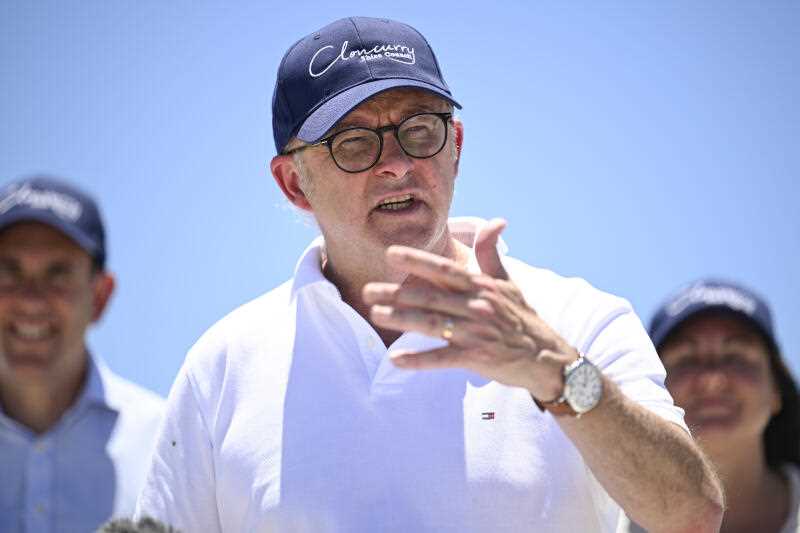
Prime Minister Anthony Albanese said the prospect of more ran in was concerning. (Martin Ollman/AAP PHOTOS)
The support package also includes $21.5 million in grants for farmers who have been impacted – up to $75,000 each, $10,000 of which can be accessed immediately.
Farmers will be able to access an extra $5 million for food drops to livestock cut off by floodwaters, on top of a $2 million commitment already announced.
Treasurer Jim Chalmers, who travelled alongside Mr Albanese, said the flooded areas were a critical part of the nation’s economy.
“We know the people, communities and industries of regional Queensland play a crucial role in our country and its economy and we are here for them every step of the way,” he said.
One life lost
The inundation has claimed one life – a man in his 70s who was found dead in his car, surrounded by floodwaters.
Mr Albanese met with police, SES, fire and ambulance personnel.
One police officer spoke of his concerns for the coming week, with more rain forecast and soils already waterlogged.
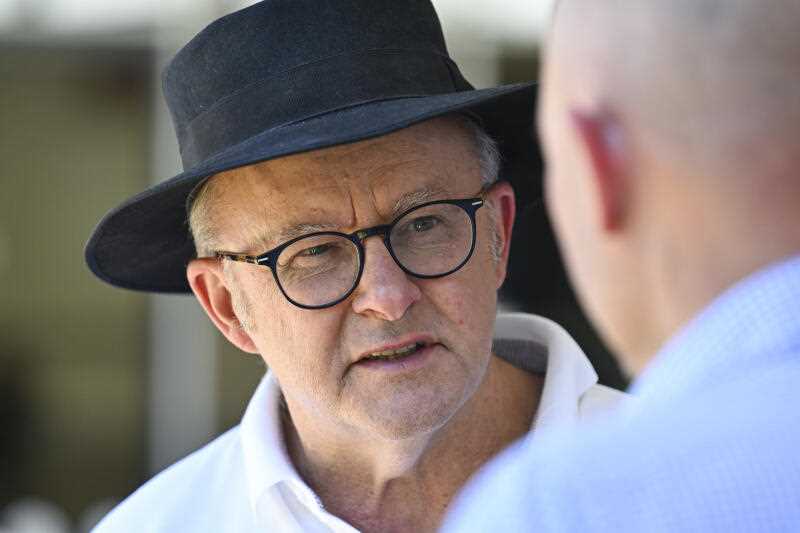
Prime Minister Anthony Albanese had to travel the last part of his trip to Cloncurry by road. (Martin Ollman/AAP PHOTOS)
The PM met with Mr Campbell, who said the inundation was worse than major floods the region had experienced in 2019.
He told Mr Albanese if floods continued becoming more severe over the coming years, a new approach might be needed.
“Do we start planning infrastructure … to try and let water get away rather than make them run a dam?” he said.
Flinders Shire Mayor Kate Peddle said despite widespread flood damage, it could have been worse.
“I’d say that we were the lucky ones, not to diminish the graziers who did have a really hard time,” she said.
“We’ve certainly got pockets of devastation, but by comparison, we’re very, very lucky compared with other areas.”
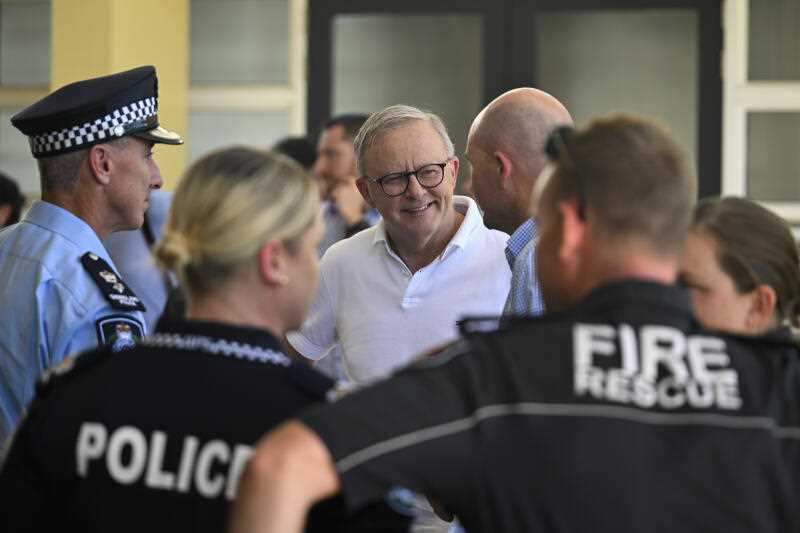
The Prime Minister, with Cloncurry Mayor Greg Campbell, met emergency services personnel. (Martin Ollman/AAP PHOTOS)
Ms Peddle called for greater investment in flood-proofing – or at least better protection – for the far north.
It’s estimated more than 1600km of private roads and almost 1000km of fencing have been damaged from the floods.
Richmond Shire had not seen as big an impact as the 2019 flood but some farmers had been left with no source of income, Mayor John Wharton said.
“I’ve seen a lot of dead cattle. Some people have lost everything,” he said.
AAP