Burning Australian flag ‘not illegal’
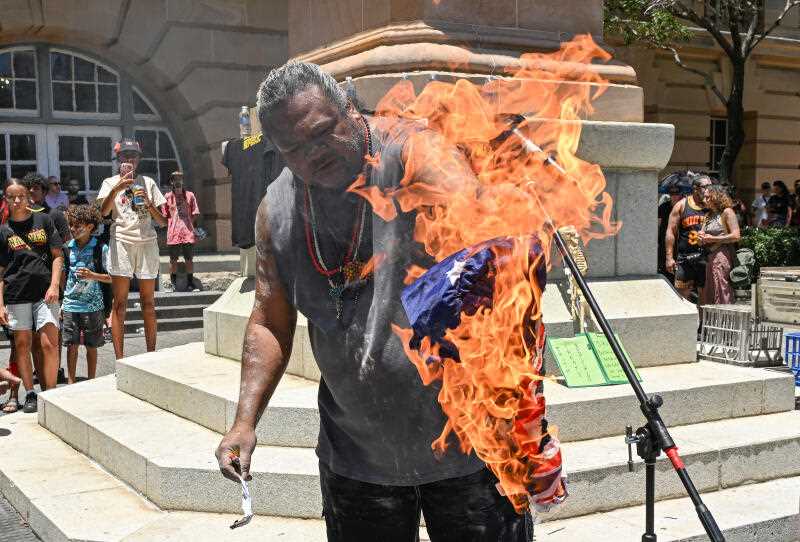
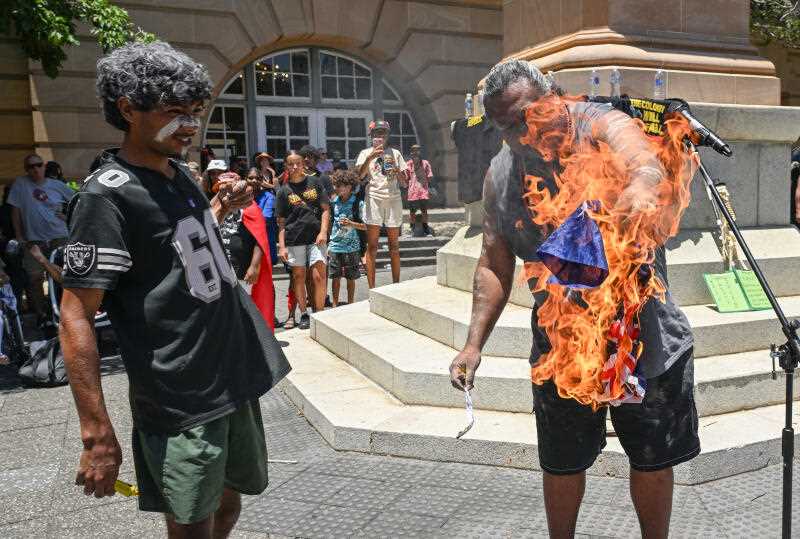
Queensland Police have said no charges will be laid after a protesting Indigenous elder, Moojidji, burned the Australian flag during an Invasion Day rally Brisbane to challenge the nation’s “legal legitimacy”.
The elder, who was applauded by onlookers, said he carried out the act to challenge the country’s legal legitimacy and claimed the flag “doesn’t represent all of us”.
“We chant for land rights,” he said.
“We’re not just chanting for ourselves as human beings, we’re chanting for country.”
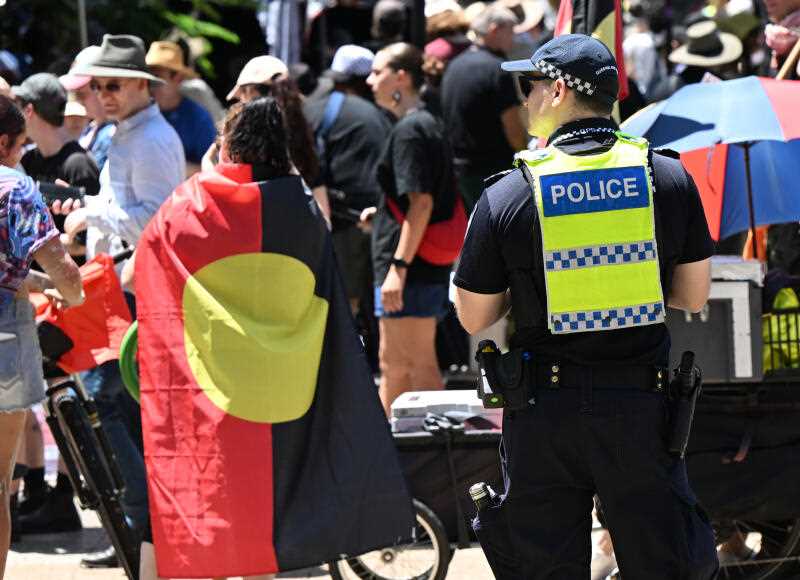
Police said about 2,000 people attended the “largely peaceful” rally in Brisbane where no arrests took place.
A spokesperson confirmed Queensland Police were aware of the flag burning incident.
“No offence was detected,” they said.
“The QPS recognises that every person has the right to peaceful protest.”
The Federal government said it deplored the actions of those who desecrated the Australian national flag.
‘The Australian national flag, the Aboriginal flag, and Torres Strait Islander flag should all be treated with the respect and dignity they deserve as the nation’s most important national symbols,” Assistant Minister to the Prime Minister Patrick Gorman said.
At a march in Melbourne, Victoria Police stepped in after a man was seen attempting to burn the national flag.
Key facts
In Australia, burning the national flag is not a criminal offence under Federal or State law as of January 2026. While the act is widely considered offensive and has been the subject of recent intense political debate, it is currently treated as a form of political expression.
Current Legal Status
No Specific Law: There is no “flag desecration” law in Australia. Multiple attempts to pass such legislation—including a prominent Coalition-led amendment in January 2026—have failed to gain parliamentary support.
Potential Charges: While burning the flag itself is not a crime, individuals can still be charged with related offences depending on the circumstances:
- Public Nuisance or Disorderly Conduct: If the act causes a disturbance or alarm to the public.
- Property Damage: If the flag being burned does not belong to the person (e.g., stolen from a public building).
- Fire Safety Violations: If the fire is lit during a total fire ban or in an unsafe manner.