Artwork unveiling caps Swan-Canning reef restoration
The Nature Conservancy Australia has marked completion of the Swan-Canning Estuary Reef Restoration Project with the unveiling of a new public artwork at Point Walter, underscoring early ecological gains and commitments to continued scientific monitoring.
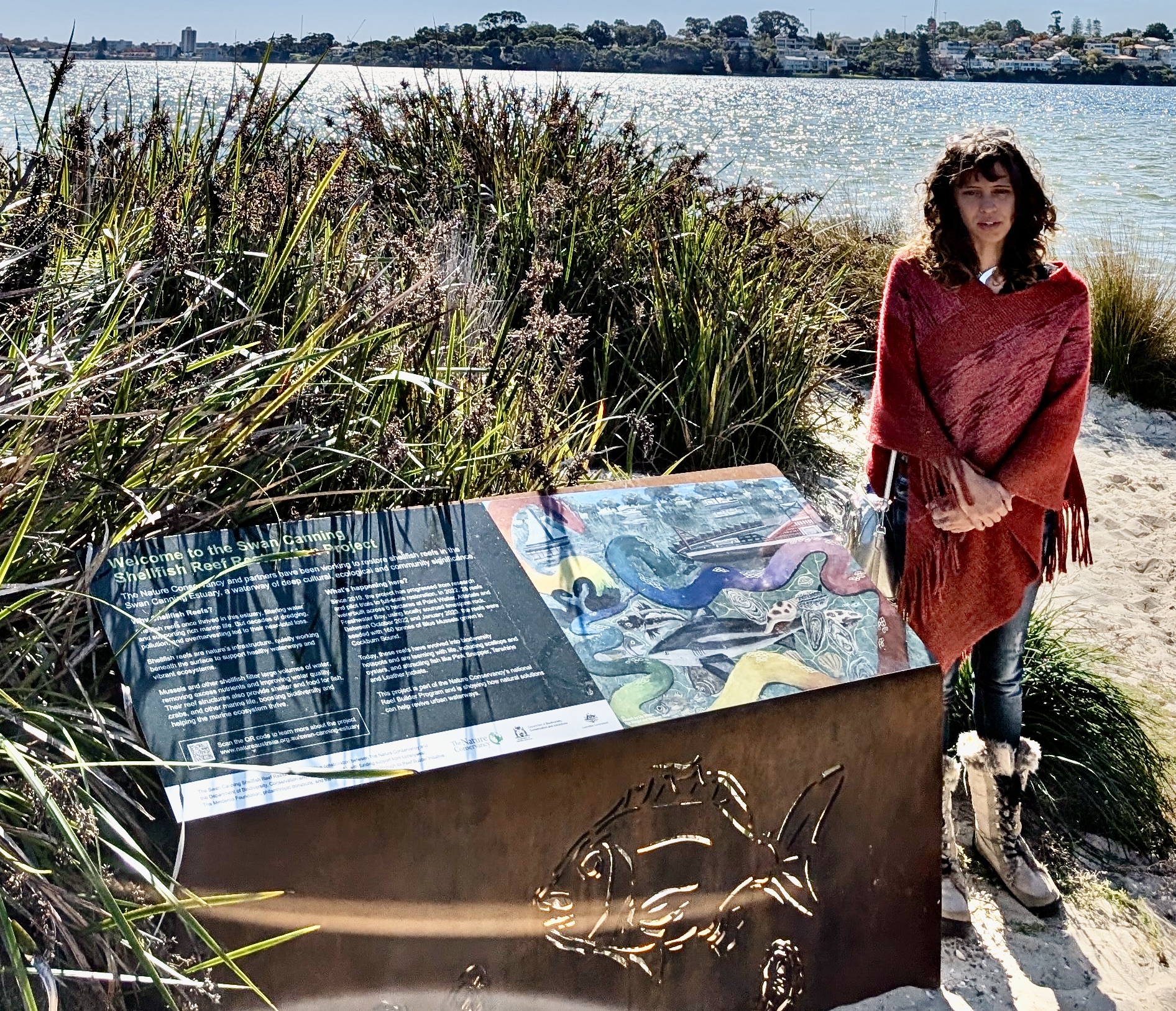
The Nature Conservancy Australia has announced the project’s completion, highlighting a newly installed permanent sign at the Point Walter foreshore that features The Wargul and the Swan River by emerging Aboriginal artist Lily Wilson, a Binjarrup Noongar woman with connections to Whadjuk country.
The sign sits alongside information about the restoration effort and the role of shellfish reefs in improving estuary health. At the centre of Ms Wilson’s piece is the Wargul—the rainbow serpent and protector of the river—surrounded by brightly coloured aquatic life.
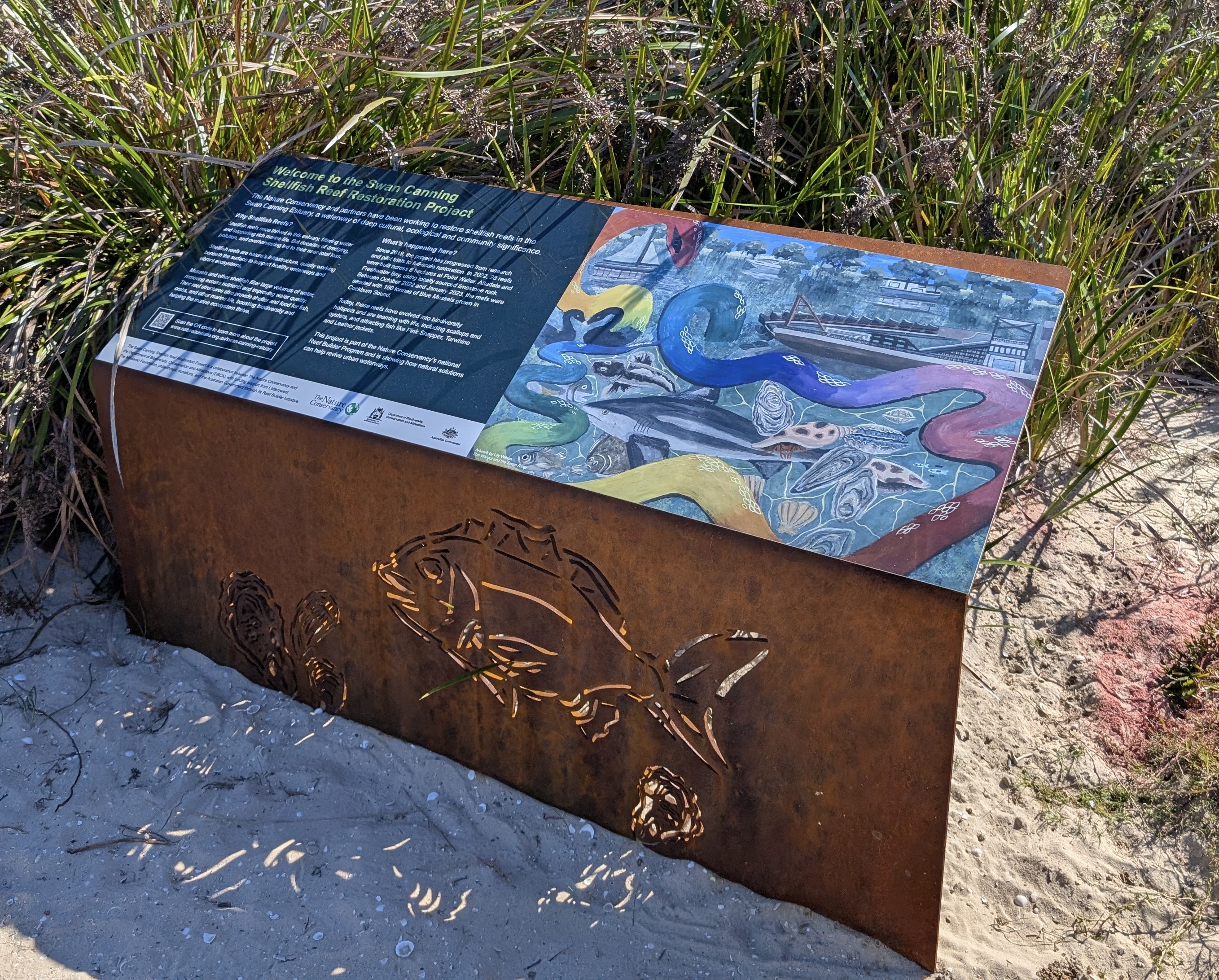
Ms Wilson said the artwork celebrates the return of shellfish reefs to the Swan-Canning Estuary and the cleaner water and habitat they support.
Key Points
- Swan-Canning Estuary reef restoration marked by new Aboriginal artwork unveiling
- Project spans six hectares with 24 reef units and 160 tonnes of mussels
- Monitoring in 2025 showed strong natural shellfish recruitment and more fish
- Nature-based solutions cited for restoring water clarity and marine habitat
- DBCA to undertake June monitoring to track shellfish densities
- Funding included WA government support and philanthropic contributions
- Artwork The Wargul and the Swan River installed at Point Walter
“Even though the river can be murky now, I wanted to show how it can be healthy again. It felt really important to tell that story visually,” Ms Wilson said.
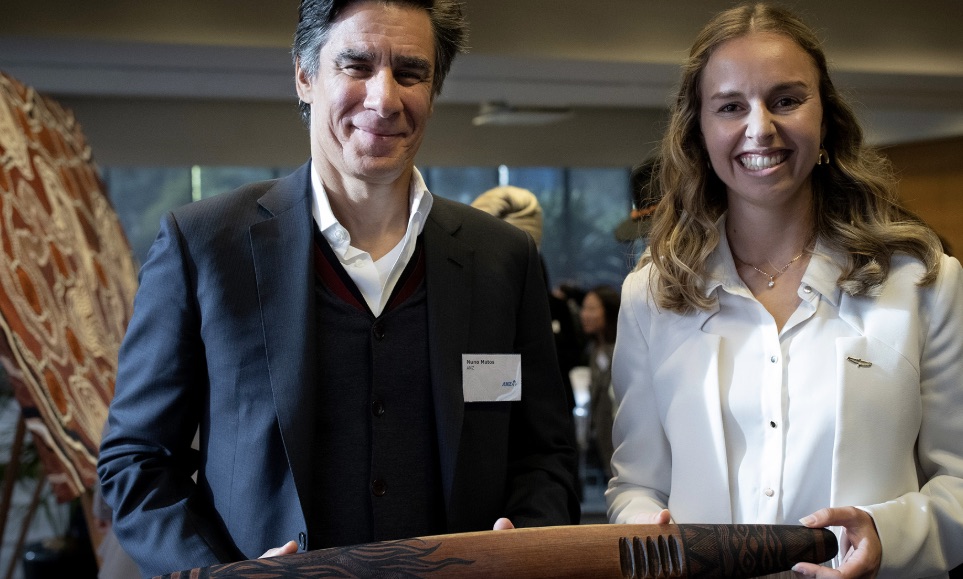
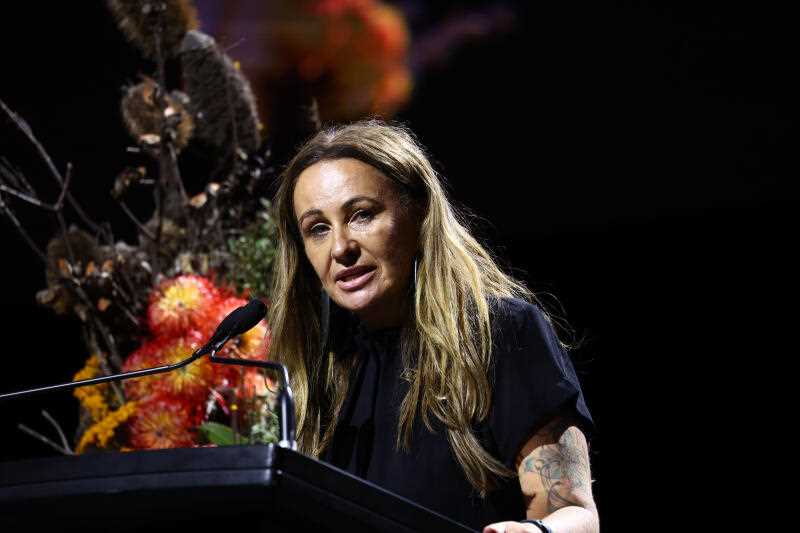
The unveiling brought together Ms Wilson; Lisa O’Malley, MLA, Member for Bicton; Dr Kerry Trayler, Principal Scientist and Program Leader for Rivers and Estuaries Science at the Western Australian Department of Biodiversity, Conservation and Attractions (DBCA); Dr Michaela Dommisse, The Nature Conservancy Australia’s Director of Oceans; and Brett Dal Pozzo, TNC Marine Restoration Manager, alongside key supporters, partners and Traditional Owners. The Wargul and the Swan River is available to view near the Point Walter Dog Beach.
Science-led restoration and early results
The Swan-Canning Reef Restoration Project spans six hectares and includes 24 purpose-built reef units that host 160 tonnes of seeded mussel stock. TNC has undertaken monitoring of the restored reefs, tracking shellfish growth, water quality and marine biodiversity to assess outcomes to date.
Its latest reef survey in 2025 demonstrated significant natural shellfish recruitment. According to TNC, fish abundance and overall species diversity on the restored reefs exceeded that of nearby barren seabeds.
Mr Brett Dal Pozzo said the project shows how nature-based solutions can help restore ecological function in the estuary after decades of dredging and industrial pollution. He added that restoring shellfish reefs is linked with clearer water and richer marine life.
“Rebuilding these important ecosystems restores their many benefits – improved water clarity and quality, and vital habitat for the hundreds of marine species found in the estuary,” he said.
Benefits already evident
The State government has characterised the project as a cutting-edge, large-scale application of shellfish reefs to address water quality and biodiversity issues in the Swan Canning.
Dr Kerry Trayler said the initiative embedded science throughout planning, implementation and review so that lessons could inform future habitat enhancement work across other locations.
She indicated the benefits are already evident for the waterway and for broader application of the project’s learnings. Trayler noted the work remains ongoing, with DBCA continuing to watch over the reefs to understand how they develop in a changing waterway. DBCA will undertake monitoring next month to ascertain current shellfish densities and provide a baseline for tracking the outcomes of this adaptive management project.
- Project area: six hectares in the Swan-Canning Estuary
- Infrastructure: 24 purpose-built reef units
- Biomass: 160 tonnes of seeded mussel stock
- Monitoring: shellfish growth, water quality and marine biodiversity
- 2025 survey: significant natural shellfish recruitment recorded
- Ecological outcomes: higher fish abundance and species diversity than nearby barren seabeds
Partners, funding and next steps
The reefs were built by TNC in partnership with the government. The initiative forms part of TNC’s Reef Builder program and received support from Lotterywest, the Minderoo Foundation and several notable Western Australian philanthropists.
Within the electorate of Bicton, Member Lisa O’Malley said the Swan-Canning Estuary is central to many residents’ lives. She said she was proud to have helped secure a $2 million commitment from the Western Australian government to support the development of the project and described how increasing shellfish in the estuary can improve water quality and enhance fish stocks and other marine life for generations to come.