Art Centre Collective demands new Federal inquiry
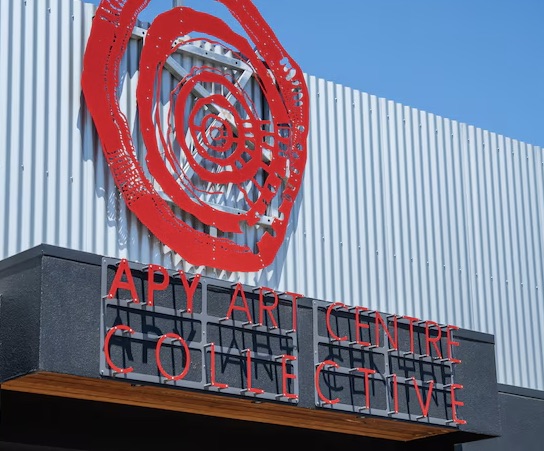
The APY Art Centre Collective is calling for a new Federal inquiry into the Indigenous art sector, arguing the current voluntary framework is failing to protect First Nations artists and does not adequately address alleged unethical practices by private dealers.
The push follows a turbulent period for the collective, which was at the centre of the “white hands on black art” allegations published by The Australian in 2023, including video appearing to show a non-Indigenous woman painting on an Aboriginal artist’s canvas at Tjala Art Centre. The collective was later removed from the Indigenous Art Code (IAC), a voluntary code of conduct promoting ethical practices in the industry.
Key Points
- APY Art Centre Collective urges a new Federal inquiry into the sector
- Group questions effectiveness and governance of the Indigenous Art Code
- Collective removed from the voluntary code in 2023 without reinstatement
- Watchdog found no consumer law breach; registrar took no further action
- Concerns raised over private dealers and transparency in artist payments
- Government reviewing Indigenous Art Code findings and considering legislation
- National Gallery exhibition proceeds after probe found no improper interference
Subsequent investigations examined aspects of the collective’s operations. A state government-appointed panel referred evidence to other regulatory bodies. The Australian Competition and Consumer Commission said the collective had not violated consumer law, and the Office of the Registrar of Indigenous Corporations concluded its probe with no further action taken.
“We was expecting them to support us, but we were on our own,” Sandra Pumani, the APY Art Centre Collective chair and Yankunytjatjara artist, told the ABC.
The APY ACC maintains its call for systemic scrutiny of industry practices, including how private dealers operate in major hubs. The collective argues artists should have clearer protections and that current mechanisms are not providing adequate oversight.
Concerns over code governance
The Indigenous Art Code was established in 2009 on the recommendation of a federal inquiry into the First Nations art sector. Developed by an industry alliance group and finalised in 2009, the IAC sets out guidelines for ethical and transparent conduct to which businesses may commit as signatories or members. It is not enforced by law. Being a signatory is also a criterion for some federal funding grant streams.
APY ACC chief executive Skye O’Meara raised concerns about the IAC’s governance, including the role of private art dealers on its board and the potential for conflicts of interest in a competitive, relatively small industry.
“I think that the IAC board has always struggled to manage conflicts of interest […] It’s a very small industry … it’s enormously competitive, and the board members have always been a group of competing dealers — Indigenous and non-Indigenous, ” Ms O’Meara said.
Concerns about so-called carpet baggers — a term used to describe unscrupulous dealers who coerce Aboriginal artists into exploitative commercial arrangements — have persisted in central Australia over decades, including during a 2007 inquiry and a 2018 inquiry into inauthentic Indigenous art.