Negotiations progress for Yindjibarndi to acquire desalination plant
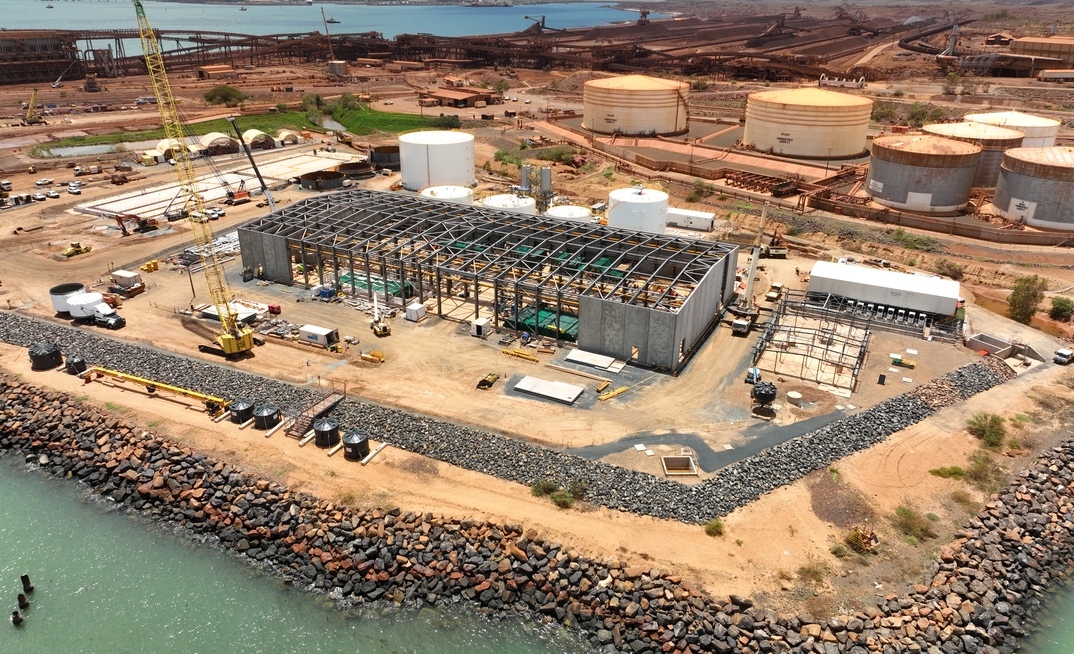
The WA Government and Rio Tinto are working with Yindjibarndi WaterCo to potentially acquire the Dampier Seawater Desalination Plant (DSDP), a critical piece of infrastructure which will support the delivery of housing and jobs in the Pilbara.
To be delivered through a $1.1 billion investment by the State Government and Rio Tinto, the DSDP will help provide water security and support the diversification of Karratha’s economy.
This in turn will support the Government’s Seven Cities vision in the region, which builds upon the government’s strong record of ongoing investment and achievements in regional Western Australia by delivering the infrastructure needed to keep WA’s economy the strongest in the nation.
Key points:
- WA Government and Rio Tinto working with Yindjibarndi WaterCo to progress acquisition of Dampier Seawater Desalination Plant
- Water security critical to the delivery of housing and jobs in Karratha and the Pilbara
- Acquisition subject to due diligence, capital raising, and assurance processes
- The Dampier Seawater Desalination Plant (DSDP) is a major infrastructure project in Western Australia designed to supply up to 8 gigalitres of potable water annually to the West Pilbara region, supporting both communities and industrial operations.
Pursuant to separate non-binding agreements signed with Yindjibarndi WaterCo – majority owned by the Yindjibarndi people – Rio Tinto and Water Corporation’s interests will be acquired in the DSDP, subject to further due diligence and successful capital raising from debt and equity sources.
Another step to self-determination
Yindjibarndi WaterCo Chair Michael Woodley said the agreement resulted from the Yindjibarndi people’s longstanding drive to protect water on our Ngurra Country, and their goal to build shared understanding and shared responsibility.
“We warmly acknowledge the Western Australian Government and Rio Tinto – our partners in this agreement – and our capability partners, The Right Water Company and Affinity Capital Group, for delivering this significant milestone,” he said.
“This is another step on the Yindjibarndi path to self-determination by delivering a secure, long-term economic return and, over time, enabling us to grow operational capability through employment, training, and contracting arrangements.”

Under the pathway, Water Corporation would enter a long-term agreement with Yindjibarndi WaterCo for the supply of four billion litres of water each year, delivering reliable drinking water supply for 10,000 homes in Karratha, Wickham, Roebourne, and Point Samson.
Importantly, the DSDP will help protect and restore WA’s environment by reducing the drawdown of the Millstream and Bungaroo aquifers, while protecting environmentally and culturally significant water sources of Traditional Owner groups, including the Yindjibarndi people and Robe River Kuruma people.
Seven Cities vision for regional WA
The DSDP will also improve resilience to lower rainfall, which has reduced levels in Harding Dam in recent years.
The Government will work with Yindjibarndi WaterCo, Rio Tinto, and relevant Traditional Owner groups, with a view to reaching binding agreements in the second half of 2026.
Premier Roger Cook said his government was delivering the Dampier Seawater Desalination Plant in Karratha as part of the Seven Cities vision for regional Western Australia.
“This critical piece of infrastructure will do more than just support Karratha’s growing population,” he said.
“It will help deliver a secure supply of water needed to deliver job-creating projects which will help to diversify the city’s economy and keep WA’s economy the strongest in the nation.
“We are already working with Yindjibarndi Aboriginal Corporation to improve the Millstream aquifer’s sustainability, with the potential for Yindjibarndi WaterCo to acquire the Dampier desalination plant to further empower Traditional Owners while protecting culturally significant water sources in the Pilbara.”