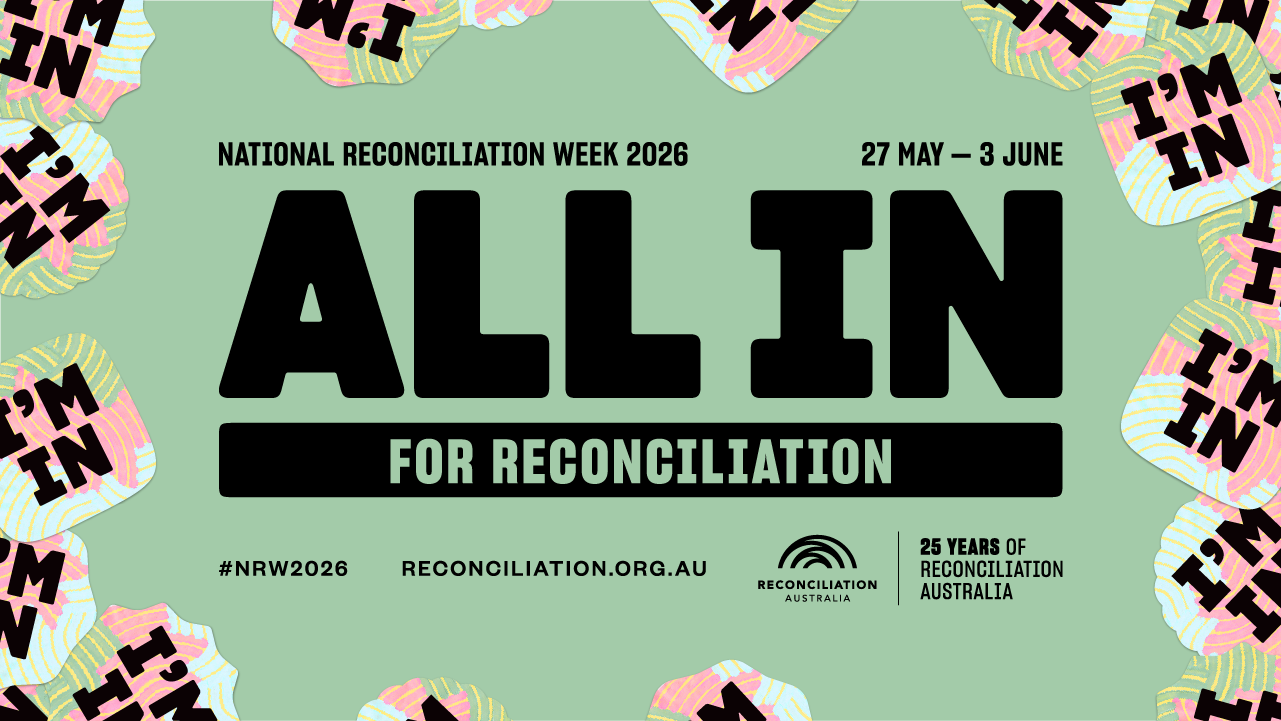
National Reconciliation Week urges ‘All In’ action
National Reconciliation Week is calling for concrete, everyday action to stand alongside First Nations people, with this year’s theme urging Australians to go “All In” from May 27 to June 3.
The National Justice Project is emphasising active ally-ship, confronting racism, and sustained support for Indigenous-led solutions.
Key Points
- National Reconciliation Week runs from 27 May 27 to June 3 annually
- Theme stresses ‘All In’ participation and rejects passive observance
- Dates mark 1967 referendum and 1992 High Court Mabo decision
- Campaign developed with First Nations-owned Carbon Creative agency
- Call It Out register reports over half of incidents are systemic
- Sharp rise in racist incidents targeting children reported in 2024–25
- Australians urged to support First Nations businesses and charities
Theme, dates, and campaign artwork
The message behind this year’s theme is that reconciliation is not a spectator activity. Standing alongside First Nations people is distinct from standing back and watching, and the responsibility must not continue to fall on the very people reconciliation is meant to serve.
The campaign stresses that National Reconciliation Week is not about asking Aboriginal and Torres Strait Islander colleagues and friends to educate others or shoulder emotional and physical labour; it is about non‑Indigenous people committing to ongoing work that extends far beyond occasional bake sales and morning teas.
National Reconciliation Week is held from 27 May to 3 June every year. The dates mark two milestones: the successful 1967 referendum, where 90.77 per cent of Australians voted “yes” to counting Aboriginal and Torres Strait Islander peoples in the census and giving the Australian Government the power to make laws for Aboriginal and Torres Strait Islander people; and the 1992 High Court Mabo decision, which overturned terra nullius, the claim that Australia was unoccupied when the British arrived.
This year’s campaign was developed in collaboration with Carbon Creative, a First Nations‑owned and operated agency. The artwork, Gaagal (meaning “Ocean” in Gumbaynggirr), is by Gumbaynggirr/Bundjalung artist Otis Hope Carey, who uses the ocean as a metaphor for people from all walks of life moving together, with ripples spreading outward as a reminder that meaningful change starts with everyone.
Confront racism: Call It Out and 2024–25 findings
Taking action against racism targeting First Nations people is framed as core to “showing up” for reconciliation. The National Justice Project points to the Call It Out racism register as a practical step for accountability. Led by the Jumbunna Institute for Indigenous Education and Research and supported by the National Justice Project, the register enables Aboriginal and Torres Strait Islander people and non‑Indigenous witnesses or bystanders to report incidents of racism they have experienced or observed.
The 2024–25 report found that over half of all incidents were systemic, indicating racism embedded within the policies and cultures of organisations and institutions. The findings describe how this plays out across public services, workplaces and schools, where governments and organisations subject Aboriginal and Torres Strait Islander people to harmful treatment and discriminatory policies. This year’s data also revealed a sharp rise in incidents targeting children, demonstrating how racism is deeply impacting young people.
Reporting to the Call It Out register helps build a collective picture of where racism is happening. According to the National Justice Project, the collated data strengthens the case for community‑led solutions and for government accountability in addressing both systemic and individual harms.
Support and amplify First Nations voices
Non‑Indigenous Australians are urged to listen and engage year‑round by seeking out First Nations voices across podcasts, literature, music, art and film, politics and advocacy. The guidance emphasises attentive listening to stories, knowledge, and perspectives across creative and public platforms. It further encourages amplifying First Nations voices within personal networks and communication channels, and actively advocating for Indigenous rights.
Workplaces, schools, and community groups across Australia host National Reconciliation Week events in the lead‑up and throughout the week, from in‑person talks and creative workshops to webinars and educational sessions. People are encouraged to search the Reconciliation Australia events calendar to find local activities or register their own.
Additional updates and resources referenced alongside the campaign include:
- First Nations families, youth justice and community-led solutions – National Justice Project’s April Justice Brief
- What Health Justice means and how it impacts First Nations women, families, and communities
- Creating bold legal solutions to tackle the climate crisis with Lawhack 2026
- Human Rights Commission accepts racism complaint against NSW Police
- Justice Brief March Issue