Indigenous heritage bids challenge Brisbane Olympic stadium
Indigenous groups have lodged a series of cultural heritage protection applications seeking to block construction of a proposed Olympic stadium at Brisbane’s Victoria Park, known as Barrambin.
The multi-purpose site is expected to be used for the 2032 Olympics, with the Queensland government naming a central location near Gilchrist Ave for the arena.
Key Points
- Six applications lodged under cultural heritage laws to stop Victoria Park stadium
- Federal Environment Minister Murray Watt says assessments of applications are underway
- Applications claim Barrambin is a sacred burial ground and ceremony site
- Concerns include irreversible cultural damage and disturbance to waterways, flora and fauna
- One submission argues a 63,000 seat stadium and aquatics centre would harm Barrambin
- Representations due by May 29 to Dominic McGann for ministerial reports
- Queensland government set preparatory works to start in June near Gilchrist Ave
Federal Environment Minister Murray Watt confirmed that his department has received at least six applications under cultural heritage protection laws opposing development at Victoria Park. The groups argue the land is a sacred burial ground and a site used for ‘sorry business’ and ceremonies.
“We are working through those applications at the moment,”
— Murray Watt, Federal Environment Minister
The applications aim to halt site investigations and construction tied to a proposed 63,000 seat stadium, an aquatics centre and associated infrastructure. According to the submissions, the works would cause unacceptable cultural disturbance to Barrambin, which several applicants say holds profound ancestral and spiritual importance for First Nations people.
Claims of cultural significance
One application, from a Yuggera, Jagera and Turrbal First Nations person, states the project poses an immediate and serious threat to a site of profound cultural, spiritual and ancestral significance. The applicant emphasised that Barrambin is of profound cultural, spiritual and ancestral importance to many people, and warned that site investigations risk irreversible damage to what they described as the last remaining culturally significant area in Brisbane where Indigenous communities maintain a connection to their traditional homelands.
In another application, a Yagara, Quandamooka and Bundjalung First Nations person claims the land is a resting ground for ancestors and continues to be used for gatherings, ceremonies and ‘sorry business.’ While noting that the Queensland government has yet to release detailed stadium designs, the applicant submitted that it is difficult to imagine that a 63,000 seat stadium, aquatics centre and related works could be built anywhere within Barrambin (Victoria Park) without significant physical disturbance to the area and its traditional significance.
A third application, lodged by a Yagarabul First Nations person and the Yagara Magandjin Aboriginal Corporation, raises concerns about potential damage to waterways, as well as flora and fauna in the area, according to News Corp. They argue the area is significant for Aboriginal people, and that YMAC elders are obliged under traditional cultural totem law to protect Barrambin, including the ecosystems, waterways, trees, flora and fauna.
Government process
Representations can be made in writing by May 29 to Dominic McGann, who is compiling reports for the Federal Environment Minister. The applications will inform whether additional protections or interventions are warranted under cultural heritage laws.
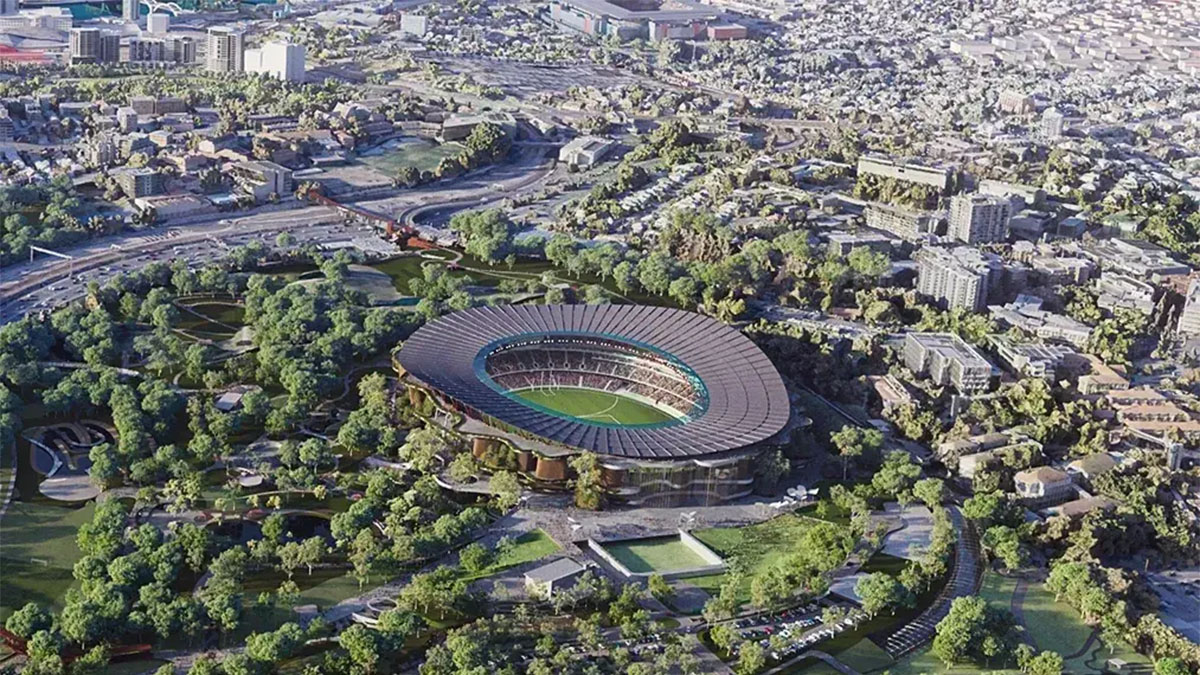
Last month, the Queensland government identified the arena’s precise location as a central position near Gilchrist Ave, with preparatory building works set to start in June. An artist’s impression released earlier depicted how a 2032 Brisbane Olympic Stadium could potentially look at Victoria Park.
“Every legal avenue possible to protect our cultural heritage”
— Gaja Kerry Charlton, YMAC spokesperson
At that time, YMAC spokesperson Gaja Kerry Charlton said the organisation would pursue every legal avenue possible to protect cultural heritage at Barrambin. Several applicants also urged the consideration of environmental impacts, including the effects on waterways and native species that they say are integral to the area’s cultural fabric.
The filings collectively assert that Barrambin’s cultural values remain active and continuous, including as a resting place for ancestors and a centre for community practices. Applicants contend that the scale of the proposed 63,000 seat stadium, aquatics centre and associated infrastructure would bring significant disturbance, fundamentally altering the landscape and cultural connections they describe as enduring.
Ancestral significance
Minister Watt did not provide a timeline for decisions on the applications, but confirmed officials are working through the submissions. Outcomes could influence whether preparatory works proceed on the timeframe outlined by the Queensland government. Written representations remain open until May 29.
As the heritage assessment process continues, Indigenous groups maintain their opposition to development at Barrambin. They say the cultural, spiritual and ancestral significance of Victoria Park must be safeguarded from irreversible damage linked to major construction tied to the 2032 Olympics.

- AFL / AFLW
- Arts
- Athletics and Olympics
- Business
- Conditions and Research
- Culture
- Elections
- Employment and Careers
- Enterprise and Startups
- Entertainment
- Events and NAIDOC
- Fashion
- Film and TV
- Food
- Government and Policy
- Grants and Funding
- Health
- Healthcare and Services
- Heritage and History
- International
- Language
- Lifestyle
- Mental Health and Wellbeing
- Music
- News
- NRL and Rugby League
- Olympics
- Opinion
- Other Sports
- People and Profiles
- Podcast
- Politics
- Property and Land
- Sports
- Technology
- Travel
- Treaty and Truth-telling
- Voice and Referendum