Call for access key to closing many gaps
The Council of Aboriginal Services Western Australia (CASWA) has called for expanded regional-level data access, warning that Closing the Gap progress in Western Australia remains slow and uneven.
CASWA, who issued the appeal on National Close the Gap Day, said timely access to regional data was essential for Aboriginal Community Controlled Organisations (ACCOs) to target resources, prioritise services, and deliver measurable outcomes in communities most in need.
CASWA Chief Executive Officer Chad Stewart said progress under Closing the Gap has been frustrating, with some targets moving in the wrong direction.
Key Points
- CASWA says regional data access is essential to target support effectively
- Chad Stewart warns some Closing the Gap targets are tracking backwards
- Calls coincide with National Close the Gap Day on 19 March 2026
- WA saw 22.8 per cent rise in direct Aboriginal expenditure to 2022–23
- ACCOs involved in only 53.2 per cent ($403.5m) of 2022–23 direct spend
- ACCO sole-provider funding dropped to 16.4 per cent in 2022–2023
- Share of direct spend via ACCOs projected to fall to 7.3 per cent in 2023–24
“Six years into the Closing the Gap commitment and we still don’t know exactly where we should focus our collective efforts” Mr Stewart said.
“For too long, Aboriginal communities and ACCOs have been expected to influence outcomes without access to important data to inform their services, priorities and advocacy efforts.

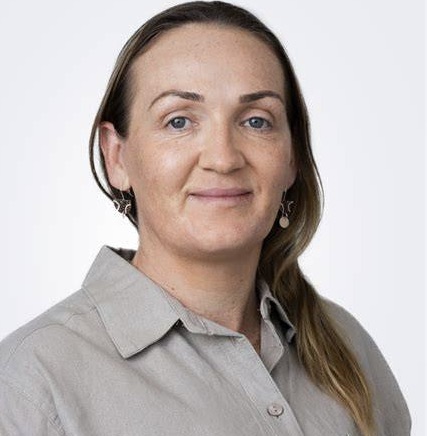
CASWA Chief Executive Officer Chad Stewart said progress under Closing the Gap has been frustrating.
“WA has made improvements in 10 of the 19 Closing the Gap targets, and while this is welcome, it still shows that we need a more strategic and partnership-driven focus if we are to effect genuine change.
“Multiple reviews, including the Productivity Commission’s 2024 review, have highlighted that progress on Closing the Gap has been slow, inconsistent, and often disconnected from the lived experiences and priorities of Aboriginal people.
“Every community is different, and so are the challenges they face. Regional data gives us the power to tailor support, rather than relying on one size fits all solutions. Only then, can we direct resources more effectively and ensure communities receive the support they need to deliver real change on the ground.”
“For too long, Aboriginal communities and ACCOs have been expected”
— Chad Stewart
Mr Stewart said Western Australia had recorded improvements in a number of indicators but argued that progress remains insufficient without a more strategic, partnership-driven approach between governments and Aboriginal organisations. He pointed to broader assessments that have flagged problems with the rate and consistency of change under the National Agreement.
Mr Stewart also referred to multiple reviews, including the Productivity Commission’s 2024 review, which he said have found progress to be slow, inconsistent, and often misaligned with the lived experiences and priorities of Aboriginal people. He argued that improved access to regional data would allow services to be tailored more effectively and make better use of available resources.
“Every community is different, and so are the challenges they face.”
— Chad Stewart
Funding review raises concerns
CASWA highlighted that ACCOs deliver programs grounded in culture, community knowledge and lived experience—from health and healing initiatives to early years, justice, and housing. It said these approaches consistently demonstrate that Aboriginal-designed and Aboriginal-led solutions are central to improving outcomes. Despite this, Mr Stewart said spending remains dominated by government agencies rather than ACCOs.
The latest WA Aboriginal Expenditure Review, released by the Department of Treasury and Finance in January, reported a 22.8 per cent rise in direct Aboriginal expenditure between 2021–22 and 2022–23.
However, ACCOs were involved in only 53.2 per cent ($403.5 million) of that direct spend. While budgeted expenditure for 2023–24 increased to $479.7 million, the percentage of direct Aboriginal expenditure via ACCOs fell to 46.9 per cent.
The review found that of the 403 programs for, or predominantly used by, Aboriginal people in 2022–23, less than half (182) were delivered wholly or in part by Aboriginal organisations. In 2022–2023, funding where ACCOs were the sole provider dropped from 20.6 per cent to 16.4 per cent, with a projected fall to 7.3 per cent in 2023–24.
Mr Stewart described the spending trajectory as a concerning mismatch with public commitments to strengthen the ACCO sector. He said outcomes will continue to lag if Aboriginal organisations are not empowered and funded to lead work they are best placed to deliver, and called for a genuine transition of services away from government control to build a strong, sustainable ACCO sector.
National Agreement and priority reforms
The National Agreement on Closing the Gap came into effect in 2020 to shift how governments work with Aboriginal people and communities. It commits to genuine partnership and shared decision-making aimed at overcoming entrenched disadvantage and improving life outcomes for Aboriginal people.
The agreement identifies four priority reform areas:
- Partnerships and shared decision-making
- Building the community-controlled sector
- Transforming government organisations
- Shared access to data and information at a regional level
CASWA’s latest statement centres on the fourth priority reform—shared access to regional data—arguing that data transparency and availability are critical to tailoring supports and measuring progress in real time. The organisation framed its call as a necessary step to align investments with community priorities and to avoid one-size-fits-all responses that fail to account for local contexts.