Words do matter – honouring Malgana language in naming of new species
By BRENDAN BURNS and KYMBERLEY OAKLEY
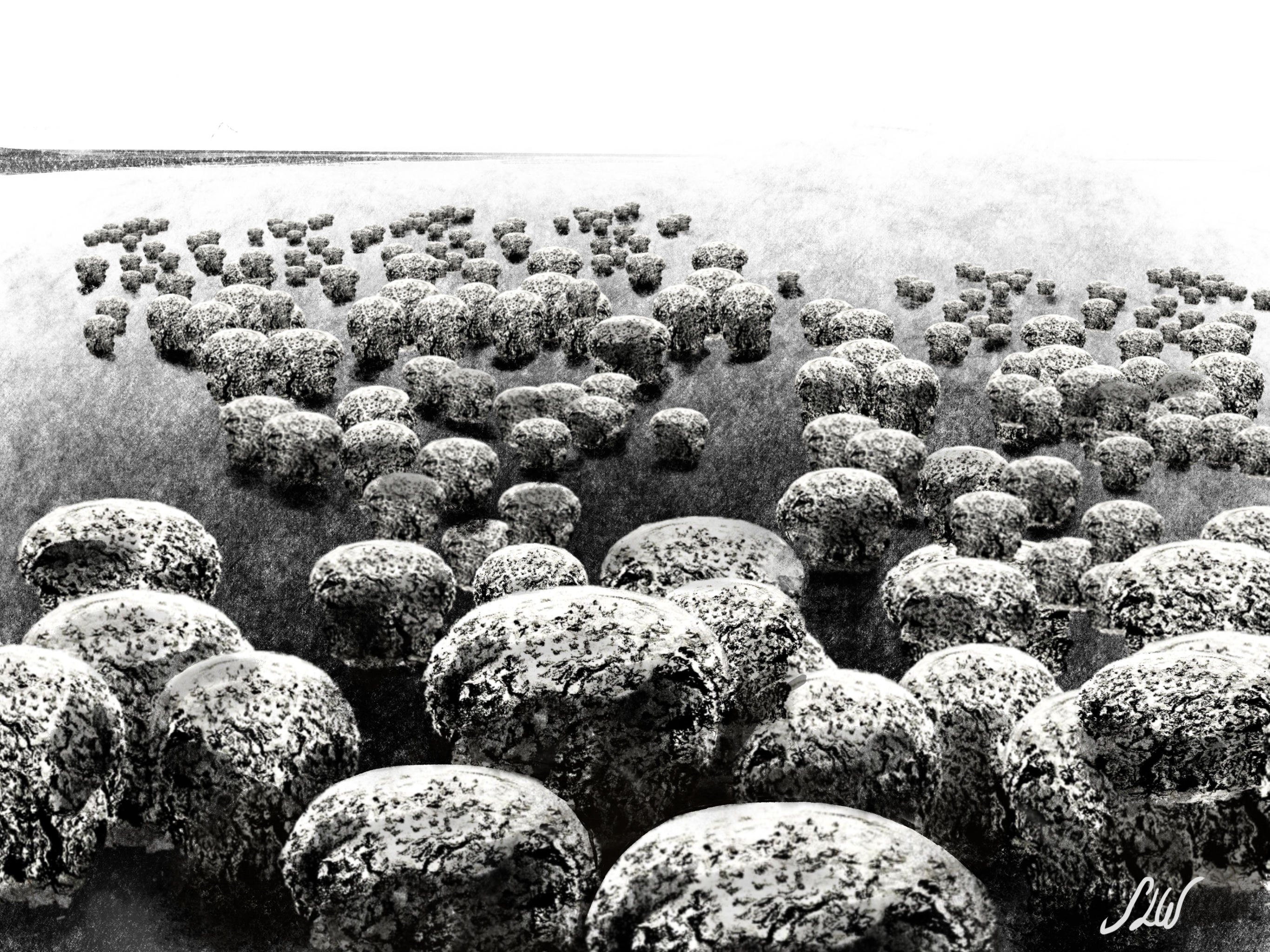
Have you ever wanted to go back in time? If you visit the iconic stromatolites on the shores in Gathaagudu (Shark Bay) in Western Australia, you can imagine yourself doing this.
Stromatolites are ‘living rocks’, an invisible microbial biosphere and have been on the earth for billions of years. Walking past them is like walking back through time.
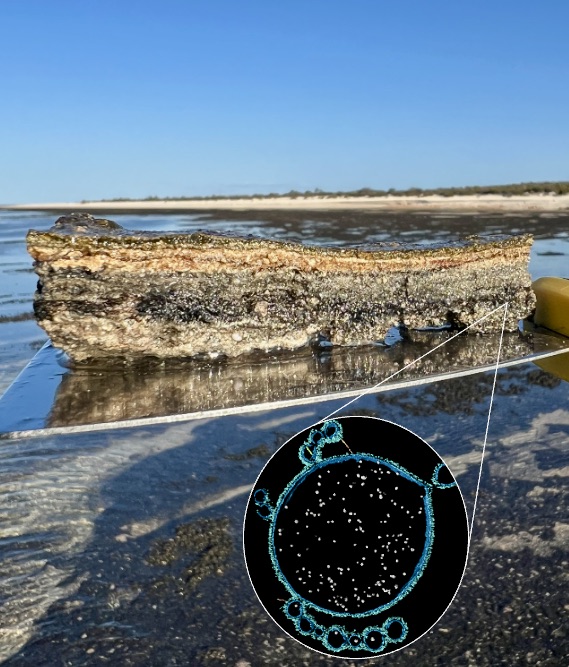
And we recently made a thrilling discovery in these stromatolites. We unearthed a novel microbe– a tiny so-called ‘Asgard’ archaea – that is closely related to ancient eukaryotic cells, the very first complex cells that arose billions of years ago. The forming of these first complex cells (called ‘eukaryotes’) was a defining moment in the evolution of all life as these eukaryotes eventually went on to form all complex life: plants, animals. Us.
Scientists have proposed that these first complex cells came about when two tiny microorganisms came together on an Early earth to ‘fuse’, forming an ancient partnership that led to the first eukaryotes. But we have never seen a living model of how this may have occurred. Until now.
Using advanced microscopy and DNA sequencing, our team showed for the first time the physical connection between an Asgard archaeon and another microbe in a model that may reflect what happened on an early Earth, when our great microbial ancestors decided to come together. This was for us a ‘eureka’ moment.
But our new microbe needed a name. We all have a name, usually given to us at birth. And every living thing has a name to classify it from a biological/scientific point-of-view.
Western science has a naming system that assigns a unique name for each species, usually in Latin. For instance, we humans are all Homo sapiens, the scribbly gum’ tree is Eucalyptus haemastoma. It is important to decide on a formal name for any new species, as only 30% of the world’s species have been named, and naming is a first step in recognising and conserving Australia’s precious diversity, whether it be native tree, koala, coral. Or microbe.
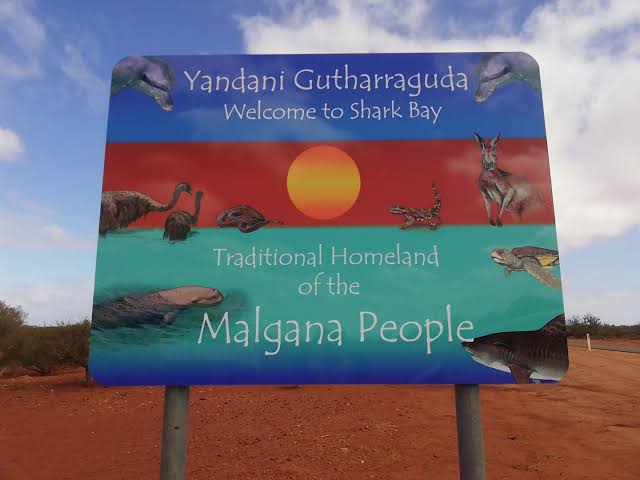
We initially called our tiny microbe ‘Nelly’ until we could come up with a proper name. As Nelly was from Gathaagudu, we were keen to recognise and honour Aboriginal language and culture of the local Malgana people in naming the new organism. It was also a way of connecting western science with Aboriginal knowledge.
Together with the world’s foremost Malgana language linguistic expert, Kymberley Oakley, we looked for possibilities. Of utmost importance, no new Aboriginal names should be adopted for species by scientists without explicit permission of the speakers of the language. Language is sacred and it isn’t as simple as picking a word from a list but it connects all aspects of the Malgana Culture.

After extensive discussions, consultation with Malgana Elders for appropriate words that could be respectfully used, permission was granted for us to use the Malgana words marumaru and maya in the name of our novel microbe: Nerearchaeum marumarumayae.
Nereus in Greek mythology is an ancient sea god (described as the ‘Old Man of the Sea’) and father of the Nereides, female spirits of sea waters, in reference to both the coastal marine origin of this microbe, and the antiquity of stromatolites. marumarumayae is derived from Malgana language, meaning ‘ancient home’ (marumaru, means ‘many nights, old’, ancient; maya means ‘camp, home’).
Thus marumarumayae, ‘of the ancient home.’ The stromatolites of Gathaagudu are a window to our past, yet global environmental change is threatening these systems, with increasing temperatures, rising sea levels, and urban development. It is important that these fascinating ecosystems are protected before any tipping point is reached.
Why is it important to seek to weave Indigenous language into our new name? The stromatolites are part of Malgana heritage and the use of Malgana language in the naming of this new microbial species celebrates the thousands of years of Aboriginal culture in the region, recognising the deep unbroken cultural connection of the Malgana people to their Country.

To all Indigenous people Country is the physical and spiritual connection to all lands, waters, skies. It is the connection of a people to place and everything that you find within that environment. Using an Indigenous name and in this instance, a Malgana one, acknowledges that that these new microbes existed on Country and it is a part of our way of life.
While through science we may have discovered this tiny new microbe lurking within the stromatolites of Gathaagudu, Malgana people have walked amongst these fascinating ‘living rocks’ long before scientists came along. Gathaagudu has a rich Aboriginal history, where Aboriginal people first inhabited the area some 60, 000 years ago.
There is a continuing connection of the Malgana Traditional Owners to Country with numerous cultural heritage values, and the ties Aboriginal groups have to Gathaagudu are recognised by Native Title. Malgana Elders, Rangers and Community actively work in Gathaagudu caring for Country, protecting wildlife, and restoring the land.
Words do matter. Malgana Elder, Aunty Pat says it beautifully: “Strong culture comes from strong relationships. When Malgana knowledge walks alongside western science, we’re not losing who we are, we’re strengthening how we care for Country. Working with scientists helps us protect what our old people handed down, so our stories, our sea, and our land stay alive for the next generations.”
We believe Indigenous language can be a way to connect western science with Indigenous knowledge, ways of being. Indigenous and non-Indigenous people can work together to increase awareness of the value of Indigenous language/knowledge, where there is a genuine two-way exchange of knowledge and best practices.
Names can be part of a greater story. Our own names tell people who we are, what our connections are. Incorporating Malgana language into the naming of new species connects at different levels.
It connects the two knowledge systems of Indigenous knowledge and western science. And it represents a special and fitting connection between unique Indigenous culture and the ancient microbe we described – possibly a ‘window to our past’ – that calls the stromatolites of Gathaagudu ‘home’.
- Kymberley Oakley is a proud Malgana woman, Aboriginal Education Consultant, and the leading expert in the Malgana language.
- Brendan Burns is an Associate Professor in the School of Biotechnology and Biomolecular Sciences at The University of New South Wales.
Images: Kymberley Oakley, Brendan Burns, Iain Duggin, Debnath Ghosal, Pieter Visscher, Scarlett-Li Williams.